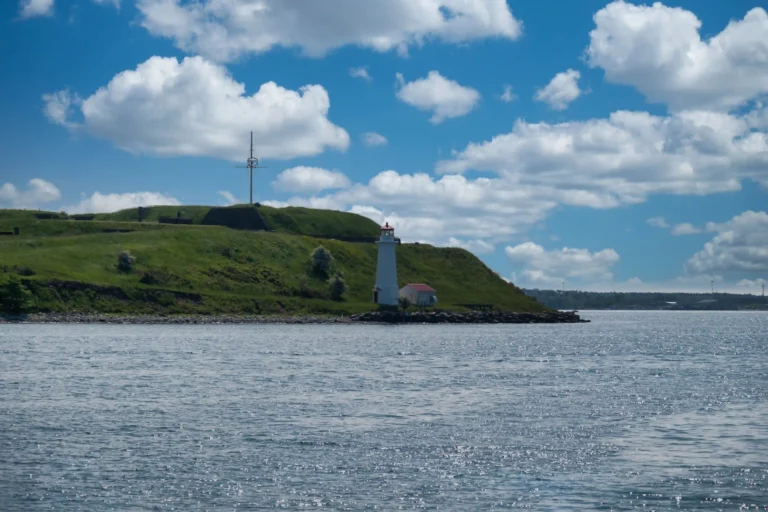
South Shore Nova Scotia in Fall: Lunenburg, Peggy’s Cove, and Slower Coastal Days
Affiliate note: This article may contain affiliate links, which means I may earn a small commission if you book or buy through them – at no extra cost to you. I only recommend things that make sense for this kind of trip.
Fall does not make the South Shore louder. It makes it easier to hear.
The parking lots empty out, the beach crowd goes home, and what’s left is harbour light, a slower kind of walking pace, and towns that stop performing for the season and just get on with being themselves. South Shore Nova Scotia in fall is a different trip from the one you’d plan in July — not better or worse, just built around different priorities.
This isn’t a full route guide and it isn’t a beach list. It’s a planning guide for the specific question a lot of people land on in September: is the South Shore still worth it once summer’s over, and if so, how do you plan around it?
Quick Answer: Fall Is for Harbour Towns, Not a Summer Replay
Short version: yes, the South Shore holds up well in fall — you just have to want a different kind of day.
Lunenburg works as an anchor whatever the weather does. Mahone Bay is a strong short stop. Peggy’s Cove is the one that depends most on conditions — it’s still worth seeing, but only when the weather earns your trust. Beaches drop down the priority list. Daylight gets shorter, which matters more than people expect when they’re building a route.
| Fall South Shore Mood | Best Fit | Watch For |
|---|---|---|
| Harbour town day | Lunenburg | Give it enough time |
| Short pretty pause | Mahone Bay | Don’t overbuild it |
| Ocean/lighthouse hit | Peggy’s Cove | Weather and wet-rock safety |
| Slow coastal overnight | Lunenburg / nearby coast | Seasonal hours |
| Photo/weather day | Peggy’s Cove or Blue Rocks | Wind, fog, shorter light |
| Family-friendly fall day | Lunenburg + Mahone Bay | Avoid too many stops |
What Changes on the South Shore After Summer?
The obvious thing first: there are fewer people. That alone changes how the towns feel — you can actually see the harbour in Lunenburg instead of the backs of forty other visitors’ heads.
The light changes too. Fall sun sits lower, which does something to the coloured houses along Lunenburg’s waterfront that midsummer glare never quite manages. It’s the kind of thing you notice without being able to explain why a photo suddenly looks better.
Weather gets more involved in the decision-making. Summer gives you a better shot at building a day around the beach, even though South Shore weather is never fully predictable in any season. In fall, you’re checking wind and fog before you commit to Peggy’s Cove specifically, and that’s just part of the trip now, not a hassle layered on top of it.
A few practical shifts worth knowing before you build a day around them:
- Daylight shrinks fast. An October afternoon closes in noticeably earlier than an August one, so a route that felt relaxed in summer can feel rushed in fall if you don’t adjust.
- Some seasonal businesses cut back or close. Cafés, shops, and tour operators that ran full summer hours may be on reduced hours or closed for the season — check before you build a stop around one specific place.
- Driving feels different once sunset moves up. If you’re doing a loop that ends after dark, that’s a different kind of drive on coastal roads than the same route at 6pm in July.
None of this makes the South Shore a lesser trip in fall. It just makes it a trip that rewards planning a little more carefully than “show up and wing it.”
September, Early October, or Late October?
“Fall” covers a lot of ground on the South Shore, and the three stretches of it don’t feel the same.
September still runs mild — days often sit comfortably warm, most businesses are on close to full hours, and the towns are only just starting to thin out from the summer rush. It’s the easiest entry point if you want a fall trip that still feels a little like summer, just with fewer people in it.
Early-to-mid October is where the shift shows up. Nights get cooler, the crowds thin further, and this is generally the window locals point to for the best colour further along the coast — though colour change is never on a fixed schedule and varies year to year. Nova Scotia’s colour season typically runs from late September into late October, with the Cape Breton Highlands turning first and the South Shore turning later and more gradually than the highland hardwood forests — expect a mixed, subtler palette here rather than the dense reds of Cape Breton or the Annapolis Valley.
Late October into November is the quiet stretch. Daylight is noticeably shorter — sunset in Halifax moves from around 7:30pm in early September to under 6pm by late October — and more seasonal businesses have closed or cut back to weekends only. It suits a slow, low-key visit far more than a stop-heavy itinerary.
| Period | What to Expect | Best For |
| September | Still mild, most businesses open, towns only just quieting down | A summer-adjacent trip with noticeably fewer people |
| Early–mid October | Cooler, quieter, colour building along the coast | Harbour towns, photography, road trips |
| Late October–November | Short days, more closures, changeable weather | A quiet getaway over a multi-stop trip |
Two timing notes matter if your dates line up: Mahone Bay’s Scarecrow Festival can make the town worth a longer stop on its own, and Canadian Thanksgiving weekend is one of the busier fall weekends on the South Shore. Check current dates before planning around either one.
Lunenburg Is the Best Fall Anchor
Lunenburg does not need summer crowds to work. In some ways, it works better without them.
The Old Town’s colourful waterfront houses, the harbour, the walkable grid of streets — none of that depends on beach weather. You can have a good few hours here on a grey, cool afternoon that would’ve written off a beach day entirely. A slower pace actually suits Lunenburg. It’s a town built for wandering, not rushing between stops, and fall gives you the room to do that without dodging tour groups.
If you’re building a fall day around one town, make it this one. For a fuller sense of what to actually do once you’re there, our Lunenburg guide covers the town in more depth — this piece is about when and how fall changes the plan, not a rundown of every stop.
Just check current hours before you count on the museum or a specific café being open. Fall schedules shift, and not every business runs its summer timetable into October.
Practically, Lunenburg is roughly 1 hour 15 minutes to 1 hour 30 minutes from Halifax by car, and the harbourfront strip along Montague and Bluenose Drive is where most of the cafés, restaurants, and washrooms are clustered — useful to know if you’re arriving hungry or just off a long drive.
Mahone Bay Is the Softer Pause
Mahone Bay isn’t trying to be Lunenburg, and that’s exactly its value. It’s a shorter stop — the waterfront, the shops, the view of the three churches — and in fall that shortness works in its favour. You’re not committing half a day here. You’re breaking up a longer drive with something quietly pretty.
For most first-time fall itineraries, Mahone Bay works best as a shorter stop between Peggy’s Cove and Lunenburg — it’s only about 10 to 15 minutes’ drive from Lunenburg, so it costs you very little time to fold in. It’s quieter in fall than in peak summer, and the waterfront view holds up just as well without the crowds along the water’s edge. If you’re visiting during the town’s Scarecrow Festival, though, it can easily justify a longer stop on its own — that’s the one stretch of fall where Mahone Bay pulls its own crowd.
We’ve written a full comparison of Mahone Bay versus Lunenburg if you’re trying to decide how much time to give each — the short version for a fall trip is: Mahone Bay is the pause, Lunenburg is the anchor.
Peggy’s Cove in Fall: Go When the Weather Earns It
Peggy’s Cove is beautiful in fall, but the ocean does not care that it was on your itinerary.
On a clear day with manageable wind, it’s every bit as good in October as it is in July — arguably better, with fewer buses in the parking lot and softer light on the lighthouse. On a rough day, it’s not worth forcing. The black rocks get slick, waves can surge higher than they look from a distance, and this is one spot on the South Shore where the safety warnings aren’t decoration.
This isn’t the season for pretending every coastal stop is still on the table regardless of conditions. If the forecast looks rough, treat Peggy’s Cove as optional rather than essential — Lunenburg and Mahone Bay don’t carry the same wave risk and hold up fine as a fall substitute.
For the full breakdown on timing, parking, and staying safe around the rocks, see our guide to visiting Peggy’s Cove without the crowds. The short version here: check the weather first, and let it make the call.
Peggy’s Cove is roughly 45 minutes to an hour from Halifax, and facilities right at the cove are limited — use the washroom before you leave, and don’t count on much beyond a small café for food once you’re there.
A Simple Fall South Shore Day Trip from Halifax
The classic route still works in fall: Halifax → Peggy’s Cove → Mahone Bay → Lunenburg → Halifax.
What changes is how you weight it. Start earlier than you would in summer — you’re working with fewer daylight hours, and Lunenburg deserves enough time that you’re not rushing through it at 4pm with the light already going flat. If the day’s running long, trim Mahone Bay before you trim Lunenburg. If the weather’s turned, skip Peggy’s Cove rather than squeezing it in anyway.
For the full timeline with drive times and pacing built in, our Halifax to Lunenburg day trip guide walks through the whole route — this is the fall-specific adjustment to that plan, not a replacement for it.
If You Have an Overnight
An overnight becomes especially useful in fall, because it removes the pressure of fitting the drive back to Halifax into a shorter day. Mornings are quieter, the light’s better for photos before the day crowd shows up — small as that crowd now is — and you’re not watching the clock as sunset creeps earlier.
Lunenburg is the easiest first-time base — you’re already anchored there for the afternoon, and staying puts you in place for a quieter morning walk before anyone else is out. Mahone Bay works if you want something calmer. With an extra night, places like Blue Rocks and LaHave start to make sense as add-ons rather than detours you can’t justify.
For where to actually stay, our South Shore accommodation guide covers the options in detail, and the full South Shore road trip guide has route shapes for two- and three-day versions if one night turns into more.
Blue Rocks, LaHave, and Beaches in Fall
If you’ve got extra time and want somewhere slower and less scripted, Blue Rocks and LaHave are worth the short detour from Lunenburg — fishing coves, quiet water, and a pace that suits a camera more than a checklist.
Blue Rocks is the easier add-on: about 10 minutes from Lunenburg, small, and best paired with an hour of unhurried walking rather than a long visit. LaHave takes more commitment — roughly 20 to 30 minutes from Lunenburg, including a short crossing on the LaHave cable ferry — but it pairs naturally with a stop at the LaHave Bakery on the far side, which can be a useful food-and-washroom stop when it is open if you’re continuing further down the coast.
Beaches are the one category that really takes a hit in fall. Water’s cold, wind picks up, and a beach day just isn’t the reliable plan it is in July. That doesn’t rule beaches out entirely — a bracing coastal walk is still a coastal walk — but this is not the season for pretending every beach day is still on the table. Treat them as a bonus stop with extra time, not the reason for the trip.
South Shore in Fall with Kids
Fall can work well for families as long as the day stays simple. Lunenburg and Mahone Bay together make an easy, low-stress combination — walkable, forgiving if someone needs a break, and not dependent on the weather cooperating.
Peggy’s Cove only if conditions are actually sensible; the wet rocks are not the place to be managing a distracted kid. Pack more layers than you think you’ll need, bring snacks, and build in less than you would for a summer day — shorter daylight matters more with kids than it does with adults who can just push on toward dusk.
What Not to Do
- Don’t treat fall like summer with colder water. The whole rhythm of the day changes, not just the temperature.
- Don’t force Peggy’s Cove in rough weather. The rocks don’t care about your schedule.
- Don’t chase every coastal stop in one short day — you’ll spend more time driving than looking at anything.
- Don’t arrive in Lunenburg late and expect it to feel unrushed. Give it real time, or give it up for the day.
- Don’t assume every café or shop is running full summer hours. Check before you build a stop around one.
- Don’t build the whole day around beach time. It’s the least reliable part of a fall itinerary.
What to Do When the Weather Actually Turns
Lunenburg and Mahone Bay are still mostly outdoor towns, so heavy rain or a hard wind doesn’t just mean skipping Peggy’s Cove — it changes what you do once you’re there too. Cut Blue Rocks and any beach stop first; they offer the least shelter for the least payoff in bad weather.
Lunenburg has more indoor options than it gets credit for: the Fisheries Museum of the Atlantic, Ironworks Distillery’s tasting room, and a cluster of galleries and craft shops along the waterfront all give you somewhere dry to spend an hour, seasonal hours permitting. A slow lunch in one of the harbourfront restaurants works just as well as a plan B — sometimes better, since you’re not fighting anyone for the table.
Best South Shore Fall Routes by Time
| Time Available | Better Route |
|---|---|
| Half day | Peggy’s Cove if weather is good, or stay closer to Halifax |
| Easy full day | Lunenburg + Mahone Bay |
| Full ambitious day | Peggy’s Cove + Mahone Bay + Lunenburg |
| Overnight | Lunenburg base + Blue Rocks/LaHave add-on |
| Bad weather | Lunenburg/Mahone Bay, museum or gallery over exposed coastal stops |
| Family day | Lunenburg + one shorter stop |
FAQ
Is South Shore Nova Scotia worth visiting in fall?
Yes. The towns don’t depend on summer weather to work, and Lunenburg in particular holds up — arguably improves — once the crowds thin out. What you lose in beach weather, you gain in quieter streets and better light.
Can you visit Peggy’s Cove in fall?
Yes, but weather should decide the day, not your itinerary. Clear conditions with manageable wind make for a great fall visit. Rough weather means slick rocks and unpredictable waves — worth skipping rather than forcing.
Is Mahone Bay good in fall?
Yes, especially as a shorter stop between Peggy’s Cove and Lunenburg. It’s quieter than in summer, and if your dates line up with the Scarecrow Festival, it can easily hold its own as a longer stop.
Are South Shore beaches worth visiting in fall?
As a bonus rather than a plan on their own. Cold water and rising wind make a full beach day unreliable, but a short coastal walk still works well.
Can you do the South Shore as a fall day trip from Halifax?
Yes, the classic Halifax–Peggy’s Cove–Mahone Bay–Lunenburg loop still works. Start earlier than you would in summer, protect enough time for Lunenburg, and be ready to trim Mahone Bay or skip Peggy’s Cove if the day runs short on daylight or the weather turns.
What should you wear for the South Shore in fall?
Layers, and more of them than you’d pack for a summer trip. Coastal wind picks up fast, mornings can be cool even when afternoons warm up, and a packable rain shell is worth having even under a clear sky.
Do restaurants and shops stay open in fall?
It varies by business. Many reduce hours after Labour Day and some close for the season entirely, while others run close to full schedules into October. Check current hours directly with anywhere specific you’re planning around.
When do the leaves change colour on the South Shore?
Later and more gradually than in Cape Breton or the Annapolis Valley. Colour typically builds through September and into October along the coast, with the mix of hardwoods and evergreens giving the South Shore a subtler palette than the highland maple forests further north. Exact timing shifts year to year, so treat any specific date as a rough guide, not a guarantee.
The Short Version
The South Shore in fall is less about swimming and more about light, wind, harbour walks, and knowing when to call the day early. Lunenburg is the anchor, Mahone Bay is the pause, and Peggy’s Cove goes ahead only when the weather deserves your trust. Beaches slide down the list. Daylight is shorter than you’re used to, so plan for fewer stops done properly rather than a packed route done at a run.
It’s still a good trip. It’s just a different one than the summer version — and for a lot of travellers, that’s exactly the appeal.