3 Days in Kyoto: The Guide I Wish Someone Had Given Me
Affiliate note: This article may contain affiliate links, which means I may earn a small commission if you book or buy through them – at no extra cost to you. I only recommend things that make sense for this kind of trip.
Most people do Kyoto wrong.
Not because they pick the wrong temples. Not because they miss some obscure neighbourhood only locals know about. They do it wrong because they show up at 10am, shuffle through the same five spots they’ve already seen on Instagram, and leave thinking yeah, that was nice.
Nice. Kyoto deserves better than nice.
I’m going to tell you how to actually feel it — not just tick it off. This 3-day itinerary puts you in the right places at the right time of day, gives you real budget numbers, and tells you a few things most guides leave out because they make the destination sound less perfect. It’s not less perfect. It’s just real.
Let’s go.
The One Thing That Determines How Good Your Trip Is
Go early. Not “set the alarm for 8am” early. I mean rolling up to Kiyomizu-dera at 6:30am while the city is still half-asleep early.
I did this on my first morning in Kyoto and it’s still one of the clearest travel memories I have. The air was cool. Maybe a dozen other people on the steps. The view across the rooftops — completely open, no one in the way, soft morning light on the terracotta tiles. The whole place felt like mine.
By 9am, shoulder to shoulder. By 10am, a queue just to get a photo without a stranger’s head in it.
That’s not a marginal difference. It’s a completely different experience. Everything in this guide is built around that idea.
Day 1: Higashiyama & Gion
Kyoto’s eastern district is where most people start, and for once the obvious choice is the right one. Higashiyama is Kyoto at its most itself — wooden buildings, stone lanes, incense drifting from temple gates. Do it first, do it early, do it on foot.
Kiyomizu-dera: Before 7am If You Can
500 yen entry. You’re standing on a wooden stage built out from the hillside, looking over the rooftops of eastern Kyoto. For a few minutes it feels like you’ve found a version of the city that hasn’t been discovered yet.
It has been discovered. The crowds will prove that within the hour. So go early, stand there, and take it in properly.
Sannenzaka & Ninnenzaka: Slow Down
From Kiyomizu-dera, follow the stone lanes downhill through Sannenzaka and Ninnenzaka. Old wooden shopfronts, ceramic shops, the occasional cat sitting in a doorway pretending not to notice you. Give it an hour. No agenda, just walk.
This is the Kyoto that doesn’t fit in a guidebook summary. It’s just the city, looking more or less exactly as it did a hundred years ago.
Yasaka Pagoda & Maruyama Park: Afternoon Gear Change
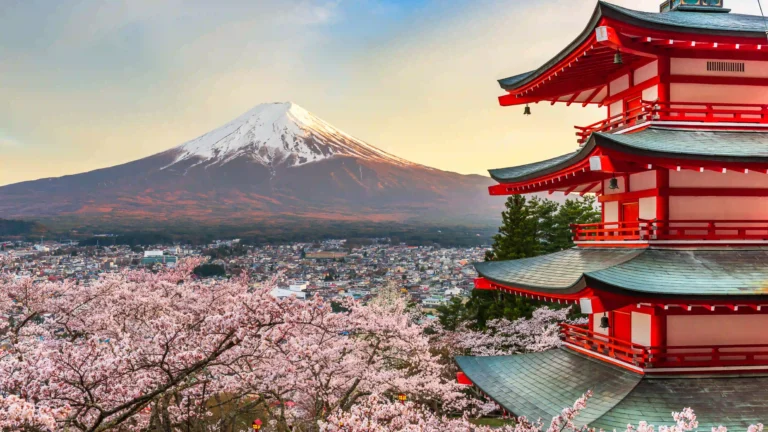
The Yasaka Pagoda is one of those views you’ve seen a thousand times before you arrive. Still hits differently in person — especially in late afternoon light looking up from Ninenzaka. Go figure.
Maruyama Park is five minutes away and useful for exactly one thing: sitting down, getting a coffee, and reminding yourself you’re on holiday and not a sightseeing machine.
Gion at Night: Look, Don’t Shoot
Gion is beautiful after dark — paper lanterns, wooden machiya townhouses, the faint sound of shamisen drifting from somewhere you can’t quite locate. Walk Hanamikoji and the lanes around it.
The side streets off Hanamikoji are private residential alleys. Actual people live there. Some have had to put up signs asking tourists to stop photographing their front doors. Don’t be the reason more signs go up. Walk through, appreciate it, keep moving.
End the day at Pontocho — a narrow corridor running parallel to the Kamo River, packed with restaurants at every price point. Pick somewhere that looks busy, walk in, figure it out from there. That’s the whole strategy and it works every time.
Day 2: Arashiyama & the North
Completely different feel from Day 1. More space, more green, fewer crowds in the morning. Kyoto’s western and northern districts have some of the city’s best temples and the kind of scenery that makes you forget there’s a city around you at all.
The Bamboo Grove: Here’s What Nobody Says
The bamboo grove is striking. It’s also much smaller than any photo makes it look.
Those images of an endless green tunnel stretching into the distance? Long lenses and tight framing. The actual grove takes about five minutes to walk end to end. I’m not saying don’t go — you absolutely should. I’m saying go in with accurate expectations and go before 8am, because the experience at 7am versus 10am is like visiting two different places.
At 7am I had it nearly to myself. The sound alone is something photos can’t touch — thousands of bamboo stalks shifting in the wind, this low eerie rustling that fills the whole space. By 10am it was a slow-moving human queue and everyone was holding their phone above their head hoping for the shot.
Tenryu-ji: Actually Stop Here
Right next to the grove, and most people rush past it. Don’t. Tenryu-ji is a UNESCO World Heritage temple with a Zen garden that’s been tended for over 600 years. The design uses the Arashiyama mountains as a backdrop — a technique called shakkei (borrowed scenery) — so the garden and the landscape become one composition. It’s one of those things that takes about ten seconds to understand and doesn’t leave you.
500–800 yen depending on which areas you access. Budget 45 minutes.
Iwatayama Monkey Park: The View Nobody Talks About
Twenty minutes uphill from Arashiyama (moderately steep, worth it). Around 120 wild Japanese macaques live here semi-free. Entry is 550 yen. The monkeys are interesting. The view from the top is better — a wide panorama over Kyoto that makes you realise just how far the city actually stretches.
Don’t try to touch the monkeys. Don’t feed them outside the designated station. If one stares you down, don’t stare back. You’ll be fine.
Kinkaku-ji & Ryoan-ji: Afternoon North Loop
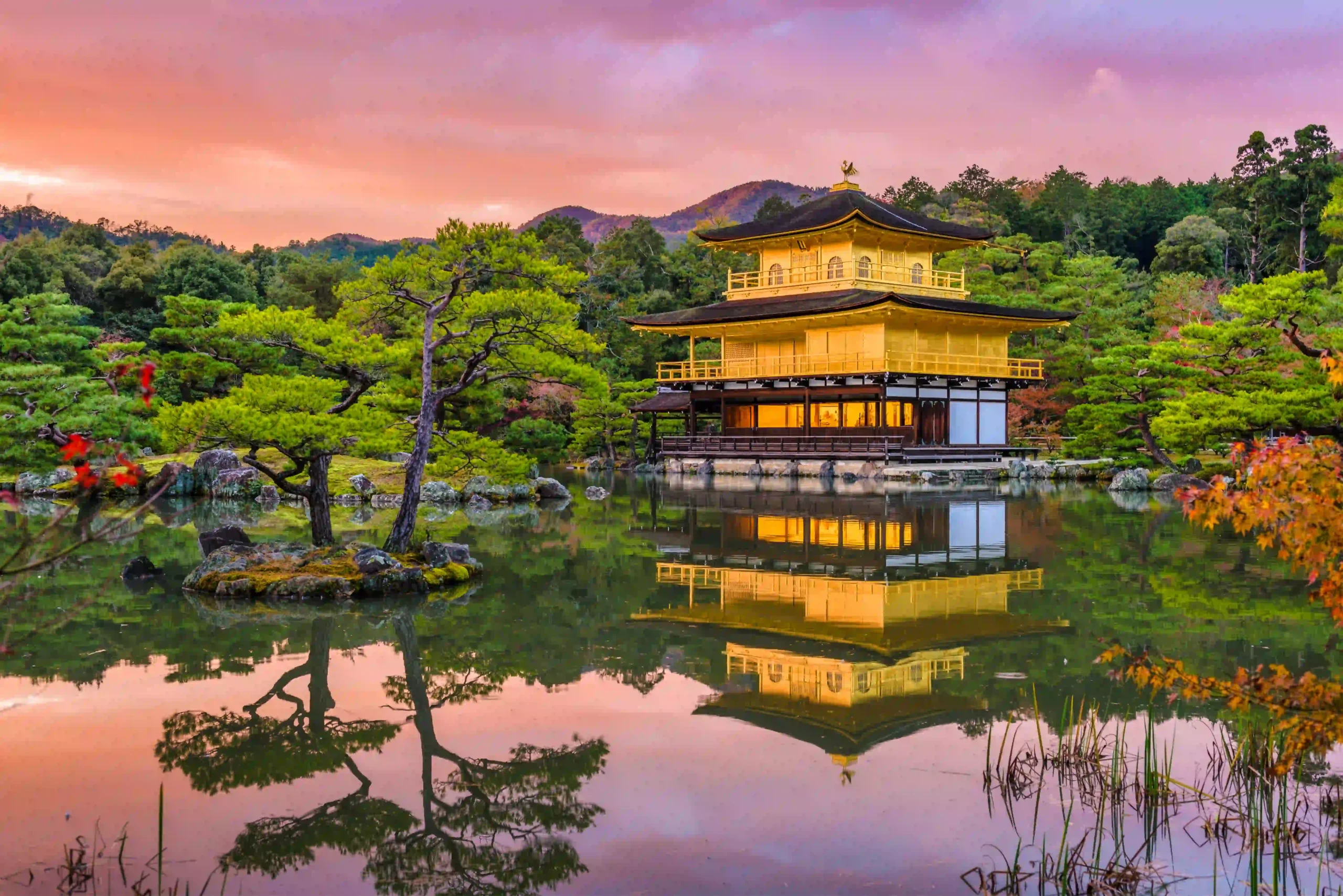
Kinkaku-ji needs no introduction. Gold-leafed pavilion, still pond, exactly as photogenic as advertised. Also busy at every hour of the day. Go anyway — it earns it, and there’s something satisfying about finally seeing in person something you’ve been looking at in photos your whole life.
Ryoan-ji is the one that actually stays with you. The rock garden — 15 stones arranged in raked gravel in a configuration nobody has ever fully explained — is confounding in the best way. It’s not beautiful exactly. It’s more interesting than that. You’ll stand there trying to figure it out and leave still not sure you did. That seems to be the point.
When Is the Best Time to Visit Kyoto?
Spring (late March to April) for the cherry blossoms, autumn (mid-October to November) for the foliage. Both are worth it and both are crowded — prices go up, accommodation books out, and popular spots have queues. Plan around it if the colours matter to you, but go in with your eyes open.
For a calmer trip: early May or October before the foliage kicks in. July and August are hot and humid in a way that makes walking between temples less enjoyable than it sounds. January and February are cold and quiet — you’ll have places to yourself that are impossible at any other time of year.
Golden Week (late April/early May), Silver Week (September), and New Year’s are all national holiday periods. Kyoto gets busy in a way that changes the whole character of the place. Book accommodation months in advance if you’re travelling then.
Day 3: Fushimi Inari & Central Kyoto
Fushimi Inari: Keep Walking
The famous thousand torii gates. The bottom section is always crowded — it’s one of the most visited sights in Japan. The trick is simple: keep going.
Most visitors do the first 20–30 minutes and turn back. If you push up toward the summit (about two hours total), the crowds drop off fast. By the halfway point you’re often walking alone, moving through tunnels of vermillion gates with nothing but birdsong around you. That version of Fushimi Inari barely gets photographed because most people don’t see it.
Start early — 7am if you can manage it. The light through the gates in the morning is different from any other time of day.
Nishiki Market: Eat First, Plan Later
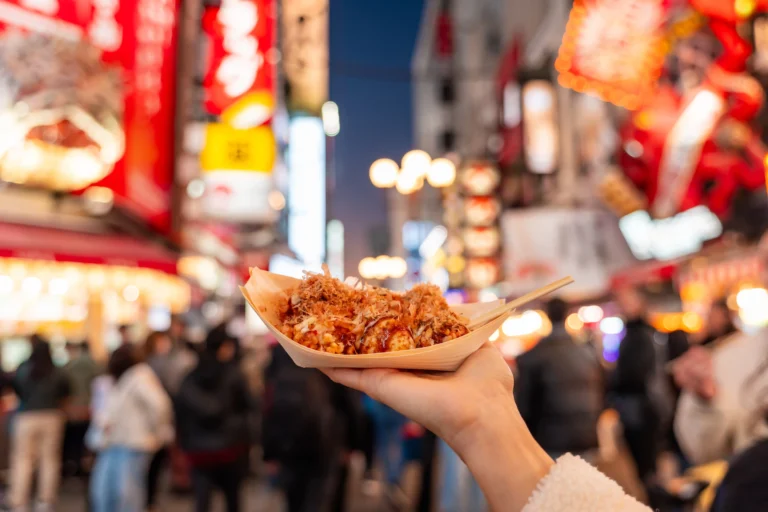
A narrow five-block covered arcade in central Kyoto they call “Kyoto’s Kitchen.” Part food market, part local institution. Pickled vegetables in colours that seem improbable, skewered octopus balls, fresh mochi made in front of you, tofu doughnuts that sound wrong but aren’t.
Go mid-morning. Eat your way through it without a plan. That’s the correct approach.
Nijo Castle or Kyoto Imperial Palace: Pick One
Nijo Castle (¥1,300) is one of the best-preserved examples of feudal Japanese architecture still standing. The Edo-period painted screens inside are extraordinary, and the “nightingale floors” — engineered to squeak underfoot so no one could approach the shogun undetected — are the kind of detail that makes old history feel suddenly vivid.
Kyoto Imperial Palace is free but requires booking a guided tour in advance. The grounds are quietly impressive, and there’s something that’s hard to put into words about standing in a place where Japanese emperors lived for over a thousand years.
Short on time? Nijo Castle.
How Do You Get Around Kyoto Without Getting Lost?
Easier than most people expect. Here’s what actually works:
Buy a bus day pass (¥1,100). Unlimited rides on Kyoto City buses. I covered Higashiyama, Gion, and Fushimi Inari in a single day on this pass — buses run frequently, stop right at the temple entrances, and are more practical than the subway for most of the routes tourists actually use. Buy it on the bus or at Kyoto Station.
Use Google Maps. It handles the Kyoto bus network accurately and tells you which routes to take in real time. Download offline maps before you go.
Walk more than you think you need to. Higashiyama is very walkable, and some of the best parts of Kyoto show up when you’re moving between sights rather than at them. Leave gaps in the schedule.
For Arashiyama specifically: the JR San-in Line from Kyoto Station to Saga-Arashiyama takes about 15 minutes. Covered by the JR Pass if you have one.
What Does 3 Days in Kyoto Actually Cost?
Real numbers, based on 2026 pricing.
Entrance fees:
- Kiyomizu-dera: ¥500 (~$3.50)
- Kinkaku-ji: ¥500 (~$3.50)
- Nijo Castle: ¥1,300 (~$9)
- Tenryu-ji: ¥500–800 (~$3.50–5.50)
- Iwatayama Monkey Park: ¥550 (~$4)
- Fushimi Inari: Free
- Nishiki Market: Free
Transport:
- Bus Day Pass: ¥1,100/day (~$7.50)
- JR Kyoto → Arashiyama: ~¥250 each way
Food (per day):
- Budget — convenience stores, market snacks, ramen: ¥2,000–3,000 (~$14–21)
- Mid-range — sit-down meals, izakaya: ¥4,000–6,000 (~$28–42)
Three days mid-range, excluding accommodation: roughly ¥25,000–35,000 (~$175–245) per person. For what you get, that’s a reasonable deal.
For finding the right place to stay at the right price, this accommodation guide breaks it down by budget and style.
Where Should You Stay in Kyoto?
Two options worth knowing about:
Around Kyoto Station (Shimogyo district) is the practical choice. Good transport links to everywhere in Japan, easy access to Fushimi Inari, options at every price point. It’s not the most atmospheric part of the city — but you’ll be out most of the time anyway.
Kawaramachi / Downtown is better if evenings matter to you. Walking distance to Gion, Pontocho, and Nishiki. More atmosphere, a bit noisier, slightly more expensive. Worth it if eating and wandering is part of the plan.
Either way: book early. Kyoto accommodation fills up, especially in spring and autumn. For the full logistics of planning a Japan trip, the Japan travel guide covers transport passes, budgeting, and everything in between.
Three Things. That’s It.
I could summarise twenty things but these are the three that actually determine how the trip goes:
Go early every day. Before 8am whenever possible. The experience is different. Not slightly — categorically.
Get the bus day pass. ¥1,100. Saves money, saves time, removes the guesswork.
Don’t try to finish Kyoto. You won’t. Three days is enough for a proper experience, not enough to cover the whole city. Decide what matters most, go deep on those things, and treat the rest as a reason to come back. There’s always a reason to come back.
Planning the wider Japan trip? Start with the Japan travel guide. Doing Osaka after Kyoto — or before — the Osaka guide is worth reading. Adding Tokyo? Here.
If you’ve been to Kyoto, I’d actually like to know what surprised you — drop it in the comments. And if this was useful, bookmark it or send it to someone who has Japan on the list.