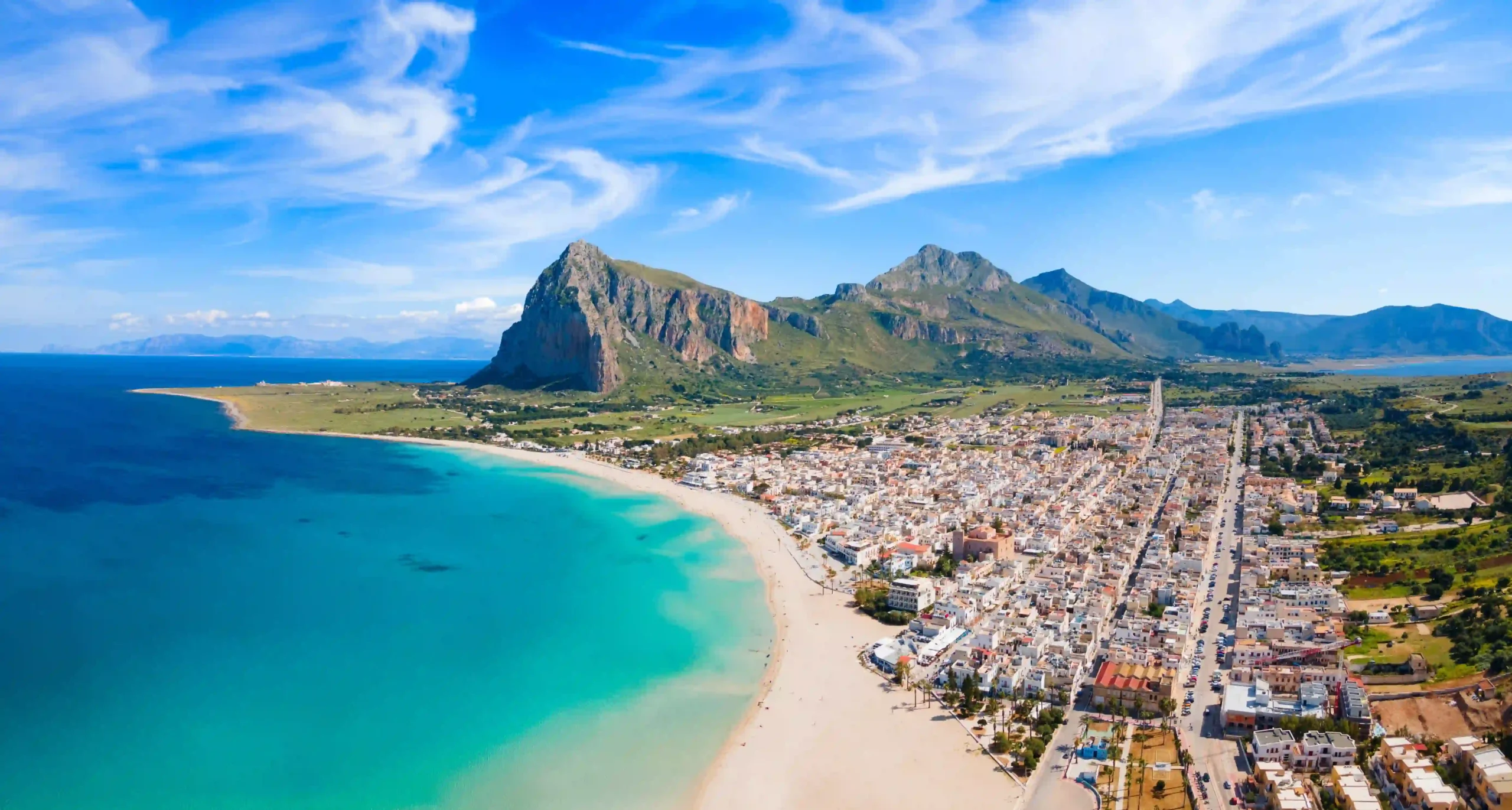
Sicily Travel Guide: What to See, Where to Stay, and How Much It’ll Cost You
Affiliate note: This article may contain affiliate links, which means I may earn a small commission if you book or buy through them – at no extra cost to you. I only recommend things that make sense for this kind of trip.
Everyone thinks they know Sicily before they get there.
They picture the Godfather. Maybe the Sopranos. Maybe just a vague image of sun-bleached coastline and someone’s grandmother making pasta. And look — none of that is wrong, exactly. But it’s also nowhere near the full picture.
Sicily is the largest island in the Mediterranean. It’s been colonised by the Greeks, the Arabs, the Normans, the Spanish, and the French — and every single one of them left something behind. You can taste it in the food, read it in the architecture, and feel it in the way the island operates on its own schedule, according to its own rules.
This is not mainland Italy. The vibe is different, the food is different, and honestly, the people are different too — more open, a bit more chaotic, and proud of where they’re from.
This guide covers where to go, what it’ll cost you, when to show up, and how to get around. Whether you’ve got a week or two, you’ll leave with far more than you came with.
What Makes Sicily Different From the Rest of Italy
There’s a quote from Goethe who a local Sicilian writer puts right at the top of his guide, and it earns its place: “Italy without Sicily leaves no image in the spirit. It is in Sicily that we find the key to everything.”
It sounds like hype. It isn’t.
The reason Sicily feels distinct is precisely because of its history. Palermo was once considered the largest and most beautiful city in the world — by the Arabs who called it “Palermo Felicissima,” Palermo the happiest. The temples at Agrigento are better preserved than most of what you’ll find in Greece. Syracuse was one of the most powerful cities in the ancient world. The island carries all of this lightly, casually, almost without seeming to notice.
And then the food. Arancini. Cannoli. Caponata. Street food cultures that predate the concept of “street food” by about a thousand years.
Where Christopher Nolan’s The Odyssey Was Filmed
There’s another reason Sicily is having a moment right now. Christopher Nolan shot a significant portion of his 2026 epic The Odyssey — starring Matt Damon as Odysseus, alongside Tom Holland, Zendaya, Anne Hathaway, and Charlize Theron — on the island.
Favignana, a small island off western Sicily traditionally linked to the part of Homer’s poem where Odysseus encounters the Cyclops, served as one of the primary shooting locations. Matt Damon and Tom Holland filmed on its rocky coast in spring 2025. Nolan, his crew, and a cast of around 500 practically took over the main town of Favignana and spent several months filming scenes there and around the island’s coves.
The Aeolian Islands, off Sicily’s north coast, also featured in the film — Nolan and his team shot scenes on Lipari, Basiluzzo, and Vulcano, whose smoking sulphurous crater and bubbling mud baths make for a striking landscape.
The film opens on July 17, 2026. If you want to visit the actual locations before they become the most Googled places in Italy, now’s the time. If you’ve already been to Pylos in Greece — another major filming location with its own incredible story — you’ll recognise the pattern: Nolan picks places that are already extraordinary.
Where Should You Actually Go in Sicily?
Sicily is big. Road-trip-big. You won’t see all of it on one trip, and you shouldn’t try. Here’s an honest breakdown of the main stops.
Palermo — The Messy, Brilliant Capital
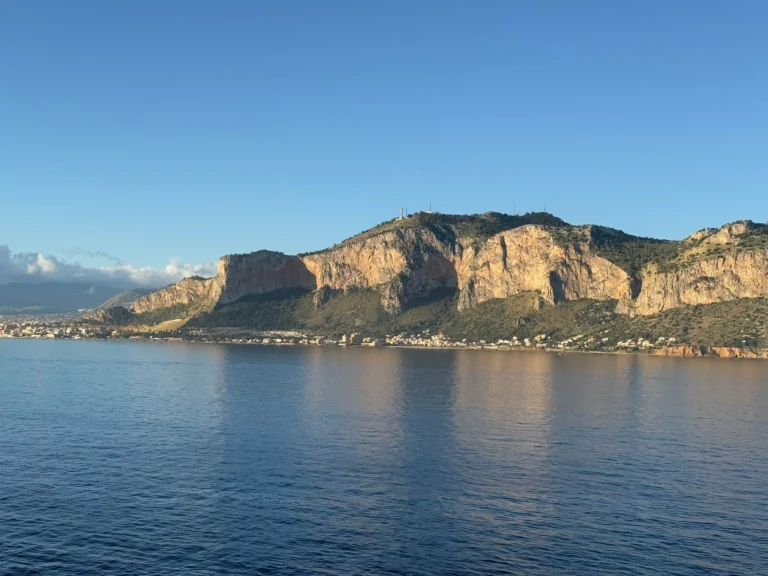
Palermo is the kind of city that takes a day to click. The first morning can feel overwhelming — traffic noise, market chaos, facades that are beautiful and crumbling in equal measure. By day two, you’re hooked.
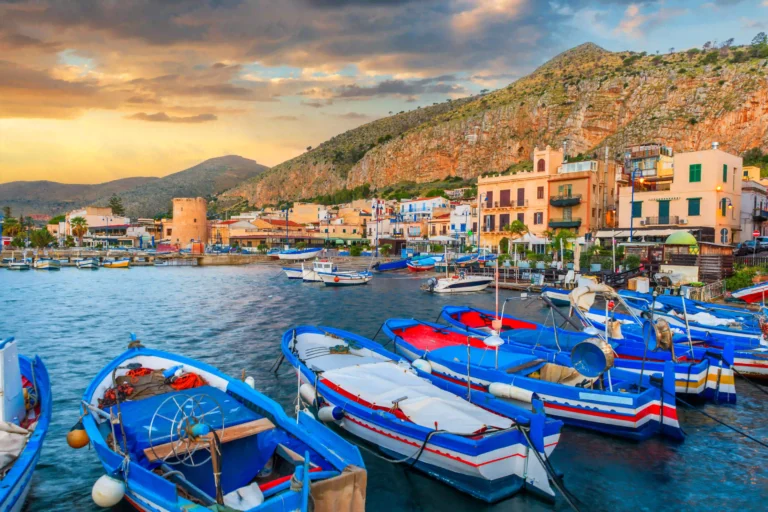
The street food is legitimately some of the best eating in Italy. Ballaro market is where you want to be for hot chickpea fritters (panelle), crispy cannoli made in front of you, and the notorious spleen sandwich (pani ca meusa) — one of those things that sounds wrong and tastes completely right. You will arrive in Palermo with mixed expectations and left wanting to extend the trip by a week.
After eating, the churches will slow you down in the best possible way — the Palatine Chapel inside the Norman Palace has Byzantine mosaics so detailed they look like pixels. The Arab-Norman architecture elsewhere in the city is unlike anything in Europe.
Budget for €80–140 / $88–154 per night for a solid three-star in the historic centre. Eat at the markets and you’ll spend almost nothing on food.
Taormina — Worth It, But Go In With Eyes Open
Taormina has earned its reputation. Clifftop position, views over the sea to Mount Etna, a perfectly preserved Greek amphitheatre where they still stage performances in summer. It’s beautiful.
It’s also extremely expensive and extremely busy in July and August. Beachfront hotels in Taormina charge €200–400 nightly in summer 2026, with restaurant mains averaging €18–35 and even simple cafes requesting €4–6 for an espresso.
Go in May or October instead. The views are the same, the crowds aren’t, and the prices drop by 40%.
Parking in Taormina is a genuine headache — the town was built long before anyone owned a car, and it shows. Your best bet is the Lumbi parking garage just outside the main centre: around $5 / €4.50 for two full days, shuttle bus included. Sort that out before you start driving up the hill.
Agrigento and the Valley of the Temples
This one surprises people. The Valley of the Temples is a UNESCO World Heritage Site with seven Greek temples dating back to the fifth century BCE — and several of them are better preserved than anything in Athens.
The Temple of Concordia is the one that stops you mid-step. It’s almost completely intact, columns and all, because it was converted into a church in the sixth century and never demolished. Go late afternoon when the light comes in sideways across the stone.
Entrance to the Valley of the Temples runs around €15 / $16.50 for adults. Combined tickets with the on-site archaeological museum are available and worth it.
The Coast and Islands
Cefalù, on the northern coast, is a fishing town that’s become a popular base — charming Norman cathedral, decent beaches, walkable old town. Hotels in Cefalù run €120–220 nightly in peak season, with restaurant mains at €15–28, making it more accessible than Taormina while still in the tourist orbit.
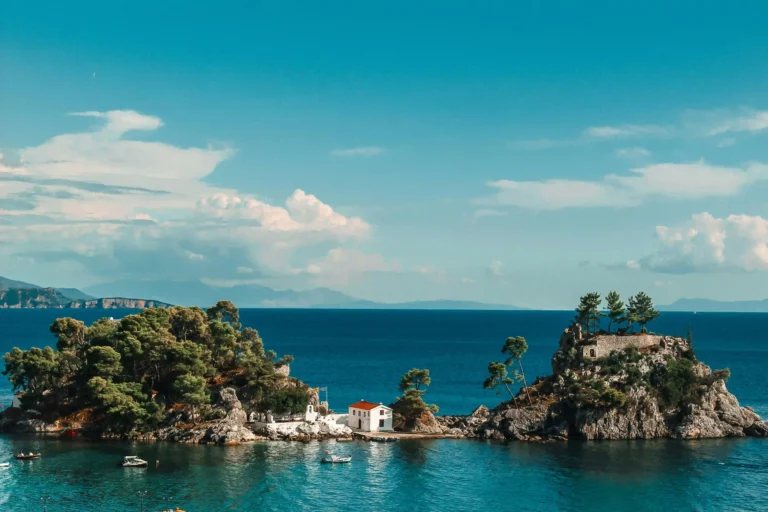
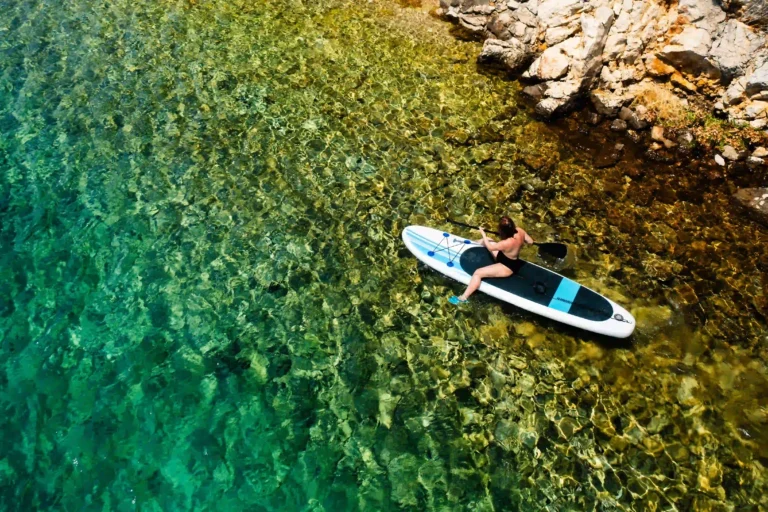
Then there’s Favignana and the Aeolian Islands — both now carrying Nolan’s stamp, but worth visiting purely on their own terms. The Aeolians are volcanic, dramatic, and the ferry journey from Milazzo takes you past Stromboli’s active crater. Favignana has water so clear it looks retouched.
How Much Does a Trip to Sicily Cost?
Sicily is cheaper than mainland Italian tourist cities like Florence or Venice, but it’s not cheap-cheap. Where you stay and when you go will define your budget more than anything else.
What €50/Day vs €120/Day Actually Looks Like
Budget travellers can manage on about €50/day, while mid-range travellers average around €120/day. Here’s what that actually means in practice:
Budget (€50 / ~$55 per day): Hostel dormitory bed in Palermo (€25–35), market meals twice a day, public transport between major cities. Hostel dorms in Palermo’s Via Roma and Ballaro market district run €25–35 nightly during shoulder season and €40–55 during July–August peaks.
Mid-Range (€120 / ~$132 per day): Three-star hotel in the historic centre, sit-down lunch and dinner at local trattorias, car rental shared between two people. Palermo’s historic centre offers solid three-star hotels at €80–140 nightly, with authentic trattorias serving pasta mains at €10–15.
For transport, the Palermo–Catania fast train costs around €22 for a 2.5-hour journey. Car rental starts at €35–45 daily for economy vehicles, with fuel running €1.80–2.00 per liter and a full weekly Sicily circuit consuming roughly €80–120 in petrol. If you’re splitting a car with someone, it’s often cheaper than trains and far more flexible.
My honest tip: base yourself in Palermo or Catania (working cities, real prices) and day-trip to the expensive spots like Taormina. You see everything, you pay half as much. More on stretching your money is in the budget travel tips section.
When Is the Best Time to Visit Sicily?
The honest answer is: not July and August, unless you specifically want the beach scene and don’t mind the prices or the crowds.
Shoulder Season: The Honest Recommendation
The best time to visit Sicily is during the shoulder seasons — April to May and September to October — when temperatures are warm and pleasant, prices are moderate with better deals on accommodation and flights, and the island is manageable to navigate.
April and May specifically are excellent: wildflowers, comfortable walking weather, and the Valley of the Temples in the green version of itself. October gives you harvest season, cooler evenings, and Sicilians who aren’t exhausted from months of tourists.
Summer If You Must
June is actually a reasonable compromise — the weather’s warm, the chaos of peak summer hasn’t fully arrived, and you can still find accommodation at sane prices if you book early. The best deals on flights for Sicilian airports usually appear in January, and January also offers the lowest hotel rates of the year. If you’re flexible on dates, a winter trip is a different kind of Sicily — quieter, cheaper, and surprisingly atmospheric.
Where Should You Stay in Sicily?
Best Bases By Trip Type
For first-timers: Palermo. It’s the most complex, the most rewarding, and the best value. Give it at least three nights.
For history: Base yourself between Agrigento and Syracuse. Both have incredible sites within 30–40 minutes.
For beaches and islands: Cefalù as a mainland base, then day-trips or an overnight to Favignana or the Aeolians. Or skip the base entirely and go straight to the islands.
For the Nolan locations: Favignana (ferry from Trapani, roughly €13 / $14 return) and the Aeolian Islands (ferry from Milazzo, €25–35 / $27–38 depending on the island). Both are worth at least an overnight.
The accommodation guide has more detail on booking strategies, but the core rule holds here as everywhere: stay in the historic centre if you can, even if it costs a little more. You lose nothing on transport and gain the whole neighbourhood.
How Do You Get Around Sicily?
Car vs. Public Transport
You need a car. That’s the short version.
The trains between Palermo, Catania, and Messina are perfectly functional. But the Valley of the Temples, the Turkish Steps (Scala dei Turchi) between Agrigento and Trapani, most of the smaller coastal towns — public transport between them is slow, infrequent, or both.
Renting at Palermo or Catania airport and dropping at the other end is the cleanest approach for a circuit. Compare options through a flight and transport comparison tool before you book — prices can vary significantly between providers, and booking in advance matters more in summer.
On the roads: Sicilian driving is fast, confident, and occasionally chaotic. The highways are fine. The narrow town-centre streets are where things get interesting. Allow extra time for parking everywhere, and remember that most historic centres have restricted traffic zones (ZTL) that will generate a fine if you drive into them without permission. Your rental company should give you a map of these.
The Practical Bit: What to Know Before You Land
A few things that would have saved me time on my first trip around the island:
Eat at the markets. Ballaro and Vucciria in Palermo are not tourist traps — they’re where Palermitans actually eat. A full meal at a market stall costs €5–8 / $5.50–9 and is usually better than a €25 restaurant down the street.
Book Taormina accommodation early. Or don’t stay there at all and day-trip from Catania instead (45 minutes by train). That’s my honest preference.
Check the ferry schedules in advance. Hydrofoils to Favignana and the Aeolians run regularly in summer but can sell out on weekends. Book a day ahead if you can.
The Turkish Steps are worth the detour. If you’re driving between Agrigento and Trapani, the Scala dei Turchi — white limestone cliffs carved into natural steps that lead down to the sea — is the kind of thing you pull over for and end up staying an hour. It’s free. Don’t miss it.
The Bottom Line on Sicily
Sicily rewards travellers who slow down. The ones who drive the scenic route, eat where there are no menus in English, take the ferry to an island that wasn’t part of the plan. That’s when the island makes sense.
It’s a lot to fit into one trip. Most people who go once end up going back. That’s probably the best thing I can tell you.
Planning a trip to Europe and still figuring out your route? Browse the Europe travel guides for more destination breakdowns. Already have Sicily sorted and wondering what’s next? The travel itineraries section has you covered.
Have you been to Sicily, or are you planning a trip? Drop your questions in the comments — happy to help you figure out the specifics.