Pylos Itinerary: Walk the Same Shores Where Nolan Filmed The Odyssey
Affiliate note: This article may contain affiliate links, which means I may earn a small commission if you book or buy through them – at no extra cost to you. I only recommend things that make sense for this kind of trip.
There are two things I really love in life: movies and travel. And the reason is probably the same for both — they take you somewhere you’d never reach in your regular Tuesday.
I’m a big Christopher Nolan fan. When I heard he was adapting Homer’s The Odyssey with a $250 million budget and a cast that reads like a roll call of everyone you’d want at dinner — Matt Damon, Zendaya, Tom Holland, Cate Blanchett, Anne Hathaway — I was already sold. But then I found out where he actually filmed it. And that changed things.
A stretch of southwestern Greece called Messenia. Specifically: a small harbour town called Pylos, a cave above one of Europe’s most beautiful beaches, and a medieval castle standing at the edge of the sea. All of it real. All of it visitable.
The Odyssey opens in cinemas on July 17, 2026. This is your guide to getting there first — before the crowds follow.
Why Pylos Deserves More Than a Day Trip
The Town Most Tourists Drive Past
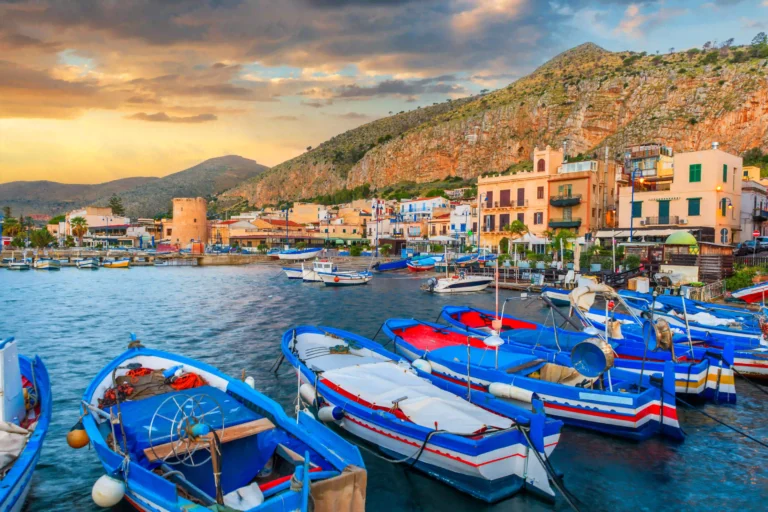
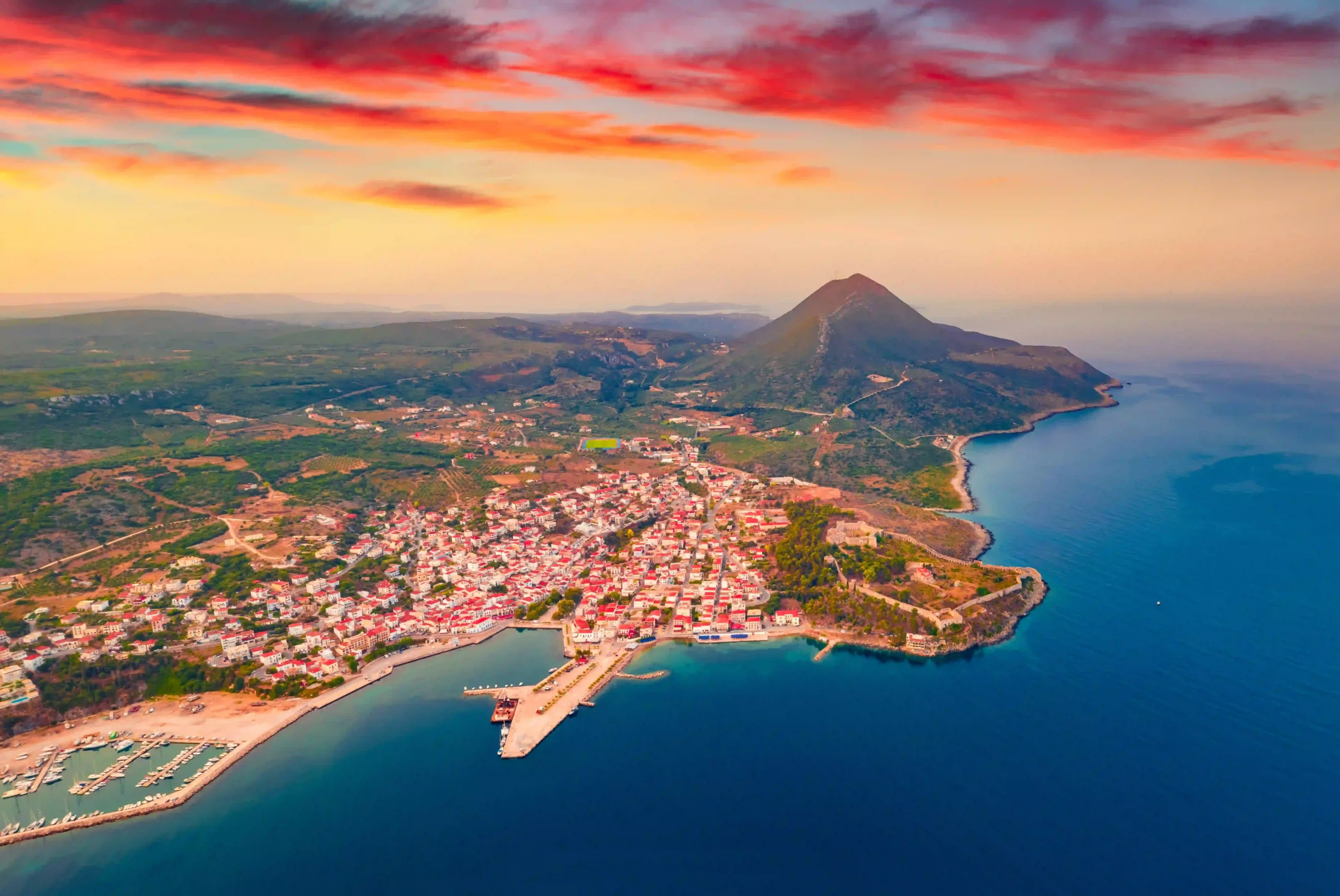
Pylos sits on the southwestern tip of the Peloponnese, tucked behind a natural bay so protected it barely has waves. It’s the kind of place where fishing boats still unload in the morning, where the main square fills up slowly in the evening, and where nobody seems to be in a particular hurry.
Most people blow through on the way to somewhere else. That’s their loss.
The town is built on two hills with views over Navarino Bay — the same bay where a decisive naval battle in 1827 helped secure Greek independence. There’s a Venetian castle on the headland. There are tavernas along the seafront. The whole place has a quiet self-assurance that doesn’t need your attention to feel good about itself.
What Nolan Saw in Messenia
Filming for The Odyssey ran from February to August 2025 across six countries — Morocco, Greece, Italy, Scotland, Iceland, and Western Sahara. The Greek portion took place across Messenia from March 10–21, 2025.
The specific locations around Pylos used in the film:
- Nestor’s Cave above Voidokilia Beach — where the Cyclops Polyphemus scene was shot
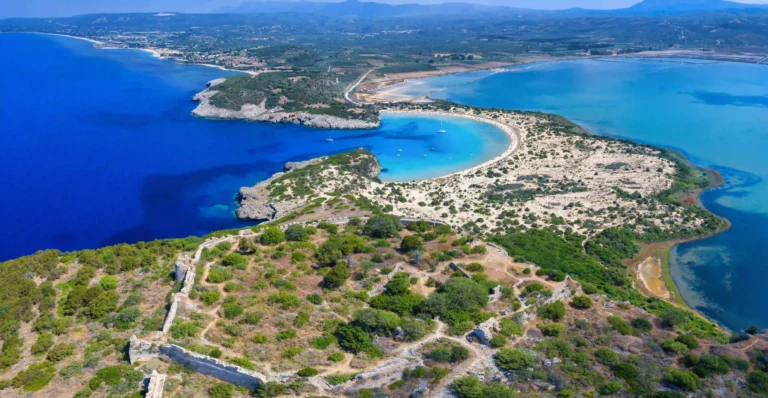
- Voidokilia Beach itself — the omega-shaped bay just north of town
- Methoni Castle — a Venetian fortress surrounded by the sea, 12km south of Pylos
- Pylos town — used as background for coastal scenes
- Nestor’s Palace — the 3,400-year-old Mycenaean site that Homer wrote Telemachus visiting
So yes. You can walk the same ground. Stand in Nestor’s Cave and try to imagine a film crew setting up IMAX cameras. Swim at the same beach Nolan chose to represent a mythic Greek coastline. It’s a strange, satisfying feeling — the kind that only travel and movies can produce together.
How Do You Actually Get to Pylos?
Flying In
The closest airport is Kalamata (KLX), about 45 minutes from Pylos by car. Aegean Airlines runs year-round flights from Athens for around €60–120 / $66–132 return, and in summer, direct connections open up from major European cities.
From further afield, Athens International (ATH) is your gateway. You can fly into Athens and then either catch a domestic connection to Kalamata, or factor in the drive.
Driving from Athens
It’s a 3-hour drive through the Peloponnese mountains — and honestly, it’s one of the better drives in Greece. The road takes you through Sparta and past the Taygetos mountain range before dropping down toward the coast. Factor in a coffee stop somewhere and you won’t regret doing it by car.
Getting Around Once You’re There
This is the key point: you need a car. Voidokilia Beach, Nestor’s Palace, and Methoni Castle are all within 20–30 minutes of Pylos town, but public transport between them is sparse. Renting a car at Kalamata Airport is the cleanest option — compare prices through a reliable flights and transport comparison before you go, since rates vary significantly by season.
Where to Stay in Pylos (and What It’ll Cost You)
My honest recommendation: stay in Pylos town itself. The walkability, the morning harbour, the evening square — you lose all of that if you’re based 20 minutes away at a resort. Check out the full accommodation guide if you want to compare options across the region, but here’s the practical breakdown.
Budget (€50–80 / $55–88 per night)
Pylos has a handful of family-run guesthouses and small hotels in the town centre. They’re clean, well-located, and the kind of place where the owner gives you restaurant recommendations that don’t appear on any list. Expect basic rooms, good wifi, and breakfast either included or available nearby.
Mid-Range Sweet Spot (€120–160 / $132–176)
To Kastro is the standout option in this bracket — rated 9.4, rooms overlooking Pylos Bay, breakfast with local honey and olives, and staff who actually know the area. If you book nothing else in advance, book this.
Artina Hotel is another solid choice at a similar price point, with a rooftop terrace and traditional stone architecture. A reliable, honest hotel.
If You Want the Full Odyssey Experience
The film’s cast reportedly stayed at Costa Navarino, a luxury resort complex about 30 minutes north of Pylos. It’s focused on eco-tourism, gorgeous, and properly expensive — but if you’re splashing out, it’s hard to argue with the setting. Expect upwards of €250 / $275+ per night at the main properties.
Your 3-Day Pylos Itinerary
Day 1 — Nestor’s Palace and Nestor’s Cave (The Cyclops Scene)
Start early. This is the rule that applies to every famous site, everywhere, but especially here in summer when the heat arrives by 10am.
Morning: Head to Nestor’s Palace, 12km north of town. This Bronze Age complex dates to 1450 BCE and is the site Homer described when Telemachus visited King Nestor in search of news about his father. The throne room floor plan is intact. The on-site museum displays Linear B tablets — the oldest deciphered writing in Europe. Entrance is €8 / $8.80 and covers both the palace and museum. Allow two to three hours.
Afternoon: From there, it’s a short drive to Voidokilia Beach. The walk up to Nestor’s Cave is about 20 minutes from the beach car park — steep, rocky, worth it. This is where Nolan shot the Cyclops Polyphemus sequence. Stand at the cave entrance. Look out over the omega-shaped bay below. Try to picture a one-eyed giant in there. After that, head down and swim. The water is extremely clear and the beach rarely gets too crowded before July.
Evening: Dinner back in Pylos town. Walk the harbour before eating.
Day 2 — Voidokilia Beach (Properly) and Niokastro Castle
Morning: Go back to Voidokilia, but earlier this time. Aim for 8am if you can manage it. The same beach that was shoulder-to-shoulder by midday is almost empty at that hour, the light is different, and you’ll get the omega shape to yourself for photographs. This is the single best travel move you can make in Pylos.
The beach itself is a nature reserve — no sunbed rentals, no beach bars. Bring water, a towel, and leave early enough to miss the rush.
Afternoon: Niokastro Castle (the New Castle of Navarino) is a 5-minute drive from town and worth your time. The Venetian-era walls wrap around a headland above the bay, and the views from the top explain exactly why every empire that came through here wanted to control this port. Entry is around €4 / $4.40.
Evening: This is the night for Sto Steno (Στο Στενό — “In the Alley”). It’s tucked in a narrow side street in the town centre, rated 4.8 out of 5 across 400+ reviews, and it earns that. The food is homemade Messenian cooking — moussaka, stuffed peppers, dolmades made with local ingredients, roast pork the way someone’s grandmother would make it. No pretension, no performance. Just very good food at honest prices. One of those places that makes you feel like a local even on your first visit.
Day 3 — Methoni Castle and the Drive Out
Morning: Methoni Castle is about 12km south of Pylos, and it’s the most dramatic thing in the region. It’s a Venetian fortress that sits at the end of a narrow promontory, connected to land by a bridge — three sides surrounded by the sea. This is one of the key filming locations for The Odyssey. The moat, the towers, the views out over open water — it all tracks with the kind of mythic atmosphere Nolan was after. Entry is free. Arrive before 10am.
Lunchtime: There are a couple of simple places near Methoni to eat before you head out. Nothing fancy — just good Greek lunch before the drive.
Afternoon: If you’re heading back to Athens or Kalamata Airport, the drive north is straightforward. If you have a bit of flexibility, the coastal road back through the Peloponnese is worth taking slowly. Stop when something looks interesting.
What Does a Trip to Pylos Actually Cost?
Numbers that are easy to budget around:
| Category | Budget | Mid-Range | Comfort |
|---|---|---|---|
| Accommodation (per night) | €50–80 / $55–88 | €120–160 / $132–176 | €250+ / $275+ |
| Food (per day) | €20–30 / $22–33 | €40–60 / $44–66 | €80+ / $88+ |
| Car rental (per day) | €35–50 / $38–55 | €55–80 / $60–88 | €90+ / $99+ |
| Site entries (per day) | €10–15 / $11–17 | €10–15 / $11–17 | €10–15 / $11–17 |
| Daily total (est.) | €115–175 / $127–193 | €225–315 / $248–346 | €430+ / $473+ |
Kalamata Airport transfers run €35–45 / $38–50 by taxi. Flights from Athens to Kalamata are €60–120 / $66–132 return. Budget travel strategies that apply elsewhere in Greece apply equally here — shoulder season (May–June, September–October) cuts accommodation costs significantly and the weather stays excellent.
What Should You Eat in Pylos?
Harbor Tavernas and Fresh Catch
The restaurants along the Pylos waterfront serve whatever came in that morning. The rule is simple: if it’s on the daily specials board, order it. If it’s not on the board, ask what came in. The seafood here is very good — octopus, sea bream, local shrimp — and portions are generous.
Lunch along the harbour is the move. Dinner, go find something smaller and away from the waterfront.
Sto Steno and Café 1937
Sto Steno has already earned its place in Day 2. But if you need more convincing: 414 reviews on Restaurant Guru, rated 4.8/5, and the kind of consistent quality that only comes from a kitchen that doesn’t cut corners. Homemade, local, honest. Go.
Café 1937 is a different experience — a coffee spot with character, named for the year it opened (or at least the year the building wanted you to think it opened). Good for morning coffee before a long day of driving, or for a sit-down that isn’t a full meal. The kind of place that exists because some towns just know how to do a café properly.
Is Pylos Worth It If You Haven’t Seen The Odyssey?
Yes. Completely.
The film is a compelling reason to visit right now, before July 17 turns Voidokilia into the Greek equivalent of every other viral travel destination. But Pylos doesn’t need a Nolan film to justify the trip.
Nestor’s Palace is one of the best-preserved Bronze Age sites in all of Europe. Voidokilia Beach is regularly listed among Europe’s most beautiful beaches — and unlike most places on those lists, it’s not overrun. Methoni Castle is spectacular and costs nothing to enter. The town itself is the kind of authentic Greek coastal experience that’s increasingly hard to find.
Three days is enough to see it properly without rushing. Five days gives you room to slow down and actually absorb it.
Go before July. Or go in September, when the summer crowds thin out and the sea is still warm. Either way, go.
Quick Trip Planner
- Best time to visit: May–June or September–October
- How long you need: 3 days minimum, 5 days ideal
- Getting there: Fly into Kalamata (KLX), 45 min drive to Pylos
- Car needed: Yes — non-negotiable for reaching the sites
- Must-see: Voidokilia Beach (before 8am), Nestor’s Cave, Methoni Castle
- Best meal: Sto Steno — narrow alley, big plates, no disappointment
- Film connection: The Odyssey opens July 17, 2026. Filmed here March 2025.
Planning a broader Greece trip itinerary? Pylos fits perfectly into a Peloponnese road trip — pair it with Nafplio and Sparta for a proper week of history and coastline.
Have you been to Pylos? Or planning to visit after The Odyssey opens? Drop a comment below — I’d love to hear what you’re thinking.