Snorkeling in Ustica: Italy’s First Marine Reserve Is Hiding in Plain Sight
Affiliate note: This article may contain affiliate links, which means I may earn a small commission if you book or buy through them – at no extra cost to you. I only recommend things that make sense for this kind of trip.
In 1986, the fishermen of a tiny volcanic island 36 miles off Palermo asked the Italian government to protect their own waters. The result became Italy’s first marine reserve — and four decades later, it’s still one of the least crowded great snorkeling destinations in the Mediterranean. Ustica isn’t a household name the way Capri or the Aeolian Islands are, which is exactly why the groupers haven’t learned to be afraid of people yet.
This guide covers how to get to Ustica from Palermo, the best coves for snorkeling, what’s actually living in the water, and whether snorkeling or diving makes more sense for a first visit. No certification required for most of it — just a mask, fins, and a ferry ticket.
Why Ustica, Specifically?
Most snorkeling recommendations near Palermo point toward the Zingaro Reserve or the Egadi Islands, and both are legitimate options. Ustica gets less attention for one simple reason: it requires a boat.
That barrier to entry is also the reason its underwater life looks the way it does. The Marine Protected Area of Ustica was established in November 1986 — alongside Miramare in Trieste, it ranks as one of the first two marine reserves in Italy — and it was the island’s own fishermen who pushed for the designation, not an outside conservation group. The reserve spans roughly 15,950 hectares and is split into three zones: Zone A is a strict no-take area of about 60 hectares where almost nothing is allowed to disturb the seabed, Zone B is a general reserve covering most of the northern coast, and Zone C permits some recreational fishing along the southern shore.
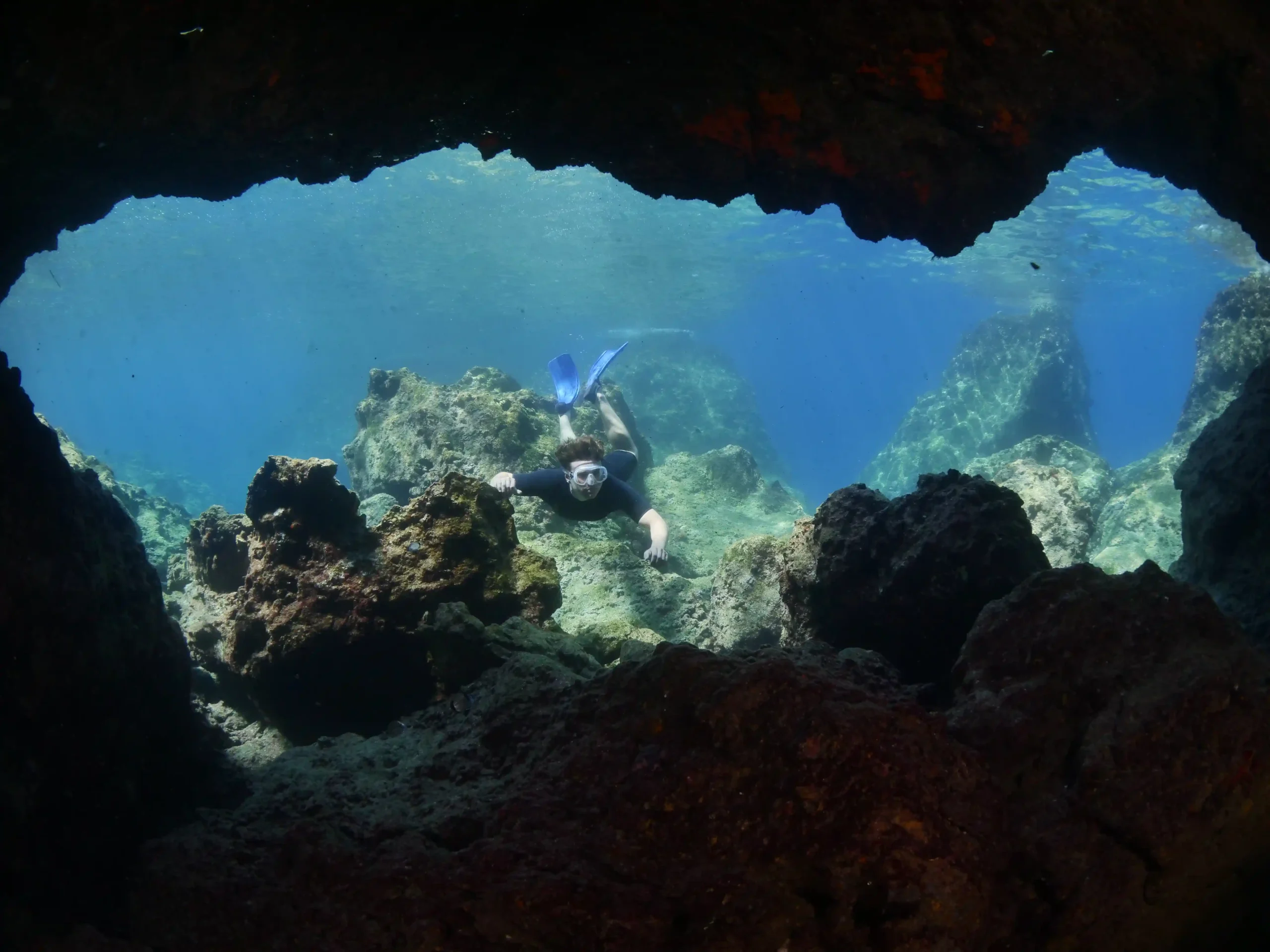
Four decades of that protection produced a side effect that matters more to snorkelers than to policy wonks: the fish stopped fleeing. Grouper here will hold their position a few feet from a snorkeler instead of bolting for cover, because generations of them have grown up without spearfishing or net pressure. That’s the actual payoff of Ustica’s hidden-gem status — not just emptier water, but tamer wildlife.
How to Get to Ustica From Palermo
Ferries and hydrofoils to Ustica depart from Palermo’s Stazione Marittima (Banchina Crispi), with Liberty Lines and Siremar both running the route. The crossing takes about 1 hour 30 minutes on the faster hydrofoils, longer on standard ferries — figure 1h30 to 2h45 depending on the vessel. One-way tickets generally run €25–40 / $29–46, with the first departure around 7:00 AM and the last return sailing around 6:00 PM in peak season.
That schedule makes Ustica workable as a day trip, and plenty of visitors do exactly that — arrive mid-morning, several hours in the water, last boat back. But a recurring theme in traveler discussions is that a single day barely scratches the surface. One contributor on a Sicily-focused TripAdvisor thread suggested staying overnight specifically to appreciate the number of dive points the island offers, noting that most of Ustica’s dive centers also run inexpensive accommodation. If the goal is more than one or two coves, building in a night on the island opens up the schedule considerably.
Sailings drop off sharply outside summer — closer to 3 crossings per week in the off-season versus dozens weekly from June through September — so anyone visiting outside peak months should confirm the timetable before locking in a return ferry.
Best Spots for Snorkeling in Ustica
Ustica doesn’t really do sandy beaches. What it has instead is a coastline of black volcanic rock cut into coves, and each one has a different personality underwater.
Cala Sidoti
The easiest entry point on the island and the one most first-time snorkelers are pointed toward. Shallow, calm, and walkable from a small parking area, with enough fish activity close to shore that it doesn’t require swimming far to see something worthwhile. Good pick for anyone snorkeling for the first time anywhere, not just in Ustica.
Cala Acquario (also called Cala Santoro)
A short distance from Cala Sidoti, this cove trades sand for posidonia seagrass meadows, which function as nursery habitat — octopus, starfish, and small reef fish tend to cluster here more than in the open coves. It’s the spot most likely to reward someone who actually slows down and looks under ledges rather than swimming straight through.
Piscina Naturale di Punta Cavazzi
A natural seawater pool tucked beneath the Punta Cavazzi lighthouse, sheltered from waves by a ring of rock and connected to the open sea through a small channel. The water here stays calmer than almost anywhere else on the island, which makes it popular with families — but the approach involves scrambling over wet volcanic rock, so reef shoes are worth packing rather than relying on bare feet or flip-flops.
Scogli Piatti
West of Cala Sidoti, this stretch is flat volcanic slab rather than a cove — less postcard-pretty, more functional. It draws a thinner crowd than Cala Sidoti and gives snorkelers more room to spread out, though sea urchins are common on the rocks here, so footing matters.
Boat-only spots: Grotta Azzurra and Punta Galera
A handful of Ustica’s best-regarded sites aren’t reachable on foot at all. Grotta Azzurra (Blue Grotto) and Punta Galera show up repeatedly in local writeups as the most dramatic snorkeling in the reserve, but both require a boat — either a rented dinghy or one of the half-day excursions that depart from the harbor and stop at several caves along the way.
What You’ll Actually See Underwater
The species list at Ustica reads like most Mediterranean reserves on paper — brown grouper, tuna, amberjack, dentex, barracuda, common octopus, and the occasional Caretta caretta sea turtle, along with different types of cetaceans and the typical red shrimp the island is known for. What’s different in practice is proximity. Forty years without spearfishing means the larger fish at Ustica don’t treat a snorkeler as a threat the way they would in a less protected area, so encounters tend to happen closer and last longer.
Smaller stuff is just as present: damselfish in dense clouds near the rocks, wrasse picking through crevices, and sea anemones tucked into shaded ledges. None of it requires diving to a meaningful depth — most of the interesting activity at Cala Sidoti and Cala Acquario happens in the first few meters below the surface.
Snorkeling vs. Diving: Do You Need to Be Certified?
No. Snorkeling in Ustica requires no certification, no course, and no prior experience — a mask, snorkel, and fins are enough to access most of the coves listed above. On a TripAdvisor thread specifically about this question, one traveler asked whether scuba training was required to enjoy the island, and a contributor replied that Ustica offers everything needed for either snorkeling or diving, with equipment rental widely available through the island’s dive centers.
Diving is a different commitment. Getting a PADI Open Water certification on the island typically requires staying at least a week, and most dive shops run beginner “discovery dives” for visitors who want a single guided dive without full certification — pricing for these generally lands around €50–75 / $58–86 per dive depending on the operator, based on rates and reviews from shops including Blue Diving Ustica, Lustrica Diving, and Ustica Diving. Several diver reviews on TripAdvisor also mention that non-diving partners were able to snorkel alongside the same boat while the rest of the group dived, which is worth asking about directly if a group has mixed preferences.
When to Go and What to Pack
Water is warmest and visibility most reliable from June through September, which is also when ferry frequency peaks and the coves get their busiest. Early morning is consistently mentioned by visitors as the best window to beat the day-trip crowds arriving from Palermo, particularly at Cala Sidoti.
Beyond the obvious mask and fins, two items come up often enough in traveler accounts to flag specifically: reef shoes, given how much of the shoreline access involves volcanic rock rather than sand, and a personal mask and snorkel set rather than relying entirely on rental gear, since fit matters more for snorkeling comfort than people expect.
Is Ustica Worth a Day Trip From Palermo?
For a first visit, yes — a single day is enough to snorkel two or three coves and get a real sense of why the reserve has the reputation it does. For anyone who wants the boat-only spots, the dive sites, or simply more than a rushed few hours in the water, an overnight stay turns Ustica from a quick excursion into a proper standalone leg of a Sicily trip.
Either way, it pairs naturally with time based in Palermo. Combine it with the best things to do in Palermo for the days spent in the city, and check where to stay in Palermo for a base that makes an early ferry departure manageable. For travelers still mapping out the full trip, the Palermo travel guide is the better starting point.
Ustica won’t show up on most people’s Sicily shortlist before they leave home. The ones who make the crossing anyway tend to be the ones who come back talking about it.