What to Do in Palermo, Sicily? — Before You Wish You’d Booked Longer
Affiliate note: This article may contain affiliate links, which means I may earn a small commission if you book or buy through them – at no extra cost to you. I only recommend things that make sense for this kind of trip.
Most people give Palermo two days. Then they rebook for four.
It’s that kind of city — one that keeps pulling you in a different direction. There’s a 12th-century Arab-Norman palace on the same block as a chaotic street market. A 9th-century mosque that became a church that became a UNESCO site. And a mummified 2-year-old in a silk dress in an underground catacomb that, for reasons that are hard to explain, ends up being one of the most quietly affecting things you’ll see in Sicily.
Palermo doesn’t reward rushing. But it absolutely rewards showing up with a decent plan. This guide covers 10 of the best things to do in Palermo — from the unmissable landmarks to a couple of things most visitors completely overlook — with honest prices in EUR and USD, transport tips, and the kind of practical detail that actually makes a difference on the ground.
1. Explore the Arab-Norman Heart of the City
Palermo spent centuries under Arab, Norman, and Byzantine rule — and unlike most cities where one era replaces the last, here they all layered on top of each other. The result is an architectural mix found nowhere else in Europe, and three sites within walking distance of each other make the perfect starting point.
Palazzo dei Normanni and the Cappella Palatina
This is the one not to miss. The Palazzo dei Normanni (Palace of the Normans) served as the seat of Norman kings in the 12th century and is now a UNESCO World Heritage Site. The palace itself is impressive, but the real reason to visit is the Cappella Palatina — a private royal chapel whose interior is almost entirely covered in golden Byzantine mosaics depicting biblical scenes. The effect is extraordinary: gold tiles catching the light from every angle, stretching from floor to ceiling with a precision that still baffles researchers today.
Entry costs €16–19 / $17–21 (weekday vs. weekend rates) and includes the palace’s royal apartments and the chapel. Opening hours run Monday to Saturday morning; Sunday visits are limited to 8:30–12:30. Book ahead in high season — queues move slowly and capacity is controlled.
Palermo Cathedral
The Cathedral is one of those buildings that’s difficult to categorise. Its exterior combines Norman towers, a Gothic arch, an Arab-inspired decorative band, and a Baroque dome added in the 18th century — all on the same structure. From the outside, it reads as controlled chaos. Inside, the nave is free to enter, though the most worthwhile parts — the royal tombs, the treasury, and especially the rooftop — require a ticket.
The rooftop is worth it. Tickets run €7–15 / $7.50–16 depending on which areas you include, and the 360° views over Palermo’s terracotta rooftops, the mountains beyond, and a sliver of sea make it one of the better vantage points in the city. The staircase is narrow and steep — not for those uncomfortable with tight spaces.
Opening hours: Monday–Saturday 9:00–18:00, Sunday 10:00–18:00.
Piazza Bellini and La Martorana
A short walk from both landmarks, Piazza Bellini is quieter than it deserves to be. The square sits in front of La Martorana — a 12th-century Greek Orthodox church with a mosaic interior that rivals anything in the Palazzo. Entry to the main nave is free; the interior is small but the mosaics are among the finest in Palermo. Go early. By 10am it fills up.
2. Lose a Morning in the Street Markets
The street markets of Palermo are not tourist attractions. They’re functional markets that have operated in roughly the same spots for centuries, and that’s exactly what makes them worth visiting. Arrive with an empty stomach.
Mercato di Ballarò is the biggest and oldest of the city’s markets, running through the Albergheria district from early morning until mid-afternoon. The produce stalls are at their best between 8 and 11am — after that the energy dips and vendors start packing up. This is the place to start: loud, colourful, and completely unpretentious.
Mercato del Capo, near the Teatro Massimo, runs a narrower but more focused food corridor through the ancient Porta Carini gate. Less frequented by tourists than Ballarò, it’s particularly good for a panelle e crocchè sandwich — chickpea fritters and potato croquettes stuffed into a sesame bun for around €2–3 / $2.20–3.30.
Mercato della Vucciria operates on an entirely different schedule. During the day it’s nearly empty — you’d walk through and wonder what all the fuss is about. After dark, it transforms into an open-air gathering spot with grilled stigghiole (lamb intestine skewers, smoky and better than they sound), cheap wine poured from unlabelled bottles, and locals who look mildly amused at the tourists trying to figure out what’s happening.
What to Order
A few things worth knowing before you eat your way through:
- Arancina — in Palermo, the stuffed rice ball is feminine. Arancina, not arancino. Conical = ragù, round = ham and mozzarella (al burro). Fresh from the fryer only. A lukewarm one is a disappointment.
- Panelle e crocchè — chickpea fritters and potato croquettes in a sesame bun. One of the best accidentally vegan street foods in Europe.
- Pani ca meusa — spleen sandwich, dressed with either ricotta or caciocavallo. Divisive among first-timers. Most people who try it order a second one.
- Sfincione — thick, spongy Sicilian pizza topped with tomato, onion, anchovies, and toasted breadcrumbs. Get it from a bakery, not a tourist café.
Eating well across all three markets costs well under €15 / $16 per person. Ballarò Market guide via doeatbetterexperience.com
3. Tour Teatro Massimo
The Teatro Massimo is the largest opera house in Italy and the third largest in Europe — it holds over 1,300 seats and has hosted performances since 1897. Film buffs will recognise the staircase from the closing scene of The Godfather: Part III, though the building needs no cinematic association to justify a visit.
Guided tours run daily from 9:30am to 6pm (last tour at 6:20pm) and last around 25–30 minutes. They take you through the main auditorium, the royal box, the lavish foyer, and sometimes the backstage area depending on the day’s performance schedule. Tickets cost €8 / $8.70 for adults, €5 / $5.50 for those aged 6–25.
The acoustics become immediately apparent the moment you step inside. Even on a tour, with no performance happening, the space has a particular quality of silence — the kind that makes you understand why an opera house would be built to this scale.
Book directly through the Teatro Massimo website or arrive early in person. Tours fill up in peak season.
4. Descend into the Capuchin Catacombs
Palermo has an underground cemetery that houses over 8,000 mummies. They line the walls in corridors sorted by gender, profession, and social standing — priests together, lawyers together, children together — dressed in the clothes of their era. The practice ran from the 16th century through to 1920, when the last resident, a 2-year-old girl named Rosalia Lombardo, was placed here after dying of pneumonia. Her body remains so well preserved that she’s known locally as the Sleeping Beauty of Palermo.
It sounds macabre, and it is — but the catacombs have a strange quality to them that sits somewhere between historical archive and meditation on mortality. People tend to come out quieter than they went in.
Entry costs €3 / $3.30. Children under 12 enter free. Photography and video are not permitted inside — this is enforced, not just requested. Opening hours: daily 9:00–12:30 and 15:00–17:30. The catacombs are a 20-minute walk from the Palazzo dei Normanni.
Not suitable for everyone — use your judgment if you’re travelling with very young children or anyone sensitive to this kind of content.
5. Take a Half-Day Trip to Monreale Cathedral
Eight kilometres southwest of Palermo, perched on the slopes above the Conca d’Oro valley, Monreale Cathedral contains what many art historians consider the finest Byzantine mosaic cycle ever created in the Western world. Around 6,400 square metres of mosaics cover the interior walls from floor to ceiling — depicting scenes from Genesis through to the life of Christ, rendered in gold tiles with a precision that the building’s 12th-century builders managed without modern tools.
The numbers are useful context: the cathedral contains an estimated 2,200 kilograms of gold in mosaic form. Standing inside and letting that land for a moment changes how you look at the place.
Getting there is easy. Bus #389, operated by AMAT, departs from Piazza Indipendenza (near the Palazzo dei Normanni) approximately every 40 minutes throughout the day. The ride takes 30–40 minutes and costs €1.60 / $1.75 each way. Detailed bus guide via fearlessfemaletravels.com
Entry costs €6 / $6.50 for the main cathedral, €8 / $8.70 for the cloister (which has its own remarkable carved marble columns and is worth the separate ticket). Combined access comes in at around €14 / $15.20.
Go before 10am if possible. The morning light through the windows hits the mosaics at an angle that afternoon visitors simply don’t see.
6. Hike Monte Pellegrino
Goethe called it “the most beautiful promontory in the world.” That’s a bold claim for a mountain on the edge of a city. But standing at the Belvedere di Monte Pellegrino with the Gulf of Palermo laid out below — the city, the coastline, the distant Aeolian Islands on a clear day — it’s easy to understand why the quote has stuck.
Monte Pellegrino rises to 606 metres and sits just four kilometres north of the city centre. The classic approach is the Acchianata — the ancient pilgrimage route taken by the faithful every September 4th to mark the death of Santa Rosalia, Palermo’s patron saint. The trail covers 7.8 km, gains around 450 metres of elevation, involves roughly 11,000 steps, and is rated difficult. Allow 2–2.5 hours up.
At the summit, the Sanctuary of Santa Rosalia sits inside a natural cave decorated with Baroque stonework, candles, and offerings left by generations of pilgrims. Entry is free. Whether or not the spiritual dimension resonates, the cave itself is worth the climb.
For those who’d rather not hike the full route, bus #812 runs from Piazza Sturzo (near the Politeama Theatre) directly to the sanctuary. The bus is the easier call in summer heat. Hiking boots are recommended either way.
Cyclists and mountain bikers will find their own reasons to come up here — for more on that, see the guide to mountain biking on Monte Pellegrino.
7. Spend an Afternoon at Mondello Beach
Most of Sicily’s beaches are dramatic but uncomfortable — rocky coves, pebble shores, crystal-clear water that requires footwear. Mondello is the exception. Nine kilometres north of Palermo’s centre, the beach is a long arc of white sand with shallow turquoise water backed by an Art Nouveau pier pavilion that somehow survives from the early 1900s. It looks like it belongs in a different century, which it does.
Mondello is popular with Palermitans year-round but reaches near-impossible crowds in August. The sweet spots are May–June and September–October — warm enough to swim, calm enough to actually enjoy the place. Even off-peak, arrive before 11am for a spot without negotiation.
Getting there: bus #806 from central Palermo takes around 30 minutes and costs standard AMAT fares (around €1.60 / $1.75 per ticket). A taxi runs €25–30 / $27–33 each way depending on traffic. Mondello Beach guide via travelmademedoit.com
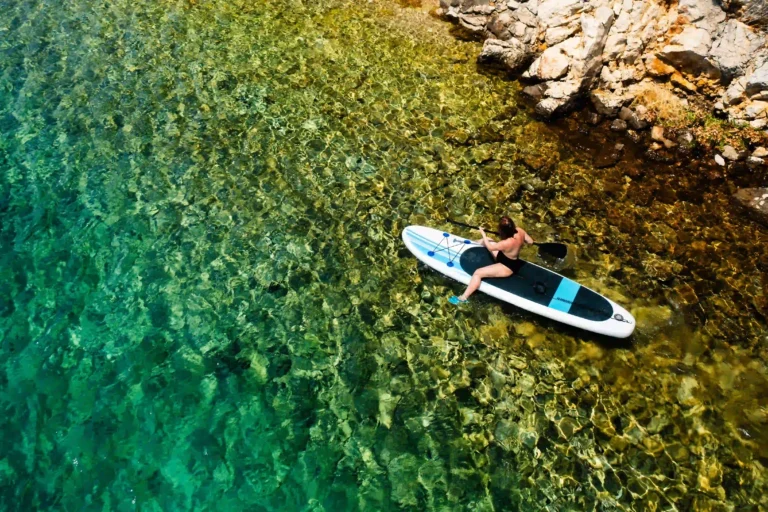
Just north of the beach, the Capo Gallo Nature Reserve begins where the sand ends. The reserve encompasses the rocky headland of Monte Gallo, with coastal walking trails, sea caves, and some of the clearest water on this stretch of coast. It’s a 15-minute walk from the main beach to the reserve entrance. For those who’d rather explore the coastline from the water, there’s a guide to kayaking and paddleboarding at Capo Gallo that covers the best access points and what to expect on the water.
8. Walk the Baroque Squares
Palermo’s historic centre is compact enough to cover on foot, and the Baroque squares that stitch it together are as good as anything in the city’s museums. None of them charge entry.
Quattro Canti — the “Four Corners” — is the theatrical crossroads at the junction of Corso Vittorio Emanuele and Via Maqueda. Four concave Baroque facades face each other across the intersection, each one layered with fountains, statues, and columns in a configuration designed to be looked at from the centre. It’s the kind of deliberate architectural moment that makes you stop mid-street.
A short walk south, Piazza Pretoria holds the Fontana Pretoria — an enormous 16th-century marble fountain covered in nude figures that the Church found so scandalous when it arrived from Florence that locals renamed it the “Fountain of Shame.” It’s now fenced off for ongoing restoration, but still worth a look from the square’s edge.
Both are best visited early morning or around sunset, when the stone takes on a different quality and the crowds thin out.
9. Take a Boat Trip Along the Palermo Coast
The coast north of Palermo is largely inaccessible by road — steep limestone cliffs drop into the sea, with sea caves and small beaches that only open up from the water. A half-day boat tour is the practical way in.
Most tours depart from the ports at La Cala or Arenella and head northwest toward the Capo Gallo Nature Reserve, stopping for swimming and snorkelling along the way. The Gulf of Mondello, the Grotta della Regina (Queen’s Cave), and the coast near Barcarello feature on most routes. Half-day tours typically run 3.5–4.5 hours and cost €35–55 / $38–60 per person for small group options, depending on the operator and season.
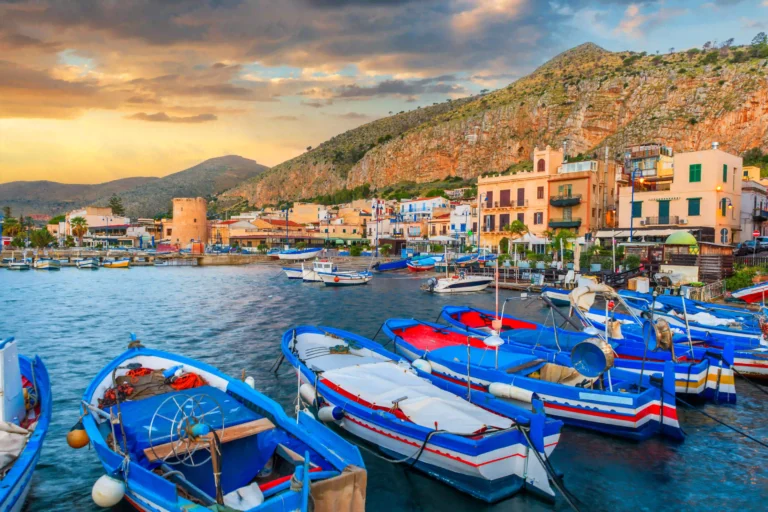
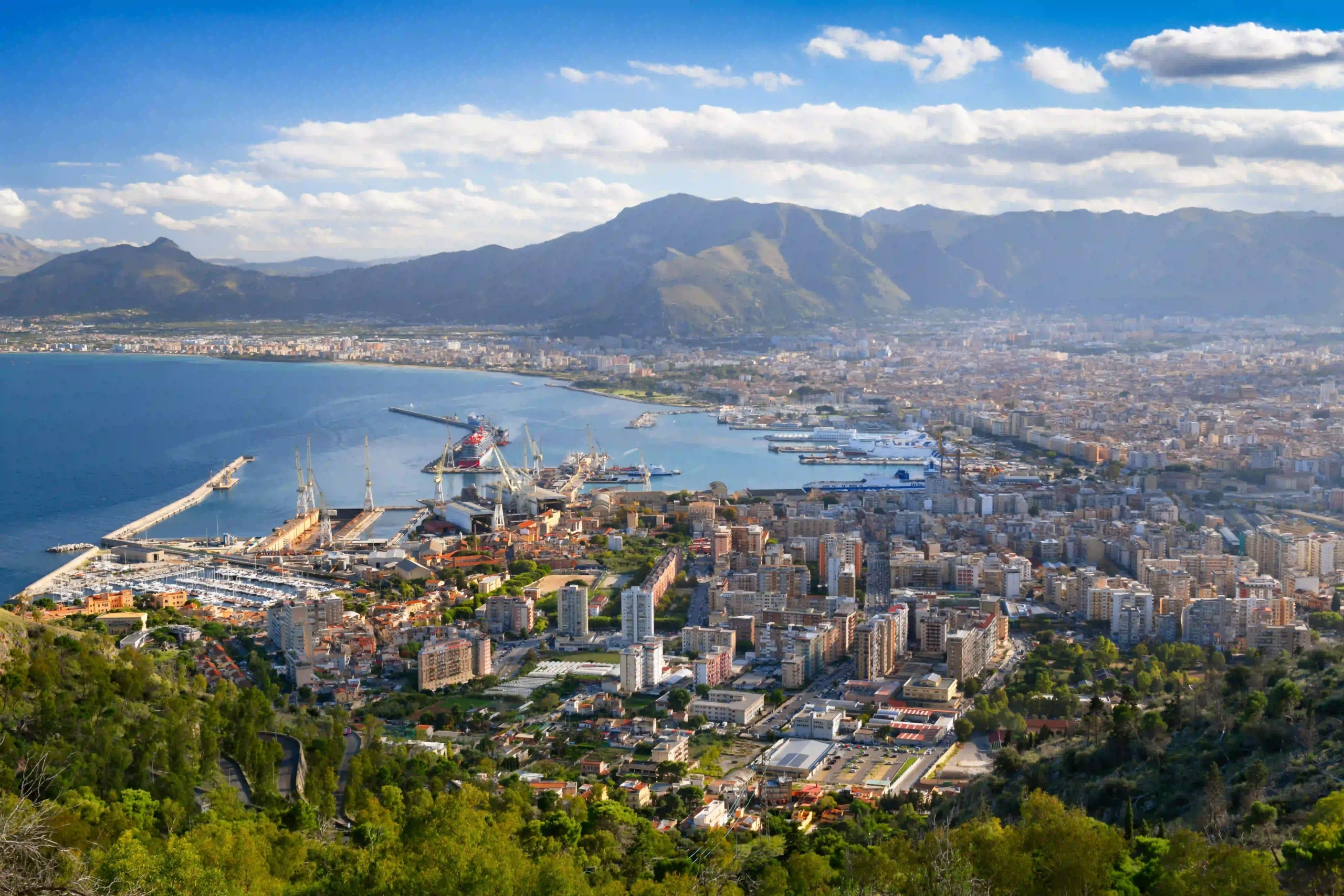
It’s a different view of the city entirely — Palermo from the sea, with Monte Pellegrino rising behind the waterfront, is the image most people carry home.
For divers looking to push further, the waters around Ustica Island — about 60 kilometres northwest of Palermo — are among the best diving destinations in the Mediterranean, with a protected marine reserve and visibility that regularly exceeds 30 metres.
10. Take a Sicilian Cooking Class
Understanding the food makes eating it better. Sicilian cuisine reflects the same layered history as the architecture — Arab spice influences, North African flavours, Spanish techniques, Greek ingredients — and a good cooking class unpacks that context in a way that changes how every meal tastes for the rest of the trip.
Most classes in Palermo run 3 hours and focus on the classics: arancina from scratch, pasta dishes like pasta alla Norma or pasta con le sarde, and at least one dessert — usually cannoli filled with fresh sheep’s milk ricotta. Prices typically run €65–90 / $70–100 per person, with some classes held in historic kitchens near the Ballarò market area.
It’s not a budget option, but it’s one of the more memorable ways to spend a morning in the city — particularly before hitting the markets in the afternoon with a better understanding of what you’re looking at.
Practical Tips for Visiting Palermo
Best time to visit: April–June and September–October offer the most comfortable temperatures (18–26°C / 64–79°F), smaller crowds, and lower accommodation prices. July and August are hot, humid, and extremely crowded, particularly at Mondello.
Getting around: The historic centre is walkable. For Mondello (bus #806), Monte Pellegrino (bus #812), and Monreale (bus #389), AMAT buses are reliable and affordable at roughly €1.60 / $1.75 per trip. The 24-hour AMAT day pass costs around €3.50 / $3.80 and pays off if you’re making multiple bus trips.
Day budget: Expect to spend €50–80 / $55–87 per day for a solid mid-range experience — street food lunches (€10–15), one or two paid attractions (€8–19 each), and public transport. Dinner at a decent trattoria adds another €25–40 / $27–43.
How much time to allow: Three days covers the main sites without feeling rushed. Four days lets you build in Monreale, a half-day at Mondello or Monte Pellegrino, and enough time to actually sit in a piazza at sunset without checking what’s next.
Palermo is a city that takes a day or two to read properly. The first impression is often chaos — the traffic, the markets, the competing architectural styles on every block. Then something clicks, and the city starts to make sense on its own terms.
For more on planning your time in Sicily’s capital, the Palermo Travel Guide covers getting there, where to stay, and how to build an itinerary that doesn’t try to do everything at once.
Been to Palermo? Drop the thing that surprised you most in the comments — always good to hear what others discovered.