Portland, Maine for First-Time Visitors: A Low-Stress Start to the Coast
Affiliate note: This article may contain affiliate links, which means I may earn a small commission if you book or buy through them – at no extra cost to you. I only recommend things that make sense for this kind of trip.
A lot of Maine coast trips go wrong in the first hour, and not because of anything that actually happens. It’s the planning. People land in Portland and immediately start thinking about lighthouses, lobster rolls, Acadia, Bar Harbor, maybe even a ferry to Nova Scotia — and somewhere in there, day one turns into logistics soup instead of a vacation.
Portland doesn’t need that treatment. It’s compact, it’s walkable in the right neighbourhoods, the food is good without requiring a spreadsheet, and it works best as a soft landing before you head north. You’re not here to “complete” Portland. You’re here to arrive, walk, eat, adjust to the coast, and then keep moving if that’s the bigger plan.
This guide is for first-time visitors who want Portland to make the rest of the trip easier — not turn it into another checklist.
Quick Answer: Is Portland, Maine Worth Visiting First?
Yes, especially if Portland is the opening move in a longer Maine coast road trip. For most first-time visitors, one to two days is the right amount — longer if food, islands, or breweries are the actual point of the stop, shorter if Acadia is the real destination and Portland is just where the trip happens to start.
| Situation | How to Use Portland |
|---|---|
| First Maine trip | Spend 1–2 nights before driving north |
| Short weekend | Base in Portland and add one lighthouse or coastal walk |
| Food-focused trip | Give Portland 2 nights |
| Family road trip | Use Portland as an easy first stop before longer drives |
| Acadia is the main goal | Keep Portland to 1 night or a half-day stop |
| Maine + Nova Scotia route | Use Portland before Midcoast/Acadia and the Bar Harbor ferry route |
How Many Days Do You Need in Portland?
This depends less on how much there is to see and more on what you actually want out of the stop.
| Time | Best Use |
|---|---|
| Half day | Old Port walk, waterfront, one meal |
| 1 day | Old Port + Eastern Promenade or Portland Head Light |
| 2 days | Add a ferry/island trip, food, a brewery, or slower wandering |
| 3+ days | Fine if Portland is the trip, not just the start of one |
Don’t give Portland three days if what you’re actually chasing is Acadia-style scenery — you’ll get more of that further north. But don’t cut it down to nothing either. A trip that starts with exhaustion tends to stay that way.
Where to Stay in Portland for a First Visit
Where you sleep shapes the whole visit more than any single activity does. Here’s how the main areas break down.
Old Port / Downtown
Best for first-timers, short stays, and anyone who wants restaurants and the waterfront within walking distance. If you’re not renting a car for the Portland portion of the trip, this is the easiest base by a wide margin.
Watch out for higher prices and busier summer weekends — parking here can also turn into its own small project, so check what’s included with your stay before you arrive.
East End / Eastern Promenade Area
A quieter, more residential feel with real water views and easy walking. It’s a solid pick if you want some distance from the Old Port crowds without losing the waterfront entirely.
Watch out for fewer hotel options and a bit more walking, driving, or rideshare use to reach some restaurants.
South Portland / Cape Elizabeth Area
Makes the most sense if you’re driving and want easier lighthouse access — Portland Head Light and Fort Williams Park sit in Cape Elizabeth, not downtown. Families and car-based trips tend to do well here.
Watch out for a more car-dependent setup. It’s not a walk-into-town situation the way the Old Port is.
Don’t chase a specific hotel name without checking current availability and reviews yourself — pick the neighbourhood first, then the property.
What to Do in Portland Without Overpacking It
The temptation with any first visit is to try to see everything. Portland rewards the opposite approach.
Walk the Old Port and Waterfront
This is the obvious first move, and it’s obvious for a reason: it takes zero planning. Brick streets, a working waterfront, shops and restaurants tucked into old warehouse buildings — it’s a wander, not a checklist.
Early morning is when it actually feels like a working harbor rather than a postcard of one. Before the crowds show up, Commercial Street still smells like salt water and whatever’s coming out of the bakery ovens, lobster boats are unloading at the piers a few blocks from where you’ll be having brunch later, and the cobblestone side streets are mostly locals with coffee, not tour groups. By early afternoon the fudge shops and the tour buses have caught up with you, and that’s fine — it’s just a different version of the same place.
It does get busy in summer, especially on weekends, so build in some patience if you’re visiting July or August.
Eat Well, But Don’t Turn the Whole Trip Into Restaurant Logistics
Portland’s food reputation is real — seafood, bakeries, cafés, a solidly good casual dining scene. Trying to optimize every meal in Portland is how dinner becomes project management.
Pick one or two meals you actually care about and book ahead if the place is popular. Let the rest happen on the fly. If a specific restaurant matters to your plans, check its current hours and reservation policy directly — don’t build your evening around information that might be a season out of date.
A few names come up often enough that they’re worth knowing before you land, even if you don’t end up eating at all of them:
- Duckfat — a small, long-running spot built around Belgian-style frites fried in duck fat. It’s casual, popular, and first come, first served, so plan on a wait if you show up at peak lunch or dinner hours.
- Eventide Oyster Co. — an oyster bar built around Maine shellfish and its brown butter lobster roll. It is popular enough that you should check the current reservation or walk-in situation before making it the meal your whole Portland evening depends on.
- Fore Street — a wood-fired dinner spot in the Old Port with a daily-changing menu built around what local farmers, fishermen, and foragers bring in. This is the one worth calling ahead for if you want a proper sit-down dinner during your stay.
Treat this as a starting point, not a ranking — Portland has plenty of good options beyond these three, and hours, menus, and reservation policies shift, so confirm directly with the restaurant before you build a night around any of them.
Eastern Promenade
A low-stress walk with open water views and actual breathing room, which is exactly what you want after a travel day. The path runs along the hillside above Casco Bay — grass, a scattering of dog walkers and joggers, the islands sitting out on the water — and it’s a different pace entirely from the Old Port a few blocks behind you. It pairs naturally with an East End stay and works well with kids who need to run off some energy before dinner.
Portland Head Light and Fort Williams Park
This is the classic lighthouse stop near Portland — though it’s worth knowing upfront that it’s technically in Cape Elizabeth, a short drive south, not something you stumble into on an Old Port walk.
It’s the oldest lighthouse in Maine, first lit back in 1791, and the tower itself is a modest 80 feet or so. The bigger draw is really the 90-acre park around it — cliffside walking paths, sweeping views over Casco Bay, and the old military ruins scattered through Fort Williams Park. Go for the park as much as the lighthouse.
One thing worth planning around: the tower interior generally isn’t open to the public outside of an annual open lighthouse day, so treat this as a photo-and-walk stop rather than a climb. Check the official Fort Williams Park site for current park hours and any museum access before you go — they shift seasonally.
If Portland Head Light makes you want more lighthouse stops, the Maine lighthouses road trip guide covers how to work them into the coast without turning the whole trip into a lighthouse checklist.
Casco Bay Ferry and Islands
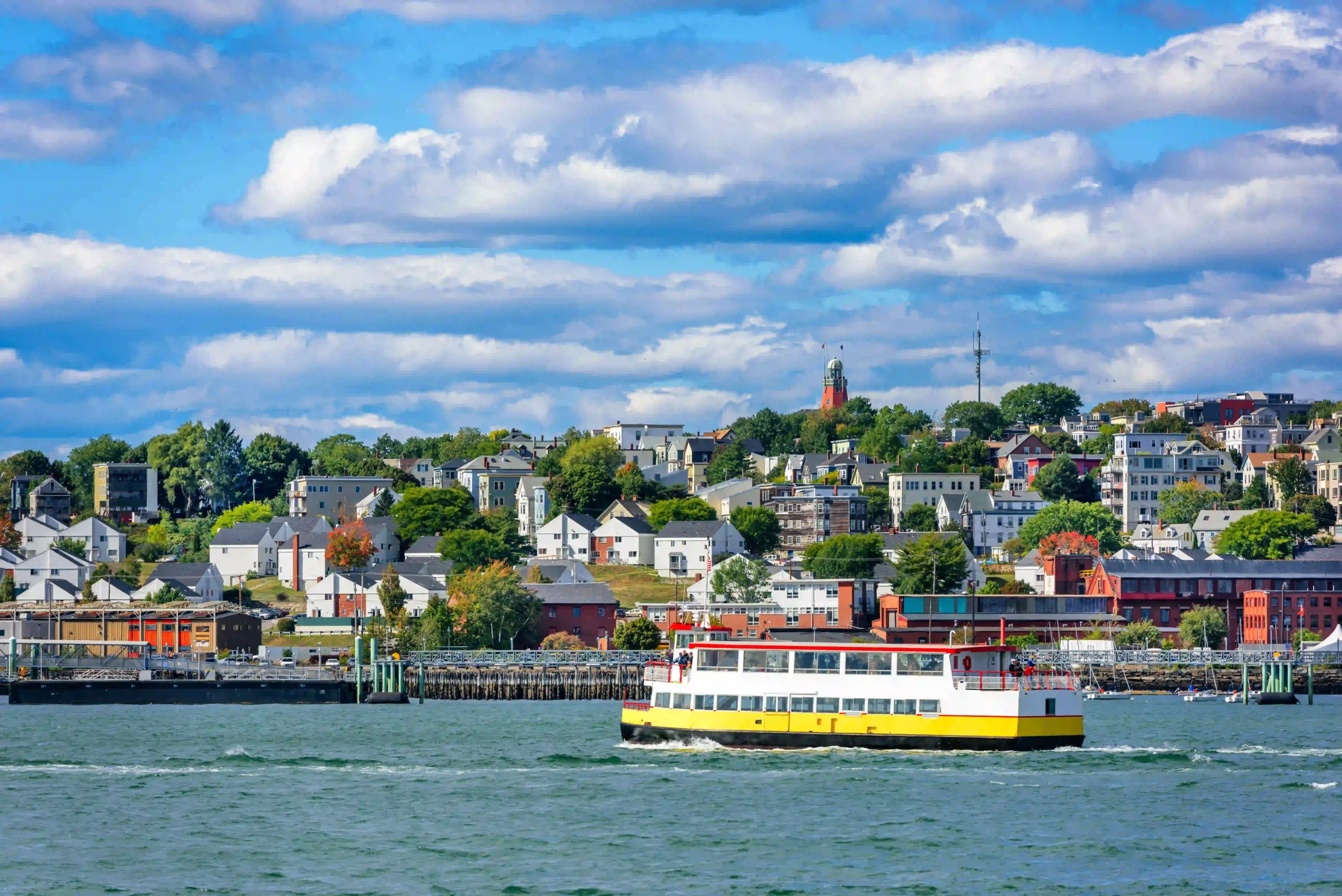
If you’ve got a second day and decent weather, a Casco Bay Lines run is a good way to get real coastal atmosphere without driving anywhere. Casco Bay Lines has been carrying people to the islands for more than 150 years, and the mailboat run still carries passengers, mail, and freight to several islands, which makes it feel like more than a tourist loop.
Departure times and fares shift by season, so check the current Casco Bay Lines schedule directly rather than planning around anything you read here. This is a nice-to-have for a two-night stay, not a must-do for a quick overnight.
Breweries, Food Markets, and Museums
Worth knowing about, not worth over-listing here. If breweries or a specific museum matter to you, treat them as optional additions to whichever day has spare time, based on your own interests rather than a forced checklist.
A Low-Stress First-Time Portland Itinerary
Option 1: One Night in Portland
- Arrive in the afternoon
- Walk the Old Port and waterfront
- Easy dinner, nothing that requires a reservation battle
- Next morning: Portland Head Light or the Eastern Promenade
- Continue north toward the Midcoast or Acadia
This is the shape for anyone using Portland as a soft landing rather than the destination itself.
Option 2: Two Nights in Portland
Day 1: Arrive, walk the Old Port and waterfront, dinner.
Day 2: Portland Head Light or a Casco Bay ferry run, then the Eastern Promenade, then a relaxed meal, brewery stop, or bakery run.
Day 3: Start the Midcoast drive.
This range works best for first-time visitors who want Portland to feel like part of the trip instead of just a place to sleep before the “real” driving starts.
Portland as the Start of a Maine Coast Road Trip
Portland to Midcoast Maine
North of Portland, the coast opens up into towns like Bath, Wiscasset, Damariscotta, Rockland, and Camden — a slower, more small-town stretch that builds nicely off a Portland start. Worth planning as its own leg rather than squeezing it into a single long driving day.
Portland to Acadia or Bar Harbor
Doable in one long drive, but better broken up with a Midcoast stop if your schedule allows it. If Acadia is the actual goal of the trip, don’t let Portland eat too many of your available days.
Portland to Nova Scotia
For travellers building a bigger Maine-plus-Nova-Scotia route, Portland can be the opening piece — most people continue toward Acadia or Bar Harbor from here before picking up the ferry crossing. If Maine or Nova Scotia is still an open question for your trip, that’s worth sorting out before you lock in a route. And once you know you’re heading across, the Maine to Nova Scotia ferry and drive guide covers the logistics in more detail than this post needs to.
Common Mistakes First-Time Visitors Make
- Trying to do Portland, the Midcoast, and Acadia all in one rushed pass
- Treating Portland like a checklist city instead of a place to wander
- Assuming parking will be effortless on a peak summer weekend
- Booking dinner nowhere and expecting a popular restaurant to have a table on a Saturday
- Staying too far out and then realizing they need to drive everywhere
- Skipping Portland entirely when they actually needed an easy first night
- Spending too long in Portland when the real goal was the coast north of it
- Planning Portland Head Light as if it’s a downtown Old Port stop
- Trying to optimize every lobster roll like there’s a final exam at the end
Who Should Spend More Time in Portland?
Good for: food-focused travellers, couples, first-time Maine visitors, people who like walkable small cities, travellers arriving late who need a soft landing, and families who want an easier first day before longer drives.
Less necessary for: people whose only real goal is Acadia, travellers with just four or five days total for Maine, anyone who wants quiet rural coast immediately, and travellers trying to combine Maine and Nova Scotia on a tight timeline.
Frequently Asked Questions
Is Portland, Maine worth visiting for first-timers?
Yes, especially as a low-stress start to a Maine coast trip. It gives you a walkable introduction to the state — food, waterfront, a bit of history — before the drives get longer and the towns get smaller.
How many days do you need in Portland, Maine?
Most first-time visitors do well with one to two days. Give it more only if Portland itself, not the coast beyond it, is the actual focus of the trip.
Is Portland, Maine walkable?
Central Portland and the Old Port are walkable for most visitors. Where you stay matters, though — some coastal and lighthouse stops, including Portland Head Light, require a car or a ride.
Do you need a car in Portland, Maine?
For a Portland-only stay, maybe not, depending on your neighbourhood. For the wider Maine coast, yes — most travellers will want a car once they leave the Old Port behind.
What’s the best area to stay in Portland for first-time visitors?
Old Port or Downtown is easiest for first-timers. The East End is calmer and still walkable. South Portland or Cape Elizabeth works better if you’re driving and want easier lighthouse access.
Is Portland a good base for Acadia?
It can be a starting point for a route, but it’s not a practical daily base — Acadia is roughly a several-hour drive north, not a place you should treat as a casual day trip from Portland. Use Portland before you go, not as a home base while you’re there.
Can you visit Portland Head Light from Portland?
Yes, but it’s a short drive into Cape Elizabeth, not a downtown walk. Plan it as its own outing rather than something you fit in on an Old Port stroll.
Should I spend one night or two nights in Portland?
One night works fine as a soft landing before you head north. Two nights gives you more room for food, waterfront wandering, and one coastal outing without rushing any of it.
Can Portland fit into a Maine to Nova Scotia trip?
Yes. Portland works well as the first stop before the Midcoast, Acadia or Bar Harbor, and eventually the ferry route across to Nova Scotia.
The Short Version
Portland earns its place as a first stop because it lowers the stress level at the start of a Maine coast trip, not because it needs to be the whole trip. Give it one to two days, pick a neighbourhood that matches how you’re getting around, walk the Old Port and waterfront, choose one lighthouse or ferry outing rather than all of them, eat well without making every meal a project, and then keep moving. If Acadia or Nova Scotia is really what this trip is about, let Portland support that route instead of swallowing it.
Are you using Portland as a weekend trip on its own, the start of a Maine coast drive, or the first leg of a bigger Maine-and-Nova-Scotia route? Let me know in the comments — it changes how much time I’d actually give it.