Maine Lighthouses Road Trip: Scenic Stops That Do Not Need a Whole Day
Affiliate note: This article may contain affiliate links, which means I may earn a small commission if you book or buy through them – at no extra cost to you. I only recommend things that make sense for this kind of trip.
Visit Maine notes the state has more than 60 lighthouses scattered along its coast, and that number alone causes a specific kind of trip-planning panic. People start thinking they need to see all of them, or at least a heroic number of them, or the trip somehow doesn’t count.
It doesn’t work like that. Some lighthouses deserve a real chunk of your afternoon. Most are best treated as scenic punctuation — the kind of stop you slot between towns, hikes, and lobster rolls, not a destination that eats your whole day. This guide is built around a Portland to Midcoast to Acadia route, and it sticks to lighthouses that are actually easy to reach by car and worth the detour without becoming the detour.
If you’re still deciding whether Maine or somewhere else fits your coastal trip better, our Maine vs Nova Scotia comparison might help you settle that first.
Quick Answer: Best Maine Lighthouse Stops for a Road Trip
| Lighthouse | Best For | Time Needed | Fits Best With |
|---|---|---|---|
| Portland Head Light | Classic first Maine lighthouse | 45–90 min | Portland / Cape Elizabeth |
| Spring Point Ledge Light | Breakwater walk | 30–60 min | South Portland |
| Bug Light | Quick harbour stop | 20–45 min | South Portland |
| Pemaquid Point Light | Dramatic rocky coast | 45–90 min | Midcoast |
| Marshall Point Light | Quiet scenic detour | 30–75 min | Port Clyde / Midcoast |
| Rockland Breakwater Light | Longer walk | 1–2 hrs | Rockland |
| Owls Head Light | Quick Rockland-area view | 30–60 min | Rockland / Camden |
| Bass Harbor Head Light | Acadia-side lighthouse | 30–60+ min | Acadia / Mount Desert Island |
These times are planning estimates, not official visit lengths. Weather, crowds, walking pace, and parking will all push them around, so treat them as a starting point rather than a schedule.
How to Use Lighthouses in a Maine Road Trip
The mistake most first-timers make is building entire days around individual lighthouses. Don’t do that. Use them as breaks in the drive — a reason to get out of the car, breathe some salt air, and take a walk before the next town or trailhead.
Pair them with food, with a town centre, with a hike you were already planning. A lighthouse that’s paired with lunch or a walk feels like part of the day. A lighthouse treated as the entire itinerary starts to feel like homework.
The best lighthouse stops are the ones that make the drive feel coastal without turning the whole day into parking-lot logistics. Be selective. Three or four well-chosen stops will stick with you more than eight rushed ones.
Best Maine Lighthouse Stops That Do Not Need a Whole Day
Portland Head Light
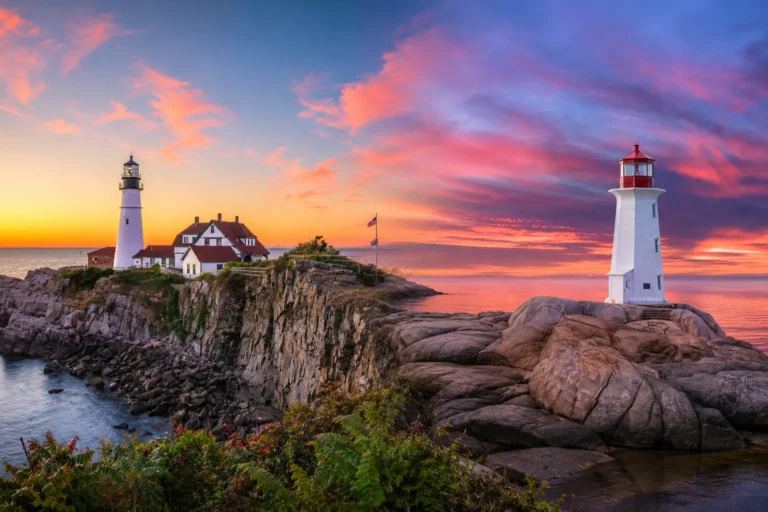
You’ll know the shape before you’ve even parked. White tower, black lantern room, waves working the rocks below it — this is the lighthouse most people picture when they picture Maine, and Fort Williams Park in Cape Elizabeth is where it actually lives.
Its construction was ordered in the late 1780s and the light was first lit in 1791, which is why it is usually treated as Maine’s oldest lighthouse. Give the stop 45 to 90 minutes: enough to walk the grounds, work your way through a few different angles along the shoreline, and duck into the small museum if it’s open (seasonally; check the official Portland Head Light site before you go). The tower itself is only open to the public one day a year, so don’t plan around going inside.
It gets busy, especially midday in summer. If you’re staying in Portland, go early or go late and skip the crowd in between.
Spring Point Ledge Light
There’s a moment on the walk out where the harbour opens up on both sides and you stop being a tourist on land and start feeling like you’re standing in the middle of the water. That’s the whole appeal of Spring Point Ledge Light, in South Portland — it’s a lighthouse you actually walk to, not one you photograph from a parking lot.
Budget 30 to 60 minutes. The breakwater surface is uneven and can be slick after rain, so watch your footing, especially with kids in tow.
It pairs naturally with Bug Light, close enough that you can knock out both without adding real driving time to your day.
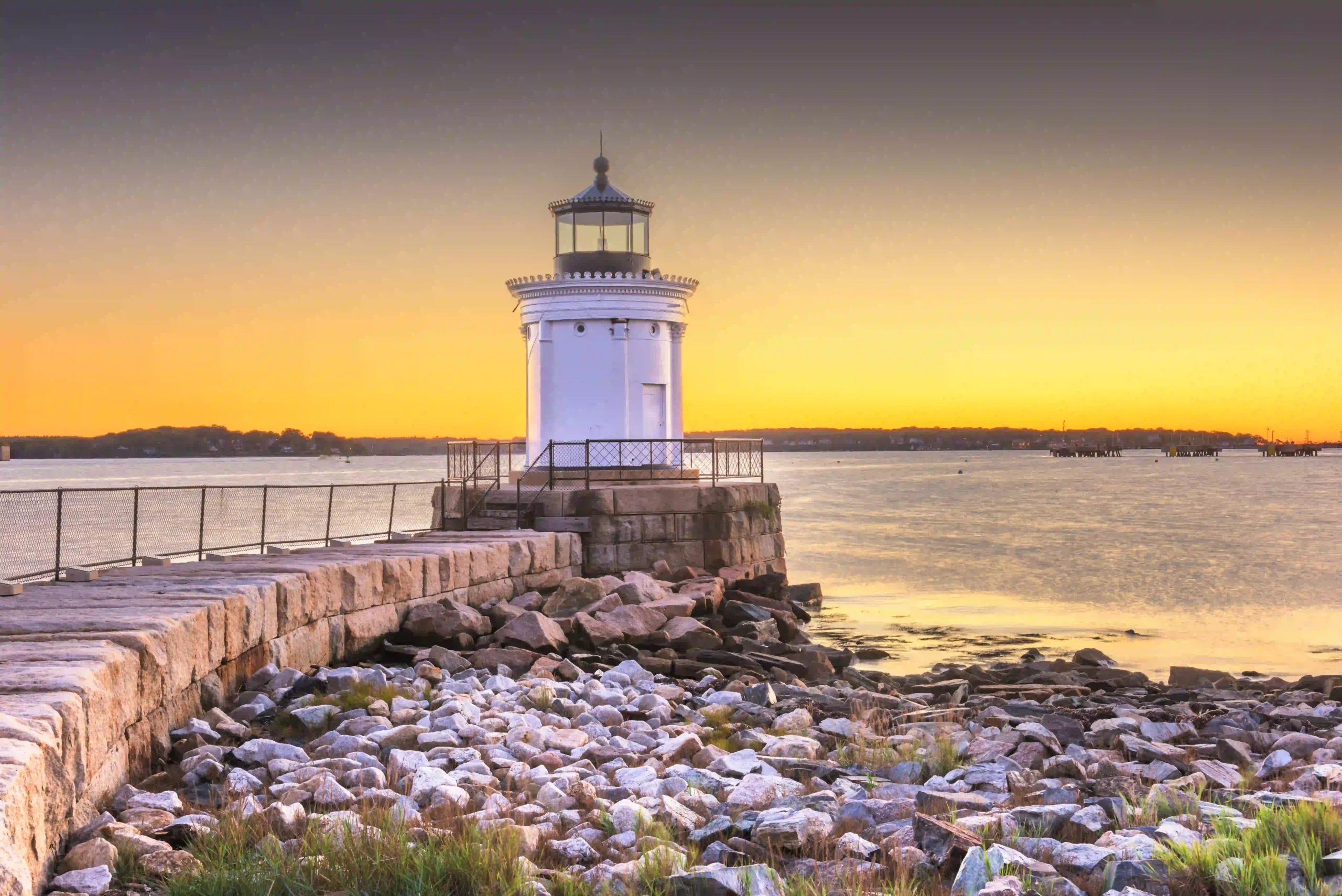
Bug Light (Portland Breakwater Light)
Let’s be honest about this one first: it’s not worth a special trip on its own. What it is worth is 20 to 45 minutes tacked onto Spring Point Ledge, since the two sit close enough that skipping Bug Light would mean driving right past a small, ornate lighthouse with a decent skyline and harbour view.
Treat it as the easy add-on, not the plan.
Pemaquid Point Light
Pemaquid Point, out on the Bristol peninsula in the Midcoast, is where Maine’s lighthouse scenery turns properly dramatic. The lighthouse sits above sloped, striated rock formations that the Atlantic has been working on for a very long time, and the setting does more of the work here than the tower itself.
Plan for 45 to 90 minutes. Give yourself time to actually walk the rocks rather than snapping a photo from the parking area and leaving — that’s where this stop earns its detour. Sit down on the slabs for a minute and you’ll notice the rock isn’t flat; it tilts and folds in a way that makes the whole point feel shoved up out of the ocean.
It’s a natural Midcoast anchor if you’re routing between Portland and Rockland/Camden.
Marshall Point Light
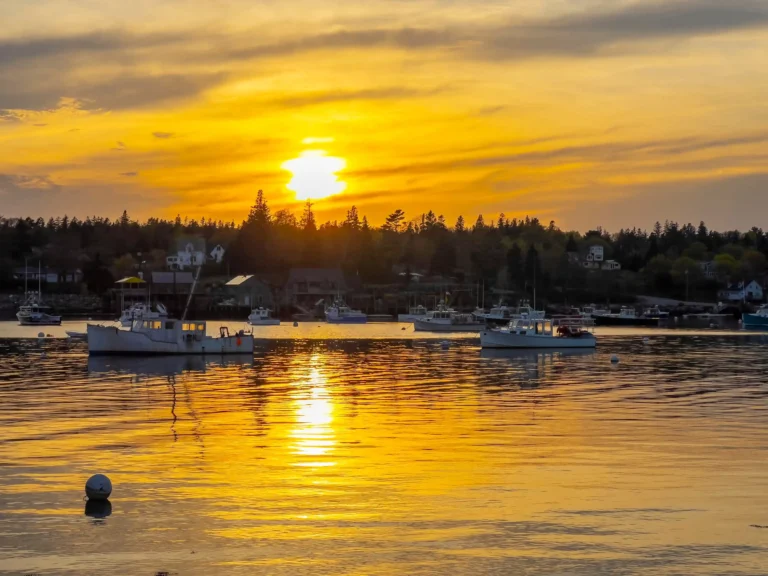
Port Clyde is the kind of small working harbour where the loudest thing is a halyard clanking against a mast, and Marshall Point Light sits right at the edge of it — quieter than every other stop on this list, and better for it.
The trivia gets mentioned everywhere, so here it is once: the wooden walkway to the tower is where Forrest Gump ends his cross-country run in the 1994 film. That’s the whole reference — the lighthouse and the fishing-village setting carry the visit without it.
Plan 30 to 75 minutes, with a small museum on site if you want to linger longer. The walkway has had storm damage in recent seasons, so check current access before you build a stop around walking out to the tower itself.
Rockland Breakwater Light
About halfway out, you realise the lighthouse hasn’t moved very much at all. That’s when the scale of the breakwater finally sinks in — you’re not walking to a lighthouse, you’re walking on a nearly mile-long pile of granite blocks that took eighteen years to build, and it’s going to take you a while too.
This one is different from every other stop on this list, so treat it differently. Budget 1 to 2 hours for the roughly two-mile round trip, more if you want to explore the keeper’s house when volunteers have it open. Skip it entirely if you only have ten minutes to spare, or if a storm’s rolling in — the breakwater gets seriously dangerous in bad weather and lightning.
Good shoes matter here more than anywhere else on this route. The granite blocks have real gaps between them, and there’s nothing to grab onto if your ankle goes.
Owls Head Light
If Rockland Breakwater sounded like more than you signed up for, this is the antidote. Owls Head sits just outside Rockland and asks much less of your legs — thirty to sixty minutes, most of it spent taking in the view rather than committing to a long walk.
It pairs naturally with a Rockland or Camden overnight, and it’s proof that not every lighthouse stop on this coast needs to be an event.
Bass Harbor Head Light
By the time you’ve climbed down the stairway to the viewing platform, you’ll usually have company — this is one of only three lighthouses Acadia National Park manages, and it’s the only one you can drive right up to, which means everyone else with the same idea is there too. A short trail and stairway lead to that shoreline platform, and the whole visit generally takes 30 to 60 minutes depending on how long you spend at the water’s edge.
Here’s the catch: it’s one of the most visited spots on this side of the park, and the parking lot only holds a couple dozen cars. Sunset draws a crowd every single evening in season, so don’t plan a sunset visit assuming you’ll walk straight in. Arrive early or accept you might be circling for a spot.
Treat it as one piece of an Acadia day — paired with a hike or a drive around the quieter side of the island — rather than the entire day’s plan.
Heads up: there’s no toll booth at the lighthouse itself, but the ground it sits on is still inside Acadia National Park. That means your vehicle technically needs a park entrance pass, even though nobody’s checking at a gate on Lighthouse Road. Buy one before you go, or make sure you already have one from earlier in the day — rangers do patrol, and “there was no booth” isn’t an argument that holds up.
A Simple Portland to Acadia Lighthouse Route
This is a loose framework, not a rigid itinerary. Stretch it or compress it depending on your timeline and the weather.
Day 1: Portland / Cape Elizabeth
- Portland Head Light
- Spring Point Ledge Light or Bug Light
Day 2: Midcoast
- Pemaquid Point or Marshall Point
- Overnight option in Rockland or Camden
Day 3: Rockland / Camden
- Rockland Breakwater Light
- Owls Head Light
Day 4: Acadia / Mount Desert Island
- Bass Harbor Head Light as an Acadia-side stop
If the weather turns or a day fills up with other plans, cut a stop rather than rushing through all of them. None of these lighthouses are going anywhere.
Which Lighthouses Are Best If You Only Have Time for Three?
Go with Portland Head Light, Pemaquid Point Light, and Bass Harbor Head Light. That trio gives you the classic Maine lighthouse image, the dramatic rocky Midcoast version, and the Acadia-side finish — three very different settings without adding an extra day to your route.
If you’re spending most of your trip in the Midcoast rather than pushing all the way to Acadia, swap Bass Harbor for Marshall Point or Rockland Breakwater instead.
Best Lighthouse Stops by Traveller Type
| Traveller Type | Best Stops |
|---|---|
| First-time Maine visitor | Portland Head Light, Pemaquid Point, Bass Harbor |
| Short Portland trip | Portland Head, Spring Point, Bug Light |
| Midcoast slow traveller | Pemaquid, Marshall Point, Owls Head |
| Active walkers | Rockland Breakwater, Spring Point |
| Families | Portland Head, Bug Light, Owls Head |
| Photographers | Portland Head, Pemaquid, Bass Harbor |
| Avoiding overpacked days | Bug Light, Owls Head, Marshall Point |
Common Mistakes
- Trying to see too many lighthouses in a single day and rushing every stop
- Underestimating how much time a coastal detour actually adds to a driving day
- Treating Rockland Breakwater like a five-minute stop — it isn’t one
- Assuming every lighthouse tower or interior is open to walk through
- Ignoring the weather and slippery rocks, especially on breakwaters
- Planning a Bass Harbor sunset with no buffer for parking
- Driving well out of your route for a lighthouse just because it showed up on a list
- Turning a scenic stop into a checklist chore instead of a break in the drive
Are Maine Lighthouses Worth Planning Around?
Yes, but selectively. Lighthouses give a Maine coast trip shape and texture, and they’re good anchors for short stops between Portland, the Midcoast, and Acadia. But the best Maine road trip isn’t the one that hits the most lighthouses. It’s the one where the lighthouse stops make the route feel richer without stealing the day from everything else you came for.
If lighthouses are just one piece of a bigger Maine and Atlantic Canada trip, our guide to driving or ferrying from Maine to Nova Scotia is worth a look before you finalize your route.
Frequently Asked Questions
How many lighthouses are in Maine?
Visit Maine notes the state has more than 60 lighthouses along its coastline, plus one on an inland lake. You won’t see all of them on a single trip, and you don’t need to — a handful of well-placed stops covers the scenery without the marathon.
What is the most famous lighthouse in Maine?
Portland Head Light is generally treated as Maine’s classic lighthouse stop and one of its most recognized. Its construction was ordered in the late 1780s and the light was first lit in 1791, which is why it is usually treated as Maine’s oldest lighthouse. It sits inside Fort Williams Park, a short drive from downtown Portland; check current parking and museum details before you go.
Can you visit Maine lighthouses in one day?
You can hit a few near Portland — Portland Head Light, Spring Point Ledge, and Bug Light — comfortably in a single day. Covering lighthouses across the full coast, from Portland through the Midcoast to Acadia, needs several days if you also want time for the towns and hikes in between.
Which Maine lighthouses are best between Portland and Acadia?
Portland Head Light near the start, Pemaquid Point or Marshall Point through the Midcoast, Rockland Breakwater or Owls Head around Rockland/Camden, and Bass Harbor Head Light once you reach Mount Desert Island. That spread covers the route without doubling back.
Are Maine lighthouses free to visit?
It varies. Many lighthouse grounds and viewpoints are free, but museums, some parking areas, and certain tours can carry a small fee. Check current pricing for the specific lighthouse before you go.
Can you go inside Maine lighthouses?
Mostly no. Most lighthouse towers and interiors aren’t generally open to the public, though a few, like Rockland Breakwater, allow access when volunteers are on site, and Portland Head Light opens its tower one day a year. Check official pages for the specific lighthouse before assuming you’ll get inside.
What is the best lighthouse near Portland, Maine?
Portland Head Light, without much competition. It’s the classic image most people have of a Maine lighthouse, and it sits inside Fort Williams Park, a short drive from downtown Portland. Check current parking and museum details before you go.
What is the best lighthouse near Acadia?
Bass Harbor Head Light. It’s the only lighthouse in Acadia National Park you can drive to, and it works well paired with a hike or drive around the quieter side of Mount Desert Island.
Is Rockland Breakwater Light worth it?
Yes, if you’re up for a real walk — roughly two miles round trip on uneven granite. It’s not the stop for a quick five-minute photo, but if you’ve got an hour or two and decent shoes, it’s one of the more memorable lighthouse experiences on this route.
Should I visit West Quoddy Head Light?
Only if you’re intentionally heading further Downeast. It’s a beautiful, well-known lighthouse, but it sits well outside a standard Portland-to-Acadia route, so it makes more sense as part of a longer trip than a detour from this itinerary.
The Short Version
Pick a few stops, not all of them. Use Portland Head Light for the classic start, Pemaquid Point, Marshall Point, Owls Head, or Rockland Breakwater for Midcoast texture, and Bass Harbor Head Light if Acadia is already on your route. Give Rockland Breakwater more time than a quick photo stop — it earns it. And check access, parking, and seasonal hours before building plans around any single lighthouse.
Which part of the Maine coast are you driving — Portland, the Midcoast, or Acadia — and which lighthouse stop are you trying to fit in? Let me know in the comments.