Grand-Pré, Nova Scotia: What to See + Evangeline Trail Guide
Affiliate note: This article may contain affiliate links, which means I may earn a small commission if you book or buy through them – at no extra cost to you. I only recommend things that make sense for this kind of trip.
If you’ve been planning a trip through Nova Scotia, you’ve probably run into three phrases that all sound like they should mean the same thing: Grand-Pré, the Evangeline Trail, and the Landscape of Grand Pré. They don’t. One is a historic site, one is a driving route, and one is a UNESCO-recognized cultural landscape that helps explain the land around Grand-Pré.
None of this is complicated once someone lays it out for you — which is the point of this guide. We’ll cover what Grand-Pré actually is, what the Evangeline Trail means when you see it on a map or in tourism material, and how to fit a visit into a Wolfville or Annapolis Valley day without turning your itinerary into a research project.
Quick Answer: Is Grand-Pré Worth Visiting?
Yes — with a caveat. Grand-Pré is worth visiting if you want a compact, meaningful history stop near Wolfville with real Acadian context, quiet grounds, and a better sense of the landscape you’re driving through in the Annapolis Valley. It is not a long, all-day attraction for most visitors. Somewhere between 45 and 90 minutes covers it for a typical first-timer. Give it longer if the exhibits and tours genuinely interest you.
| Question | Short Answer |
|---|---|
| Best for | Acadian history, UNESCO landscape context, quiet first stop |
| Time needed | 45–90 minutes for most first-timers |
| Best paired with | Wolfville, wineries, farm stops, The Lookoff |
| From Halifax | Roughly 1h–1h15 by car |
| With kids | Works best as a short visit |
| What not to do | Treat the entire Evangeline Trail as one rushed day |
What Is Grand-Pré?
Grand-Pré National Historic Site is managed by Parks Canada, and it exists to commemorate the Acadian settlement of the area and the deportation — often called the expulsion — of the Acadians in the 18th century. That’s the short version, and it’s worth sitting with for a second before you plan around it as just another stop on a list.
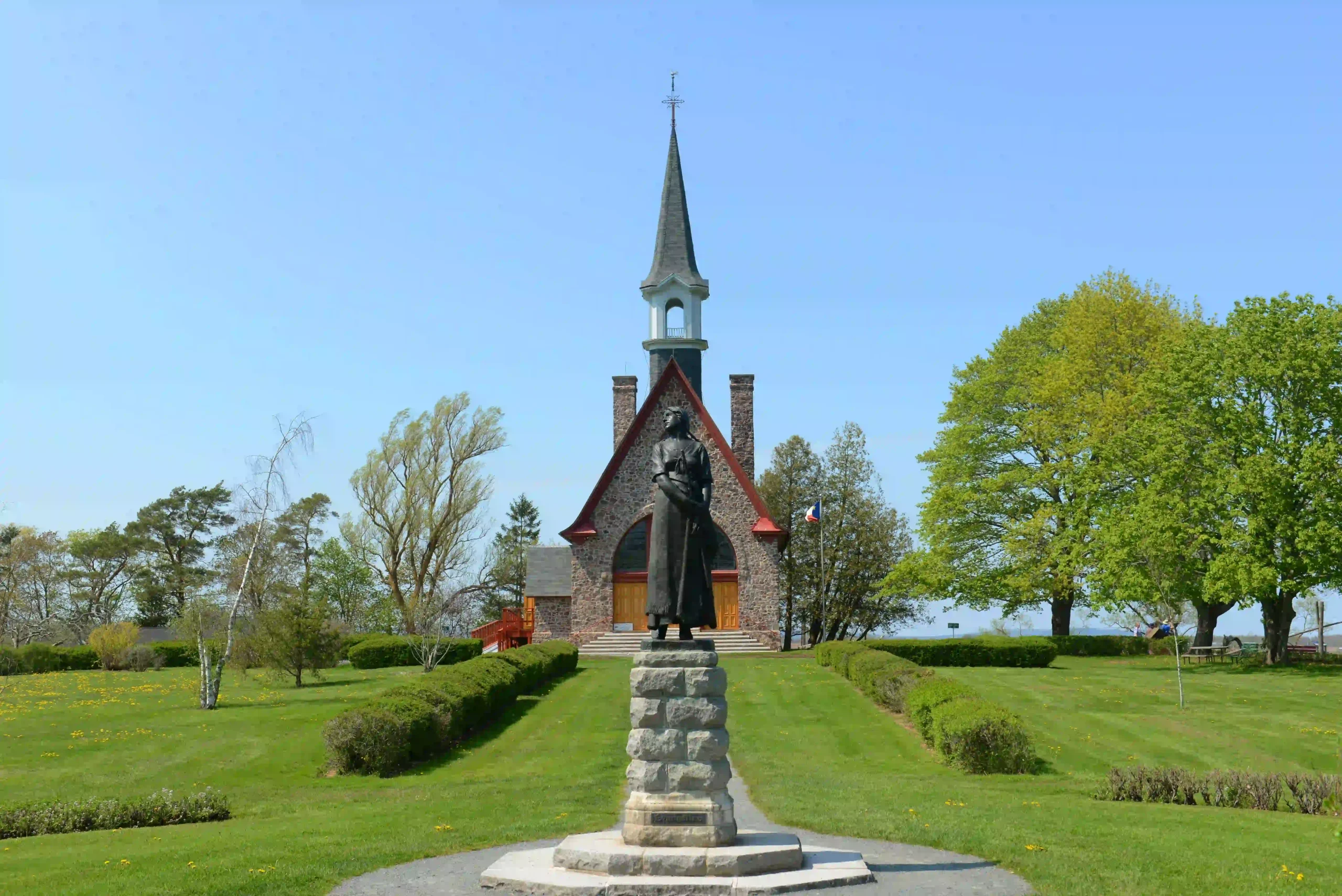
The core visitor experience centers on the Memorial Church, the Evangeline statue outside it, surrounding gardens and grounds, and interpretive exhibits when they’re open. It is quiet on purpose. That does not mean it is empty. The site was built to hold a difficult history with some dignity, not to compete for your attention the way a boardwalk attraction might.
This matters for planning: if you’re the kind of traveler who needs every stop to have a gift shop and a photo line, recalibrate before you arrive. If you’re comfortable with a slower, more reflective stop, Grand-Pré adds real depth to a Wolfville or Annapolis Valley trip. You can read more about the full Parks Canada site details before you go.
What Is the Landscape of Grand Pré?
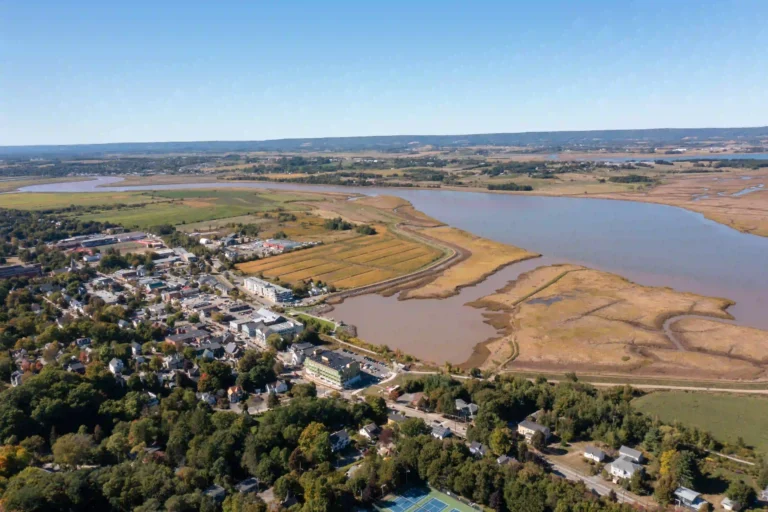
Here’s where things widen out. The Landscape of Grand Pré is a UNESCO World Heritage cultural landscape, inscribed in 2012 — and it’s bigger than the historic site itself. It recognizes the dykeland farming system the Acadians engineered, the agricultural landscape that grew out of it, and the fact that the land is still farmed today, centuries later.
In practice, this means the fields around Grand-Pré aren’t just scenery. They’re part of the story. The dyke system the Acadians built to reclaim marshland for farming is still visible, and still functioning, in the landscape you’re looking at from the site’s grounds. That continuity — settlement, deportation, and ongoing agricultural use on the same land — is exactly what the UNESCO listing recognizes, and you can find more on the working landscape itself through the Landscape of Grand Pré organization.
Grand-Pré National Historic Site isn’t separate from this landscape. It’s a gateway into it.
What Is the Evangeline Trail?
This is the one that trips people up. The Evangeline Trail is not a single attraction. It’s a scenic driving route and region that runs along Nova Scotia’s Bay of Fundy and Annapolis Valley coast, tied loosely together by Acadian history and geography, not by a single ticketed destination at the end of it.
The name comes from Longfellow’s poem “Evangeline,” a 19th-century literary work built around the Acadian exile. Evangeline is a literary figure — a symbol tied to that history, not a real historical person you’ll learn about from a tour guide reciting facts. It’s worth being clear on that distinction, because plenty of visitors arrive expecting Evangeline to be a documented figure from the deportation itself, and she isn’t.
For a first-time visitor, the practical takeaway is this: don’t try to “complete” the Evangeline Trail the way you might tick off a checklist. Grand-Pré combined with a stop in Wolfville gives you enough of the story and the landscape without turning a scenic route into homework.
What to See at Grand-Pré National Historic Site
Memorial Church and Exhibits
The Memorial Church is the visual and emotional center of the site, built to commemorate the Acadian parish and community that once stood here. Inside and around it, interpretive exhibits give historical context. Hours, tour availability, and seasonal access change, so check current details with Parks Canada before you plan your day around them.
Evangeline Statue
The statue outside the church is the most photographed element of the site, and it’s worth seeing — just hold onto the literary-versus-historical distinction from the section above. It’s a monument to a symbol, not a statue of a documented individual.
Gardens and Grounds
The grounds are compact and calm, which makes Grand-Pré a manageable stop even if you’re not planning to spend hours inside exhibits. Appearance shifts with the seasons — more vivid in summer, quieter and starker later in the year.
Dykeland and Landscape Context
Don’t stop looking once you leave the immediate grounds. The fields beyond the site are part of the dykeland system connected to the UNESCO landscape, and understanding that context changes how the whole area reads on the drive out.
How Long Do You Need at Grand-Pré?
- 30 minutes: Technically possible, but tight. You’ll see the statue and the church exterior and not much else.
- 45–90 minutes: The realistic range for most first-time visitors — enough time for the church, exhibits, and a walk through the grounds.
- 2 hours or more: If you’re reading through the exhibits in full or joining a tour.
- Half a day: Only if Acadian history is a primary reason for your trip, not a side stop.
Don’t block off a full day for Grand-Pré alone unless history is genuinely the main event. For most travelers passing through the Annapolis Valley, it’s one strong stop among several.
How to Pair Grand-Pré with Wolfville
Grand-Pré sits roughly 10 minutes from Wolfville by car, which makes the pairing almost automatic. The natural order is Grand-Pré first, then Wolfville for lunch and a walk down Main Street — history before you shift into a more relaxed pace.
This combination works well as the backbone of a day trip from Halifax through the Annapolis Valley, and if Wolfville itself is new to you, our guide to Wolfville, Nova Scotia covers the town in more depth than we’re going into here.
Can You Visit Grand-Pré from Halifax?
Yes. Halifax to the Grand-Pré and Wolfville area is roughly one hour to one hour fifteen minutes by car via Highway 101, depending on your starting point and traffic. It’s an easy addition to a focused Annapolis Valley day rather than a trip that needs its own overnight.
A reasonable sample route looks like this: Halifax to Grand-Pré, then Wolfville, then one additional stop — The Lookoff, a farm, or a winery — before heading back to Halifax. Notice that’s one additional stop, not four. Stacking too much onto this route is the most common way people run out of daylight.
Best Add-Ons After Grand-Pré
Wolfville
The easiest and most natural add-on — food, a break, and a walkable Main Street after a quieter history stop.
The Lookoff
A scenic valley view, weather permitting. Good if you have an extra 20 to 30 minutes and clear skies.
A Farm Stop or Winery
Pick one, not both, if your day is already built around Grand-Pré and Wolfville. Our guides to Annapolis Valley farm stops and Wolfville wineries can help you choose based on what you’re actually in the mood for.
The Fall Version
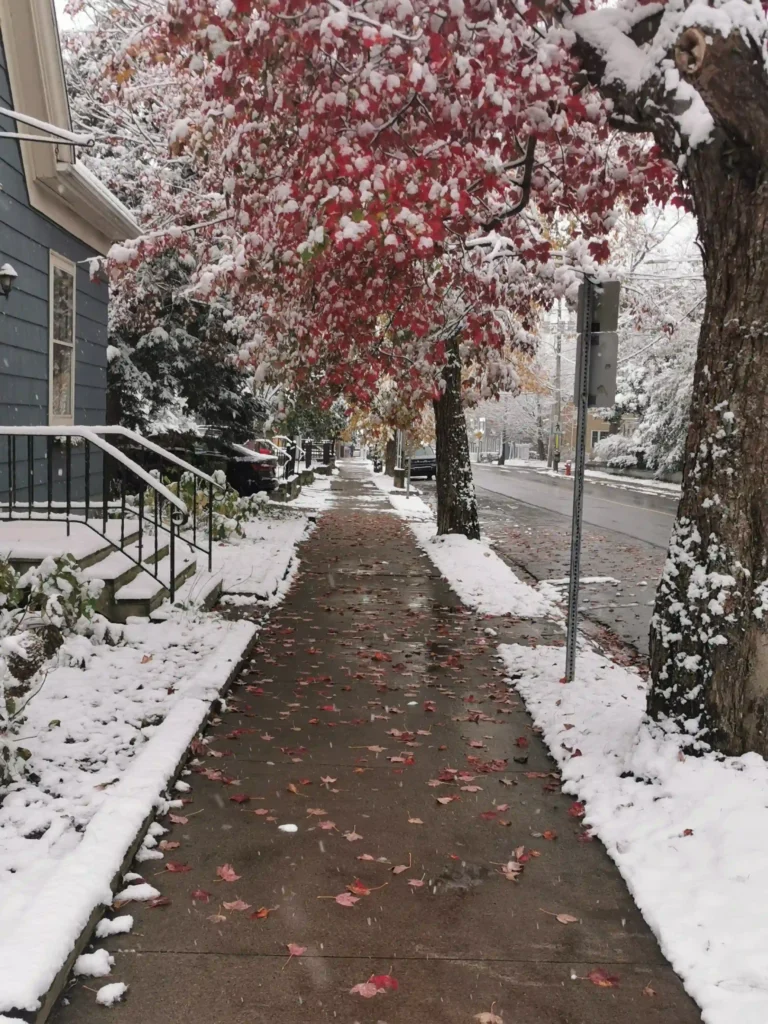
The dykeland landscape around Grand-Pré reads differently in autumn — starker fields, lower light. If you’re visiting in that window, our guide to the Annapolis Valley in fall is worth a look before you go.
Grand-Pré with Kids
This works best as a short, focused visit rather than an extended history lesson. Younger kids likely won’t connect with the exhibits the way adults will, but the grounds and statue give them something concrete to look at while the story gets explained in simpler terms. Older kids and teens tend to follow the history more easily, especially with some context beforehand.
Keep expectations realistic and keep the visit shorter rather than longer. If you’re planning a broader trip with the family, our guide to the Annapolis Valley with kids covers pacing in more detail.
What to Skip or Avoid
- Trying to drive the entire Evangeline Trail in a single day. It’s a region, not a checklist.
- Treating Grand-Pré as an all-day attraction if your interest in the history is casual rather than deep.
- Skipping the context entirely and reducing the stop to a photo of the statue.
- Stacking Annapolis Royal, Digby, multiple wineries, several farms, and Halls Harbour all after Grand-Pré in the same afternoon.
- Forgetting to check current Parks Canada hours, fees, and tour availability before you arrive.
- Treating Evangeline as a literal historical figure rather than the literary symbol she is.
Is Grand-Pré Better as a Stop or Overnight Base?
For most visitors, Grand-Pré is a stop, not a base. There isn’t much reason to overnight directly at the site. Wolfville is the easier and more practical base for first-timers, with more food, lodging, and flexibility nearby. If you’d rather stay somewhere quieter and closer to the rural landscape and wineries, our guide to where to stay in the Annapolis Valley breaks down the options by what kind of trip you’re actually running.
FAQ
Is Grand-Pré worth visiting?
Yes, if you want a compact history stop with real Acadian context and a connection to the surrounding UNESCO landscape. It’s not built for visitors looking for a large-scale, high-energy attraction — it’s a quieter, more reflective stop that pairs well with Wolfville.
Is Grand-Pré a UNESCO World Heritage Site?
The Landscape of Grand Pré is the UNESCO World Heritage cultural landscape, inscribed in 2012. Grand-Pré National Historic Site sits within, and is closely tied to, that broader landscape.
How long do you need at Grand-Pré?
Plan on 45 to 90 minutes for a typical first visit. That covers the Memorial Church, the statue, exhibits, and a walk through the grounds. Add more time if you want to read exhibits in depth or join a guided tour.
Is Evangeline a real person?
No. Evangeline is a literary figure from Longfellow’s 19th-century poem, symbolically tied to the Acadian exile. She isn’t a documented historical figure from the deportation itself, even though the statue and story are closely associated with the site.
Can you visit Grand-Pré from Halifax?
Yes. It’s roughly one hour to one hour fifteen minutes from Halifax by car via Highway 101, depending on your starting point and traffic, which makes it a realistic day trip rather than a multi-day commitment.
What is the Evangeline Trail?
The Evangeline Trail is a scenic driving route and regional travel corridor through parts of Nova Scotia tied to Acadian history, the Bay of Fundy coast, and the Annapolis Valley. It is not one single attraction, so most first-time visitors should treat Grand-Pré and Wolfville as a focused introduction rather than trying to complete the whole route in one day.
How far is Grand-Pré from Wolfville?
Grand-Pré is roughly 10 minutes from Wolfville by car, which is why the two stops pair so naturally. For most visitors, Grand-Pré works best before Wolfville: do the history stop first, then use Wolfville for lunch, cafés, and a more relaxed wander.
Is Grand-Pré good with kids?
It can be, as long as you keep the visit short and realistic. Younger kids may connect more with the grounds, gardens, and statue than the exhibits, while older kids may get more out of the Acadian history with some context beforehand.
What should you pair with Grand-Pré?
Wolfville is the easiest pairing, followed by one simple add-on such as The Lookoff, a farm stop, or one Wolfville-area winery. The mistake is stacking Grand-Pré onto every other Annapolis Valley stop in the same afternoon.
The Short Version
Grand-Pré is a quiet but meaningful first stop, not a big flashy attraction, and 45 to 90 minutes is enough for most first-time visitors. Pair it with Wolfville rather than trying to build an entire day around it alone. Understand Evangeline as a literary symbol tied to real history, not a literal historic guide. And remember that the Evangeline Trail is a route and a region, not one attraction you need to complete.
If you’re building out a longer trip around this part of Nova Scotia, our Nova Scotia itinerary guide can help you see where Grand-Pré fits into the bigger picture — without turning your one good history stop into an overloaded day.