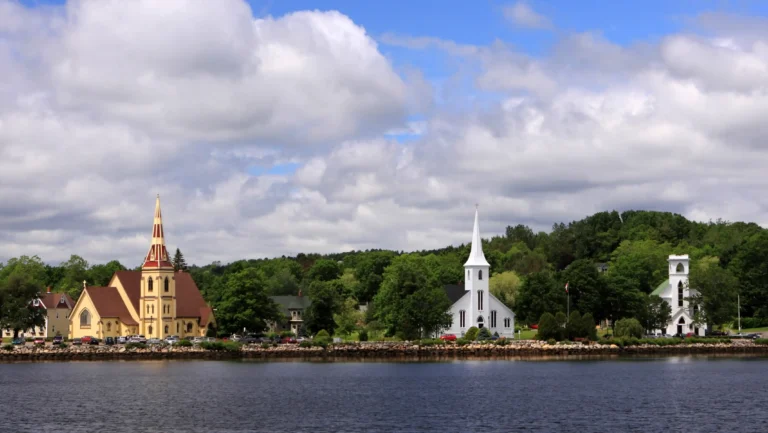
Cape Breton in Winter: Worth It or Not?
Affiliate note: This article may contain affiliate links, which means I may earn a small commission if you book or buy through them – at no extra cost to you. I only recommend things that make sense for this kind of trip.
Photo: Destination Cape Breton / Adam Hill, courtesy of Tourism Nova Scotia
Yes. Cape Breton in winter is worth the trip, as long as you go for the right kind of visit and the conditions line up. My own rule is simple: if the roads are in good shape and no storm is moving in, I’d go.
That rule is a starting point, not a permission slip. You also need to think about the specific route you’re driving, the drive home, the vehicle you’re in and how comfortable you are behind the wheel in winter. A clear morning in one place tells you very little about the next three days somewhere else.
But here’s the part a lot of winter travel advice skips. Cape Breton doesn’t stop being Cape Breton when the whale boats come out of the water. The Highlands are still there. The coastline is still there. What changes is the shape of the trip — fewer moving parts, fewer things on the schedule, and a lot more time to be in one place instead of rushing between five.
Who Will Love Cape Breton in Winter (and Who Won’t)?
Winter suits travellers who want a slower stay with a clear focus. Scenery, a quiet base for a few nights, a day on the ski hill or a short snowshoe outing — those are the trips that work.
It suits you less if your wish list looks like a summer brochure. Whale tours, a full roster of open attractions, spontaneous late dinners wherever you happen to stop, and a tightly scheduled loop of the whole island all belong to a different season.
That doesn’t mean the island empties out. People live here year-round, and towns keep going. It just means you plan around what’s actually running rather than what was running in August.
A few things nobody can promise you: deep snow cover on the day you arrive, dramatic sea ice, bargain rates or blue skies. Some winter visits get all of that. Some get grey drizzle. Go for the trip, not for a photo you’ve already imagined.
What Makes Winter Worth Considering?
The good version of a winter visit usually takes one of these shapes. They’re different trips, so pick the one you actually want.
A stay, not a sprint
The best winter trip here might be the one where you barely move. Pick a base, settle in, and give yourself room to enjoy the surroundings instead of trying to tick off the entire island. Two nights in one place often beats four nights spread across three.
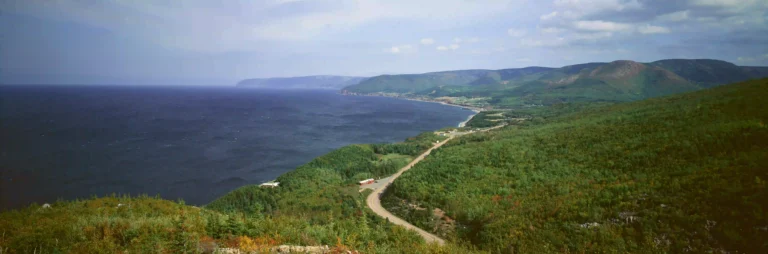
Scenery on the Cabot Trail, when conditions allow
The Highlands in winter look like a different landscape from the summer postcard. Driving part of the Cabot Trail for the views can be the whole point of the day — when the road, visibility and safe places to stop all cooperate.
That last bit matters. Use proper, cleared pull-offs only. Don’t stop in the travel lane, on an uncleared shoulder or in a lookout that hasn’t been plowed. If there’s nowhere safe to pull over, the view will still be there next time.
A ski day at Cape Smokey
Near Ingonish, Cape Smokey can anchor a ski-focused trip on the eastern side of the Highlands. What makes it stand out for me is the view: looking down the ski slopes with the Atlantic Ocean ahead is genuinely spectacular. That’s a reason to choose this particular hill, not just a reason to go skiing somewhere.
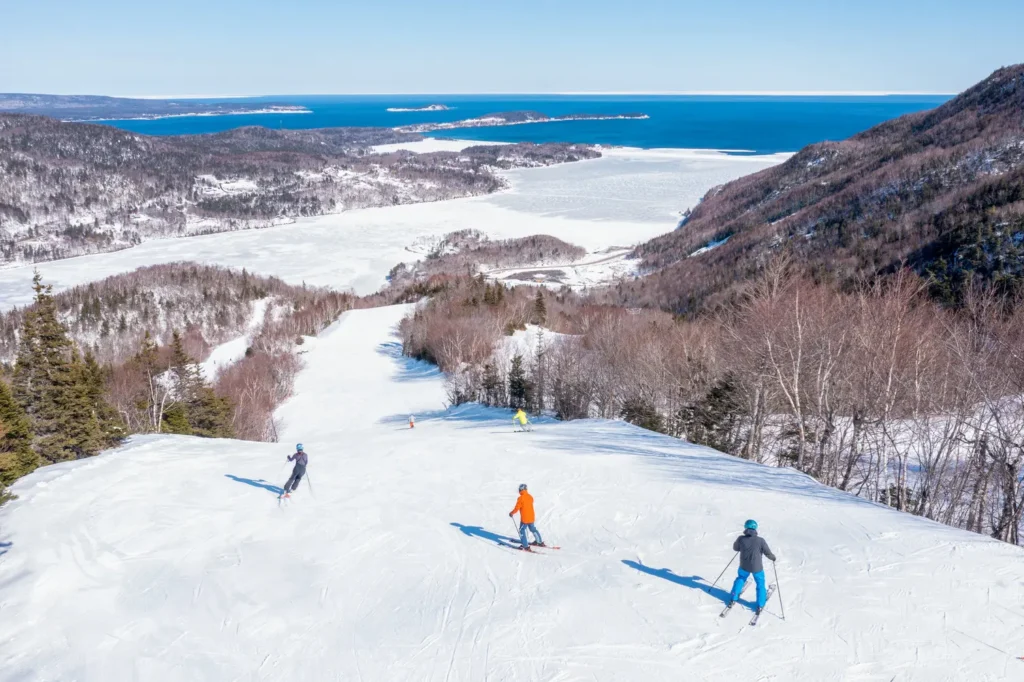
Photo: Tourism Nova Scotia / Adam Hill
Check Cape Smokey’s winter operating information and current conditions before building the trip around it. Its website also promotes summer activities, so make sure you’re checking the details for skiing and your intended dates.
A short winter walk or snowshoe
You don’t need a summer trail ranking to get outside. Parks Canada’s guide to winter in Cape Breton Highlands National Park lists options for walking, snowshoeing and cross-country skiing, including places like Clyburn Valley and Freshwater Lake.
Treat those as starting points for your research rather than guaranteed easy outings on any given date. And skip anything involving walking on lake or coastal ice — that’s not part of this plan.
Is the Cabot Trail Open in Winter?
Yes. Parks Canada confirms on its hours of operation page that the Cabot Trail itself is open year-round. The national park’s operating season is a different story: it runs roughly from spring to fall, and its visitor services close for the winter.
So “the road is open” and “the summer experience is available” are two separate statements. In winter, keep these apart in your head:
- Temporary weather closures. An open road can still close or become a bad idea during or after a storm.
- Trailhead and parking access. Parks Canada notes that some trailheads may have limited access in winter, and the Cabot Trail takes priority for plowing.
- Visitor-centre services. Don’t expect them to be running the way they do in summer.
- Local accommodation and dining. Some places close for the season. Confirm the ones you’re counting on.
- Trail conditions. Winter trails aren’t groomed like a ski resort, and markers can be drifted over.
Also: driving the full loop isn’t the measure of a successful winter trip. Focusing on one side of the island, or a shorter stretch, can easily be the better day. There’s no universally “safer” direction and no reliable winter drive time to quote you — that depends on the day.
Where Should You Base Yourself in Cape Breton in Winter?
Choose your base by what you came to do, not by what looks central on a map. Whatever you pick, confirm winter rooms and meals for your exact dates before you commit.
Ingonish area makes the most sense if your trip centres on Cape Smokey or the eastern Highlands. Check date-specific services before you go.
Baddeck works if you want a town stay in the Bras d’Or Lake area. It’s a reasonable base for that kind of trip — just don’t treat it as an easy springboard to every Highland stop in winter.
Chéticamp fits plans on the western side of the island, as long as accommodation and food are confirmed.
Sydney gives you city services and an urban-style stay. It’s not a close substitute for a Highland base, though.
For the bigger picture on each area, my guide to where to stay in Cape Breton is the next step. Read its activity examples as summer context, not proof that anything is operating in January.
What about food?
One place I recommend in Baddeck is Highwheeler Cafe & Bakery, on Chebucto Street. That’s a personal recommendation, not a promise of winter opening: Tourism Nova Scotia’s listing currently shows a May-to-October season, and I haven’t been able to confirm it opens in winter. Contact the cafe through its Facebook page before you plan a morning around it.
That’s really the rule for food anywhere on the island in winter. Know where you’re eating before you’re hungry, especially in smaller communities.
What Can You Actually Plan to Do?
Keep the list short. A winter trip with three solid options beats a summer list with fifteen question marks.
- A scenic drive on the stretch that suits your base, timed for daylight and decent conditions.
- Skiing at Cape Smokey, once you’ve checked it’s operating.
- A winter walk or snowshoe, chosen from Parks Canada’s current winter guidance.
If you want to snowshoe without bringing your own gear, Parks Canada has offered snowshoe rentals by advance reservation, with pick-up arranged through a visitor centre. Check the current reservation and collection arrangements first — don’t assume the centre is running normal visitor services just because you can collect gear there.
A few seasonal assumptions to drop before you go:
- The Alexander Graham Bell museum in Baddeck isn’t a winter backup. Its published operating season runs from late spring into fall.
- Fortress of Louisbourg won’t be the summer experience. The costumed, full-programme version is a warmer-month thing.
- Live music isn’t automatic. If you’re hoping for a ceilidh, find an actual scheduled event rather than expecting one every night.
Parks Canada also points out that cell service can be unreliable in the mountainous parts of the park, so tell someone your plans before you head out on a trail.
When Would I Postpone a Winter Trip to Cape Breton?
Here’s where I’d change plans, without much debate:
- Storm warnings or poor route conditions. Check Nova Scotia 511 for roads and Environment and Climate Change Canada for weather alerts.
- No suitable vehicle, no winter equipment, or low confidence driving in winter. Booking a bigger vehicle doesn’t fix the last one. If winter driving makes you uneasy, that’s a good reason to choose a different season.
- No confirmed place to sleep or eat in the area you’re heading to.
- A fixed schedule with no room to move. Winter trips need the freedom to shift a day.
- A wish list built around summer activities. You’ll spend the trip noticing what’s closed.
Two more things. Good weather in Halifax isn’t proof of good conditions in the Highlands. And “no storm in the forecast” is one useful check, not a safety certificate — the province’s winter driving tips are worth a read before any long drive.
For the province-wide driving side of things — route planning, what to carry, how to pace a longer trip — my Nova Scotia winter road trip guide covers that ground so this post doesn’t have to.
And if winter turns out not to fit, my Cape Breton itinerary is built around the warmer months. Use it as a broader plan, not a winter one — the route and activities need seasonal adjustment.
So, Is Cape Breton in Winter Worth It?
For the right trip, yes. A quiet stay, a ski day with an ocean view, or a few hours of Highland scenery can be a real reason to make the drive, not a consolation prize for missing summer.
Pick the experience you actually want. Confirm the pieces that make it work: the road, the weather, your bed, your meals and whatever activity you’re building the trip around. Then, if the roads are good and nothing’s brewing, go.