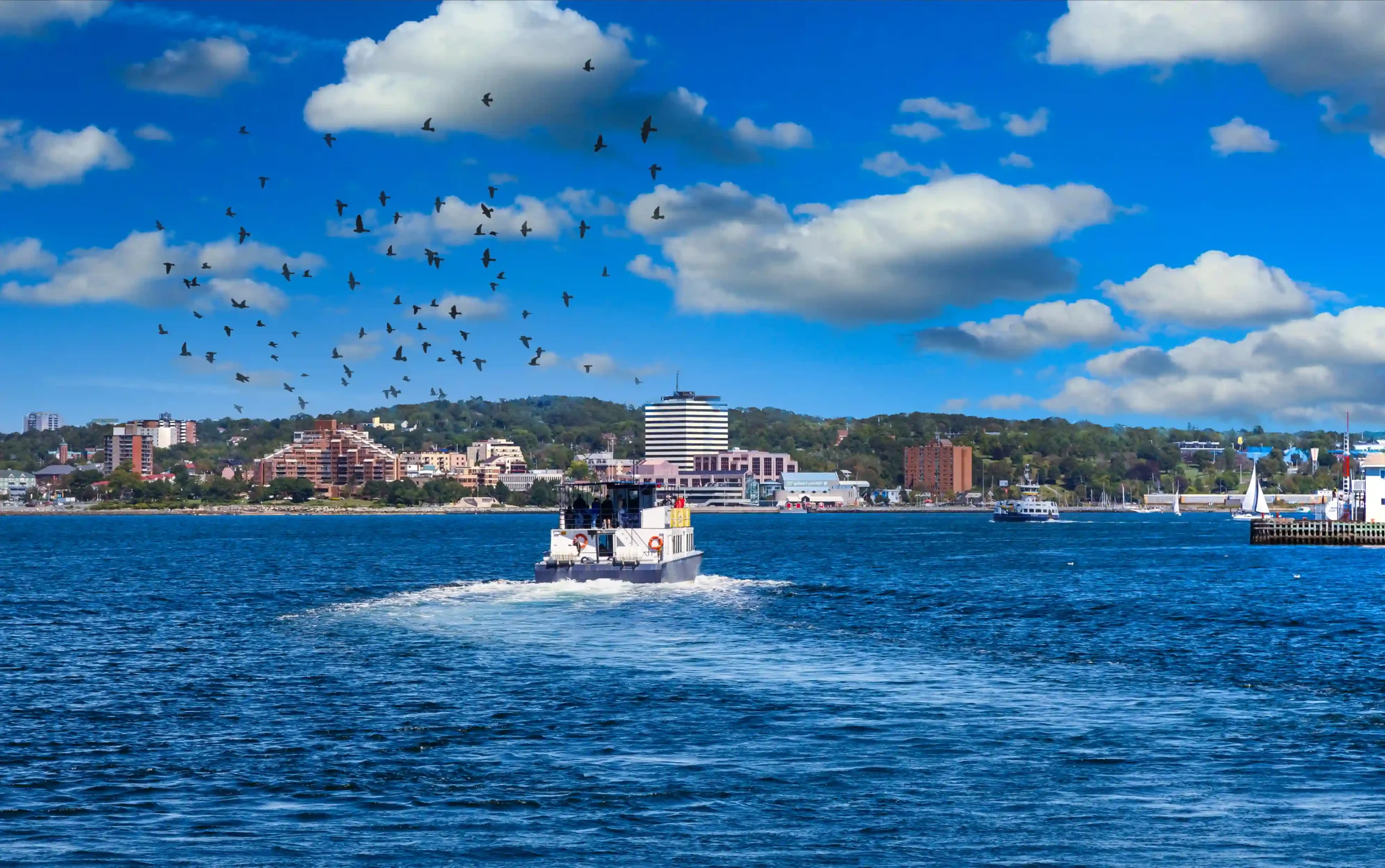
3 Days in Halifax: The Best Itinerary for First-Time Visitors
Affiliate note: This article may contain affiliate links, which means I may earn a small commission if you book or buy through them – at no extra cost to you. I only recommend things that make sense for this kind of trip.
Last checked: November 20, 2026
Three days fits Halifax well because the shape of the trip already makes sense: one day for the city itself, one day for the coast, one day for the museums and the neighbourhood you’d otherwise miss. This itinerary assumes three full days on the ground — arrival and departure add to that. Swap the days around the weather and venue opening days. If your trip includes a Saturday, put the waterfront day there for the Seaport Farmers’ Market.
That’s the pitch. Here’s how to actually spend the time.
Quick Answer: How to Spend 3 Days in Halifax
Spend Day 1 on the Halifax waterfront, Citadel Hill, the Public Gardens, and dinner downtown. Use Day 2 for Peggy’s Cove and the coastal drive. Keep Day 3 for the Maritime Museum, Alexander Keith’s, and the North End.
Downtown Halifax is the easiest base — most Day 1 and Day 3 stops are within walking distance on the peninsula. If you’re renting a car for Day 2, check the specific pickup location and opening hours before committing to any base; not all rental offices are equally accessible from every part of the city or from Dartmouth.
| Day | Main Plan | Best For |
|---|---|---|
| Day 1 | Waterfront, Seaport Market if it’s Saturday, Citadel Hill, Public Gardens | First feel of the city |
| Day 2 | Peggy’s Cove and the coastal drive | Classic Nova Scotia coast |
| Day 3 | Maritime Museum, brewery/history stop, North End | Museums and local feel |
Day 1 — Waterfront, History, and Your First Halifax Dinner
Halifax is a city you understand best on foot. Start at the water and work your way up — literally.
Morning — Halifax Waterfront and Seaport Farmers’ Market
If your trip includes a Saturday morning, start at the Halifax Seaport Farmers’ Market. If not, start on the waterfront with coffee near the boardwalk and treat the market as a bonus rather than the anchor — it’s worth going out of your way for, but the boardwalk works just as well on any other morning.
The boardwalk stretches about 4km along the harbour. It doesn’t feel like it. You’ll pass fishing boats, tall ships, and the kind of old warehouse architecture that most North American cities knocked down decades ago. Halifax kept it.
If you’re visiting in season, check whether the Tall Ship Silva is running harbour cruises — Ambassatours lists a sailing cruise that runs roughly two hours. It’s a good alternative to the full morning waterfront walk if the timing works, but be realistic: doing both the cruise and reaching the Citadel before the noon cannon is a tight fit. Pick one or plan to skip the cannon.
Afternoon — Halifax Citadel and the Public Gardens
If catching the noon cannon is a priority, head up to the Citadel before noon rather than after lunch. The Halifax Citadel National Historic Site sits at the top of Citadel Hill and gives you the best view over the harbour and the city grid below. It’s a proper star-shaped British fortress — the kind you see in history books — and it’s been watching over Halifax since 1856.
Admission and seasonal programs change year to year, so check the official Parks Canada page before you go. The noon cannon is part of the classic Halifax experience when it’s running. It’s louder than you expect.
Spend about 90 minutes here. The costumed interpreters from the 78th Highlanders are worth engaging — they’re not just decoration.
After the Citadel, walk on to the Halifax Public Gardens. Free to enter, gates open at 8am and close 30 minutes before dusk. It’s a formal Victorian park that opened in 1867 — manicured flower beds, a bandstand gazebo, old cast-iron gates. It’s the kind of place you don’t expect to linger but somehow do.
Evening — Where to Eat Downtown
For your first dinner in Halifax, two options worth knowing:
The Five Fishermen — on Argyle Street, a few blocks from the waterfront. The building started as a schoolhouse in 1817, then became a funeral home that handled bodies from both the Titanic disaster and the 1917 Halifax Explosion. It’s been a restaurant since 1975. Best treated as a reservation dinner — the history alone is worth planning around.
Drift at the Muir Hotel — Drift is on the waterfront at Queens Marque, with Atlantic Canadian dishes and a good wine list. More modern in feel than the Five Fishermen. A solid option if you want to end the day at the harbour.
Day 2 — Peggy’s Cove and the Coastal Drive
This is the day you leave the city. Don’t skip it.
Why Peggy’s Cove Is Worth It (And When to Go)
Peggy’s Cove is about a 50-minute drive southwest of Halifax, and yes — you’ve probably seen the lighthouse in a hundred photos. Here’s the thing: it still delivers. A small fishing village of about 30 residents, a weathered red-and-white lighthouse sitting on a sweep of granite rock above the Atlantic, boats bobbing in the cove below. It’s exactly what the photos promise.
The catch is timing. Summer mornings before 9am tend to be quieter than mid-morning and afternoon — fewer tour groups, better light. That said, conditions at the site vary; go when you can and use the time of day as a guide, not a guarantee.
Entry to Peggy’s Cove is free. Parking is free. Budget for a coffee and a bowl of chowder at Sou’Wester Restaurant right by the lighthouse.
One safety note: stay back from the water’s edge and any area where waves can reach. The signs are not decoration — waves here come without warning. Explore the village and harbour, and use the designated viewing areas around the lighthouse. Follow posted warnings and stay well back from exposed edges, even where the rocks look dry.
How to Get There: Car Rental vs. Guided Tour
Rent a car — the most flexible option if you’re comfortable driving. Halifax has all major rental companies (Enterprise, Hertz, Budget). Compare current rates before you build the budget around it — prices vary heavily by season and availability. Build in time for pickup and return, and confirm office hours before planning your morning.
The drive itself is part of the experience: the coastal route via NS-333 (the Lighthouse Route) passes through Indian Harbour, St. Margarets Bay lookouts, and fishing communities worth a slow stop. If you’re based in Dartmouth, factor in the bridge crossing and check parking at Peggy’s Cove before you go.
Guided tour — if you’d rather not drive, half-day small-group tours from downtown Halifax include hotel pickup and cover Peggy’s Cove with a guide. Check current pricing directly with operators before booking. The downside: you’re on someone else’s schedule. Worth it if driving isn’t an option.
Taxi — manageable if you’re splitting with others. Confirm current flat rates directly with local taxi companies before the trip.
What to Do Once You’re There
The village itself is worth a wander — a handful of galleries and craft shops, the cove with its working boats, and the granite landscape around the lighthouse. The whole visit naturally takes 2–3 hours, which leaves time to stop at one of the coastal lookouts on the drive back.
If you’re back in Halifax by mid-afternoon, the Canadian Museum of Immigration at Pier 21 is a 10-minute walk from the waterfront. This was the entry point for over a million immigrants to Canada between 1928 and 1971. Check current admission rates on the Pier 21 website before you go.
If you’re thinking about getting out on the water while you’re in Halifax, the kayaking and SUP guide for Halifax covers the best options from the harbour and around Dartmouth.
Day 3 — Maritime Museum, Alexander Keith’s, and the North End
The first part of the day covers two of Halifax’s major visitor stops. The evening is a different pace entirely.
Morning — Maritime Museum of the Atlantic
The Maritime Museum of the Atlantic sits right on the waterfront boardwalk — you could practically walk into it by accident, which wouldn’t be the worst thing that’s ever happened. It covers Halifax’s entire relationship with the sea: shipbuilding, trade, the Mi’kmaq people, the 1917 Halifax Explosion, and yes — one of the largest collections of Titanic artifacts outside the UK.
After the Titanic sank in April 1912, Halifax cable ships were among the vessels dispatched to recover victims and floating material from the ocean surface. The museum holds artifacts from that recovery effort.
Check current admission on the museum’s website — pricing varies by season. Spend 90 minutes to 2 hours here; it earns it.
Afternoon — Alexander Keith’s Brewery Tour
A short walk south brings you to Alexander Keith’s Nova Scotia Brewery, a historic Halifax brewery brand dating back to 1820. Locals apparently loved his beer so much they elected him Mayor of Halifax three times. That’s one way to build brand loyalty.
The tour is theatrical — costumed guides, 19th-century atmosphere, beer tasting at the end. Adult admission runs around CAD $36 at time of writing — check current prices and tour times directly with the operator before booking. The experience leans more into Halifax history and atmosphere than a behind-the-scenes production tour, which surprises some visitors. That’s where the interest is anyway.
If immersive theatre isn’t your thing, skip the tour and explore the building’s ground-floor market instead. The building alone is worth a look.
North End: Where Halifax Feels Less Like a Stopover
Spend your last evening in the North End. It’s a neighbourhood that’s developed its own character over time — independent coffee shops, bookstores, gallery spaces, and restaurants that draw a local crowd. The waterfront has its own appeal; this is a different register, and worth experiencing before you leave.
Walk along Agricola Street. The food options here tend toward the casual and neighbourhood-focused. Let yourself wander for an hour before dinner.
The North End is also where Halifax’s creative energy is most visible — murals, gallery spaces, the kind of street-level activity that tells you a city has more going on than the tourist map suggests.
If you’re visiting solo — especially if you’re out late — the Halifax solo female travel safety guide goes into more detail on areas, transit, and late-night route choices.
Where Should You Stay in Halifax for 3 Days?
There’s no single right answer — it depends on your travel style, budget, and how you’re handling Day 2 transport. The where to stay in Halifax guide goes into neighbourhoods in detail; here’s the short version for a three-day trip.
Downtown Halifax
Downtown is the simplest base for this itinerary. Most Day 1 and Day 3 stops are on the peninsula, and rental car offices are reachable without a long detour — confirm the specific office’s hours and location before you plan an early Day 2 start. Address, hills, and weather affect walkability; check your specific property before assuming everything is a short walk.
Compare Halifax stays on Expedia — this searches the full city; use the map view to filter for properties on the downtown peninsula.
North End
If you want something a bit removed from the busy waterfront core, the North End is a walkable neighbourhood with its own dining scene and a shorter trip to Agricola Street on your last evening. It’s still on the Halifax peninsula. Walk times to the waterfront vary depending on where exactly you’re staying — check your specific property’s location rather than relying on a neighbourhood-wide estimate.
Compare stays in and around Halifax’s North End on Expedia — results may include surrounding areas; use the map view to confirm you’re within the neighbourhood.
Dartmouth
Dartmouth sits across the harbour. The foot ferry to Halifax runs regularly during the day and makes for a pleasant commute — the harbour crossing itself is worth it. Whether Dartmouth makes sense as a base depends on the specific property: the search covers the whole city, and not every result is close to the Alderney ferry terminal, so check the location and your complete evening return journey before booking. Ferry hours are limited later in the evening.
For Day 2, check car rental availability and pickup location from Dartmouth specifically — don’t assume options or hours match what’s available downtown.
Compare Dartmouth stays on Expedia
What Does a 3-Day Halifax Trip Actually Cost?
These are rough planning indicators, not guaranteed live rates. What you spend depends on your accommodation nights (which vary with arrival and departure times), whether you’re sharing a room, meals, paid attractions, Day 2 transport, taxes, and tip. Those components add up differently for everyone, and accommodation alone varies enough by season and booking time that a single total figure would mislead more than it helps.
Food — Expect to spend roughly CAD $50–90 per day eating a mix of sit-down meals and casual stops. Halifax isn’t cheap by Atlantic Canadian standards, but it’s well below Toronto or Vancouver. A lobster roll and a bowl of chowder together will likely run you CAD $35–45 at a mid-range spot — treat those as ballpark figures, not menu prices.
Attractions:
- Halifax Citadel: check current Parks Canada rates — seasonal programs and free-admission periods change year to year
- Maritime Museum: check current rates on the museum website — pricing varies by season
- Alexander Keith’s Brewery tour: roughly CAD $36 per adult at time of writing — confirm current rates before booking
- Peggy’s Cove: free entry and parking
Transport — If you rent a car for Day 2, compare current rates before building the budget around it. Prices vary heavily by season and availability. Factor in parking at Peggy’s Cove and your return time.
When Is the Best Time to Visit Halifax?
June to September is peak season — long daylight hours, full Citadel programming, warmth on the water, and Peggy’s Cove at its most photogenic. It’s also when tour buses arrive and accommodation prices climb.
May and October tend to be quieter, with smaller crowds at Peggy’s Cove. Weather in both months is variable — plan for it rather than banking on it. Some seasonal programming may run on reduced hours; check venues directly before you go.
November to April — Halifax doesn’t close, but the waterfront goes quieter, some seasonal spots shut down, and the Atlantic wind in February is a conversation. If you’re coming from somewhere properly cold, you’ll probably be fine. If you’re coming from Southeast Asia expecting “not that bad,” adjust your expectations.
For most international travellers, late May, early June, or September hits a reasonable balance between good weather and manageable crowds.
Three Days, Three Distinct Days
One day for the city. One day for the coast. One day for the museums and a neighbourhood that most visitors miss. That’s the structure — and it works because each day feels different from the last.
One thing worth repeating: going early to Peggy’s Cove helps with summer crowds and gives better light. Weather and conditions at the site take priority over timing — go when it makes sense, not by the clock alone.
If you’re building this into a longer Nova Scotia trip, the Nova Scotia itinerary has options that extend well beyond Halifax.
Still deciding where to stay? The where to stay in Halifax guide breaks down the neighbourhoods in more detail.