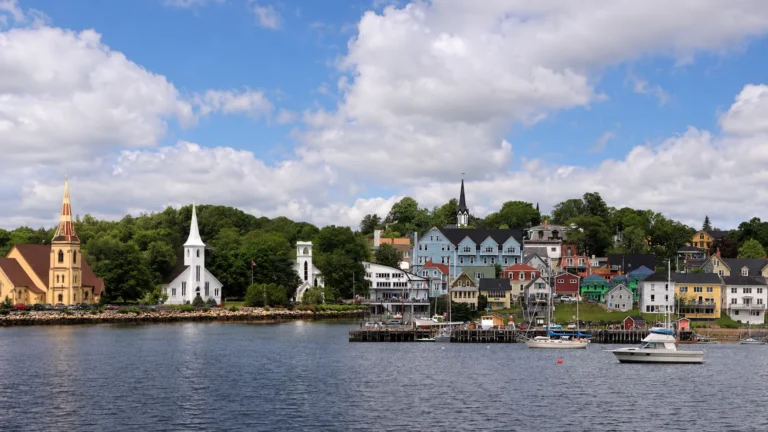
Where to Stay in Halifax: Best Areas for First-Time Visitors
Affiliate note: This article may contain affiliate links, which means I may earn a small commission if you book or buy through them – at no extra cost to you. I only recommend things that make sense for this kind of trip.
Most people don’t expect much from Halifax.
It’s not Tokyo. It’s not even Toronto. You hear “mid-sized Canadian port city” and you book the nearest hotel without thinking twice. Then you arrive, realise the city has a real personality, and suddenly the question of where you’re sleeping matters a lot more than you thought.
Halifax is compact enough to walk — but its neighbourhoods are different enough that picking the wrong one can actually shape your trip. Stay in the wrong spot and you may spend your evenings commuting to the part of the city where things are actually happening.
This guide breaks down where to stay in Halifax by travel style: first-time visit, no car, food-focused trip, quieter stay, family trip, or better-value base across the harbour. Prices move a lot by season, so use this as an area guide first and a hotel shortlist second. If you’re still figuring out what to do once you arrive, the 3-day Halifax itinerary is a good place to start.
Quick Answer: Where Should You Stay in Halifax?
For a first trip, stay in Downtown Halifax or near the waterfront. It gives you the easiest access to the boardwalk, Citadel, museums, restaurants, ferry, and most of the things worth doing in the city. If you want a more local food-and-café feel, consider the North End. If you want a quieter stay, look at the South End. If value matters and you don’t mind using the ferry, Dartmouth can work better than most first-time visitors expect.
| Traveller Type | Best Area | Why |
|---|---|---|
| First-time visitor | Downtown Halifax / Waterfront | Easiest logistics and most walkable |
| No car / short stay | Downtown Halifax | Best access to major sights on foot |
| Food, cafés, local feel | North End | Better for restaurants, bars, breweries, neighbourhood energy |
| Quieter city stay | South End | Leafier, calmer, still close enough |
| Better value / harbour views | Dartmouth near Alderney ferry | Good-value base if ferry logistics work for you |
| Family / longer stay | South End or Dartmouth | More space and quieter evenings |
If you only remember one thing: Halifax is compact, so the “best” area is less about distance and more about the kind of trip you want. Downtown is easiest. The North End feels more local. Dartmouth can be better value. The South End is calmer. Pick based on travel style, not just the first hotel map pin you see.
How to Choose Where to Stay in Halifax
Before you start comparing hotels, it helps to understand Halifax’s geography. The city sits on a peninsula, and most of the tourist-facing neighbourhoods — Downtown, the South End, and the North End — are all within walking distance of each other. Dartmouth sits across the harbour, connected by a 12-minute ferry.
That’s it. The whole city. You can walk between many of the main visitor areas in 20 to 40 minutes.
The trade-offs here aren’t really about distance — they’re about vibe. Do you want to be steps from the waterfront boardwalk and the Citadel, or would you rather wake up in the neighbourhood where people actually eat on a Tuesday? Those are different stays, not just different hotels.
Best Area for First-Time Visitors: Downtown Halifax
Best for: first-time visitors, short stays, no-car trips, waterfront access Watch out for: higher summer prices, busier streets during cruise season, less neighbourhood feel than the North End
Downtown is the obvious choice for a first Halifax trip, and the reasons hold up. The waterfront boardwalk, the Maritime Museum of the Atlantic, the Halifax Citadel, Spring Garden Road — all within a 15-minute walk of each other. The ferry terminal to Dartmouth is a two-minute stroll from most waterfront hotels.
The trade-off is price. Downtown accommodation runs higher than anywhere else in the city, and summer pushes it higher still. Prices shift heavily by season, cruise schedules, events, and waterfront demand — check current rates before building a budget around any number you read online, including this article.
What to expect
The boardwalk area hums with activity — restaurants, craft beer spots, live music, and the kind of easy energy that makes it simple to fill an evening without trying very hard. It’s also walkable in a way that a lot of cities claim to be but Halifax actually delivers on.
The Citadel is uphill from the waterfront and worth it. The view from the top over the harbour is one of those moments that makes you feel like you actually understand a place. For everything else worth doing while you’re based here, the best things to do in Halifax guide covers the full list without padding.
Where to stay in Downtown Halifax
Halifax has a small hostel scene compared with larger cities, so check current availability and recent reviews before assuming there will be many options. HI Halifax Heritage House is the main downtown option worth starting with — a heritage building close to the waterfront, with dorm and private room options. Check current rates and availability directly.
For more space near the Citadel, Cambridge Suites is one central suite-style option many visitors compare, particularly for stays of more than a night or two. Rates shift significantly by season and booking window.
At the luxury end of the waterfront, the Muir is the obvious option to compare if design and location matter more than budget — part of the Queen’s Marque development, with the Art Gallery of Nova Scotia and Maritime Museum nearby.
If you prefer a smaller, heritage-style stay over a large chain hotel, the Halliburton is worth comparing — three restored townhouses on Morris Street, with a courtyard garden and a library bar.
For travellers who want straightforward central hotels, the Westin Nova Scotian and the Lord Nelson Hotel are both well-located options to put on your comparison list. The Westin sits at the south end of the boardwalk; the Lord Nelson overlooks the Public Gardens.
Prices across all of these move sharply by season. Treat any number online as a rough planning cue, not a current quote.
Best Area for Food and Local Feel: North End Halifax
Best for: food lovers, return visitors, anyone who wants to feel less like a tourist Watch out for: limited hotel options — you’re mostly looking at hostels or short-term rentals
If Downtown is Halifax’s postcard, the North End is where the city actually eats and drinks.
Gottingen Street and Agricola Street are the twin spines of the neighbourhood. Between them you’ll find some of the better cafés, restaurants, and breweries in Nova Scotia — the kind that fill up on weekday evenings without needing a travel guide recommendation to get there. The North End is better if you care more about that energy than being beside the boardwalk.
Accommodation choices are thinner here than downtown, so it suits travellers who are comfortable trading hotel convenience for neighbourhood feel. Halifax Backpackers Hostel is the main option — a building that’s been here for over a century, with more of a local hostel feel than a polished chain operation. For longer stays or anyone who wants more space, short-term apartments tend to work better than hotels in this area.
Best Quieter Base: South End Halifax
Best for: longer stays, families, anyone who wants to walk somewhere calm in the morning Watch out for: fewer obvious hotel clusters, farther from the waterfront buzz, “South End” covers a broad area so check walking distances carefully
The South End doesn’t announce itself the way Downtown or the North End does. It’s leafier, calmer, and more residential — the kind of neighbourhood where you can get a coffee and a walk in without the noise of the tourist core.
It sits close to the Halifax Public Gardens and Point Pleasant Park, which makes it a reasonable base if you’re planning a longer stay or travelling with kids who need room to move. You’re still close enough to downtown to get there easily, but you won’t be in the middle of it every evening.
Hotel options here are less concentrated than downtown, so do your homework on exact location before booking — the South End is a broad area and some parts are a longer walk than others.
Best Value / Harbour-View Alternative: Dartmouth
Best for: budget-conscious travellers, longer stays, anyone who wants a quieter base with a great ferry commute Watch out for: fewer conventional hotels near the ferry — prioritise location carefully
Dartmouth gets overlooked. It shouldn’t.
Nicknamed the “City of the Lakes,” Dartmouth sits across the harbour from Halifax and has spent the last decade quietly developing one of the better food and arts scenes on the East Coast. It’s the kind of place where locals eat on a Tuesday without needing a reason.
The ferry situation
The Alderney ferry connects downtown Dartmouth to downtown Halifax in about 12 minutes and runs frequently during peak hours. Check current Halifax Transit schedules before building your evening around it. That 12-minute crossing also happens to give you one of the better views of the Halifax skyline you’ll get from anywhere — arriving back at sunset, watching the waterfront lights come up across the water, is one of those accidental travel moments that sticks.
Dartmouth works well as a base if the ferry fits your rhythm. It’s less ideal if you want to step out of your accommodation and be immediately in the Halifax tourist core.
Where to stay in Dartmouth
Downtown Dartmouth has fewer conventional hotel options than Halifax, so many visitors end up comparing short-term rentals or apartments near the Alderney terminal. If staying in Dartmouth, prioritise being close to the ferry or having a clear plan for getting back at night.
One place worth knowing regardless of where you’re based: Battery Park Beer Bar & Eatery on Ochterloney Street, a short walk from the ferry terminal — a useful food-and-drink stop if you are already spending time around downtown Dartmouth.
Best Accommodation Type: Hostel, Hotel, Suite, or Apartment?
This depends less on budget than on what kind of trip you’re having.
Halifax has a small hostel scene compared with larger cities — fewer options than you might find in Montreal or Vancouver, and availability can be limited in summer. The main names to check are HI Halifax Heritage House (downtown), Halifax Backpackers (North End), and Halifax Backpackers Beachhouse (out near St. Margarets Bay, about 20 minutes from the city — more of an outdoor base than a city hostel). Check current availability and recent reviews before assuming a bed will be open.
Chain hotels like the Westin and Lord Nelson make sense when you want simple logistics and don’t want to spend time researching. Boutique and heritage options like the Halliburton are worth comparing if character matters. Suite-style hotels like Cambridge Suites can be good value for longer stays where you want more than a single room.
Short-term apartments and rentals are the practical option in the North End and Dartmouth, where hotels are thinner on the ground.
Where to Stay in Halifax Without a Car
If you’re not renting a car, stay Downtown or near the waterfront. It’s the simplest answer, and it holds up. Almost everything worth doing on a first Halifax trip is walkable from there — the boardwalk, the Citadel, the museums, the ferry to Dartmouth.
The ferry itself gives you Dartmouth without needing wheels. But if your accommodation in Dartmouth is more than a short walk from the Alderney terminal, you’ll want a plan for getting around.
Avoid outer areas and cheaper suburban hotels if transit adds friction to your days. The savings rarely justify it when a short ride to the interesting parts starts eating into your time.
If your trip extends beyond Halifax into a wider Nova Scotia road trip, you can rent a car for those days specifically without needing it parked in the city. The Nova Scotia itinerary covers how to structure that kind of trip.
For solo travellers — and particularly solo female travellers thinking through the late-night logistics of different areas — the Halifax solo female travel safety guide is worth a read before you book. The short version: for most visitors, the simplest safety choice is staying somewhere that lets you walk back on well-lit, busy streets or take a short ride without overthinking the route.
Where to Stay in Halifax with Kids or for a Longer Stay
For families or anyone staying more than a few nights, space starts to matter in a way it doesn’t on a short city break.
Downtown is still the easiest first choice for families — you’re close to the main sights, the waterfront is good for kids, and the logistics are simple. For longer stays, the South End and Dartmouth tend to offer more breathing room than the busiest downtown blocks. Both are quieter in the evenings, which matters if you’re travelling with children or just want to decompress somewhere that isn’t festival-busy in summer.
Suite-style accommodation and short-term apartments are worth comparing over standard hotel rooms for stays of more than two or three nights. More space, usually a kitchen, and less of the goldfish-bowl feeling that comes with a single hotel room shared between a family.
When to Book Halifax Accommodation
Winter is usually cheaper, summer is usually most expensive, and shoulder season often gives the best balance. Halifax can spike during events, cruise-heavy periods, university dates, and major event weekends — it’s not just a flat summer premium.
Book earlier for July, August, and any weekend that lines up with a festival or large cruise day. Shoulder season (May–June and September–October) is the window where you’re most likely to get decent rates without the tradeoff of cold weather or reduced options.
Avoid building your budget around exact rates you see online. Prices move quickly and vary by booking window — use any number you find, including in this article, as a rough planning reference rather than a current quote.
My Honest Pick
For a first trip, stay downtown or near the waterfront unless you have a specific reason not to. The logistics are simply easier, and there’s real value in being able to walk back to your hotel from wherever you end up at 11pm.
For a return trip, the North End becomes more appealing. For value, Dartmouth is worth comparing if you’re comfortable using the ferry. For a calmer longer stay, the South End can make sense.
None of these are wrong choices. Halifax is small enough that you’re never far from the part you want to be in. The decision is really about what you want to step out into each morning.
Have you stayed in Halifax? I’d love to hear which neighbourhood you chose and whether it matched your expectations — drop it in the comments.
FAQ
What is the best area to stay in Halifax for first-time visitors? Downtown Halifax or near the waterfront. It gives you the easiest walking access to the main sights — the boardwalk, the Citadel, the Maritime Museum, the ferry to Dartmouth — without needing a car or a plan.
Should I stay downtown or on the waterfront? They overlap significantly in Halifax — most downtown hotels are a short walk from the water. “Waterfront” usually just means you’re closer to the boardwalk end of downtown. Either works for a first visit.
Is Dartmouth a good place to stay when visiting Halifax? It can be, if the ferry fits your rhythm. The 12-minute crossing is easy and cheap, the neighbourhood near the Alderney terminal is walkable and has good food options, and rates can be more manageable than the Halifax waterfront. It’s less ideal if you want to be in the Halifax tourist core without a commute.
Can I visit Halifax without a car? Yes, easily — for the city itself. The downtown core is walkable, the ferry covers Dartmouth, and most of the main sights don’t require a car. You’ll need one for day trips to Peggy’s Cove or a wider Nova Scotia road trip, but you can rent just for those days.
Where should families stay in Halifax? Downtown for short visits — easiest access, good for kids, simple logistics. South End or Dartmouth for longer stays where space and quieter evenings matter more.
Is the North End a good base for visitors? For food, cafés, and local energy, yes. For convenience on a first visit, less so. Accommodation options are limited and you’ll walk or ride to most of the main sights. It suits return visitors and travellers who care more about neighbourhood feel than being beside the waterfront.
When is accommodation cheapest in Halifax? Winter is typically the cheapest window, but Halifax doesn’t shut down — the food scene and live music keep running. Shoulder season (May–June or September–October) tends to offer the best balance of price, weather, and open options. Book early for July and August.
The Short Version
Halifax is compact enough that no area is a bad choice — but the right choice depends on how you travel. Downtown for ease. North End for food and local feel. South End for quiet. Dartmouth for value and a ferry view. Pick based on trip style, check current rates for your actual dates, and don’t over-research the hotel decision when the neighbourhood decision matters more.
Prices and availability change quickly in Halifax, especially in summer. Use this guide to choose the right area first, then compare current rates for your actual dates.