Is Pylos Safe for Solo Female Travelers?
Affiliate note: This article may contain affiliate links, which means I may earn a small commission if you book or buy through them – at no extra cost to you. I only recommend things that make sense for this kind of trip.
Most people Googling this question have never actually been to Pylos. And the ones who have? They’re usually trying to figure out how to go back.
Solo travel in Greece gets a lot of coverage — Athens, Santorini, Mykonos. The usual circuit. But Pylos, tucked into the southwestern corner of the Peloponnese peninsula, rarely makes those lists. Which is exactly why it’s worth paying attention to.
This guide covers what solo female travelers actually need to know about Pylos: the honest safety picture, how the town feels to walk around alone, where to stay, how to get around without a car, and what a solo trip realistically costs. No generic advice recycled from a different destination. Just Pylos, specifically.
So, Is Pylos Actually Safe for Solo Female Travelers?
The short answer: yes — and more confidently than you might expect from a destination this small and this far off the standard tourist trail.
A note on the data here: crime statistics for a town the size of Pylos don’t exist in isolation. The best available evidence comes from broader Greek travel safety reports, combined with traveler experiences specific to the Messenia region. So while some figures below are country-level, they’re the closest reliable benchmark — not a substitute for Pylos-specific context, but the honest starting point.
With that said: Greece ranked fourth globally for solo female travel in 2025 by Time Out magazine (out of a list of 12), recognised for its warm weather, relaxed pace, and welcoming atmosphere. Pylos, as a small working harbour town with no nightclub strip and a strong sense of community, sits at the safer, quieter end of that national picture.
It’s a working harbour town — fishing boats in the morning, locals at the kafeneion in the afternoon, families walking the seafront at dusk. It doesn’t have the anonymity of a big city, which is both a comfort and something to understand before you arrive. People notice strangers, which generally works in your favour as a solo traveler.
The tradition of philoxenia — Greek hospitality toward strangers — is particularly strong in smaller towns like Pylos. Traveler accounts from the Messenia region consistently describe locals as warm and forthcoming rather than intrusive.
Crime targeting tourists in Pylos is not a pattern. The main cautions are the same as anywhere in southern Greece: watch your bag in crowded spots, don’t leave valuables visible in a parked car, use common sense after a long night out.
What’s It Like to Actually Walk Around Pylos Alone?
The Town Centre and Harbour
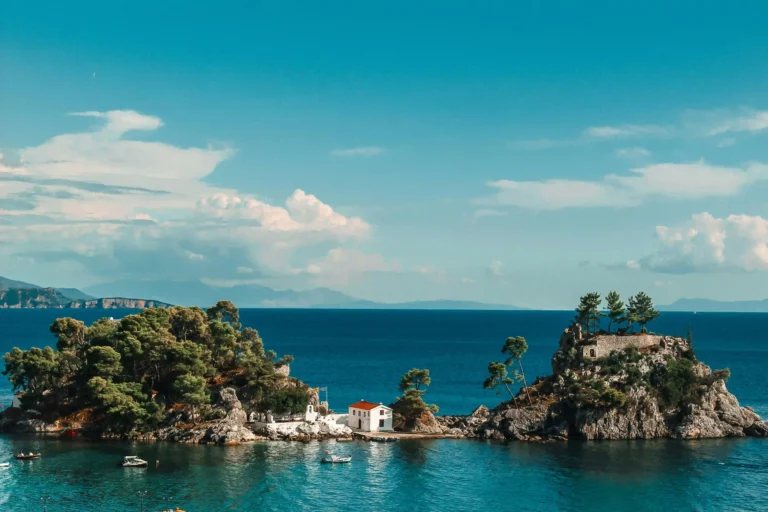
Pylos is built around a central square — Plateia Trion Navarchon, the Square of the Three Admirals — shaded by enormous plane trees planted by French officers in the 1830s, surrounded by cafés and tavernas, and overlooking Navarino Bay. (Worth noting: Nafplio has a square with the exact same name, so Google Maps sometimes pulls up the wrong one — the Pylos version sits right on the harbour.) It’s a pretty small harbour town with some excellent tavernas, a huge castle to explore, a lovely tree-shaded square, and boat trips out into historic Navarino Bay. The whole walkable core is compact enough to cover in an afternoon.
As a solo traveler, the harbour area is where you’ll spend most of your time — and it’s consistently busy during the day, with a mix of locals and visitors. Nobody is going to make you feel conspicuous for sitting at a table alone with a coffee and a book. That’s half of what the square is for.
The 15-minute waterfront walk from the town centre to Niokastro Fortress passes the small fishing harbour where the morning catch comes in. It’s a pleasant route at any hour, well-used by locals doing their own early walks.
After Dark — What Changes (and What Doesn’t)
Pylos at night is calm rather than buzzing. The square stays lively until late, especially in summer, with families out late in the way southern Greek towns tend to operate. Restaurants fill up around 9pm. There’s no nightclub strip, no area that tips from lively into chaotic.
Travelers who’ve based themselves in Pylos describe feeling comfortable walking back to central accommodation at night — the town is small, well-lit in the main areas, and active enough in summer that you’re rarely the only person on the street. Walking back from dinner to a hotel in the main area at 11pm is unremarkable.
The honest caveat: if you’re staying outside the town centre — near Costa Navarino resort, for instance, or in a more isolated rental — nighttime mobility without a car becomes more of a consideration. The town itself is fine. Dark roads outside it are a different story for someone on foot.
Where to Stay in Pylos as a Solo Female Traveler
Accommodation by Budget
Staying in or immediately around the town centre is the right call for solo travelers — walkability is your best safety asset in a place this size. On realistic daily costs: budget accommodation alone starts at €45–60, and two modest meals add another €30–45 on top. A more honest all-in daily range for a solo traveler in Pylos is €75–130/day depending on season and travel style — lower than the popular Greek islands, but not dramatically so once food and incidentals are factored in.
Budget (under €60/night / ~$66 USD): Small guesthouses and family-run rooms are available in and around the centre. These tend to be basic but clean, and the owners usually know the town well — a useful resource for a solo traveler.
Mid-range (€70–140/night / ~$77–154 USD): This is the sweet spot in Pylos. The town offers boutique guesthouses and family-run hotels as well as options with sea views over the bay. Karalis Beach Hotel is well-reviewed, well-located, and the kind of place where staff actually remember guests.
Luxury (€200+/night / ~$220+ USD): The Westin Resort at Costa Navarino sits about 10km north of Pylos and operates as a resort world unto itself. Worth knowing about, but it puts you outside the town — which may or may not suit your preferred way of traveling solo.
What to Look for in a Pylos Hotel
For solo female travelers specifically: prioritise a property in the town centre with a staffed front desk rather than a self-check-in rental. The walkability matters, but so does having a human at the property who can give you practical local intel. In a small town like Pylos, that relationship with the accommodation staff is actually useful — they know which beaches are quieter, which tavernas stay open late, and which routes to avoid after rain.
Getting Around — Does Not Having a Car Limit You?
This is the most important practical question for solo travelers considering Pylos, and the honest answer splits into two parts: for exploring the town itself, a car isn’t necessary. For exploring the wider region — Voidokilia, Methoni, the Palace of Nestor — it becomes highly recommended. The distinction matters.
On Foot Within Town
Everything you need day-to-day — the square, the restaurants, the waterfront, Niokastro Fortress — is within a 15-minute walk. The walk from the town centre along the waterfront to Niokastro takes 15 minutes and passes the small fishing harbour. For a day or two of pure town exploring, a car is unnecessary.
Reaching Voidokilia, the Palace of Nestor, and Methoni
This is where it gets more complex. Voidokilia Beach — the famous omega-shaped bay that makes most people’s “reasons to visit Pylos” list — is about 6km north of town, completely natural, with no facilities, and best reached early to beat the crowds. Without a car, a taxi or local bus is the practical option.
The Palace of Nestor is around 17km from Pylos, and Methoni Castle is about 12km south. Buses do run from Pylos to both directions, but the timetables are infrequent and not always clearly posted. The advice most experienced travelers in the region give: don’t rely on buses for Methoni or the Palace of Nestor unless you’re comfortable with potentially long waits and limited return options.
The roads in the Peloponnese are generally good, making it a strong option for a road trip. Renting a car — even for just two or three days — is the practical solution if you want to see the full region around Pylos at your own pace. Car rental is available in Kalamata (the nearest airport, roughly an hour’s drive) and can be arranged from there. Daily rates typically start around €35–50/day (~$38–55 USD) in shoulder season.
Alternatively, day tours departing from Pylos or Kalamata cover Voidokilia, Methoni, and other highlights with transport included — a reasonable option for a solo traveler who doesn’t want to rent a car for a short stay.
What Should Solo Female Travelers Know Before They Go?
Local Attitudes Toward Solo Women
Greece is a Southern European country with a warm, occasionally expressive culture. In larger cities and heavily touristed islands, solo female travelers are completely unremarkable — there’s enough tourist traffic that nobody pays particular attention. Pylos is a smaller town, which means a slightly different dynamic.
The most accurate description from traveler accounts of the Messenia region: locals are curious but not intrusive. An older Greek man may start a conversation in the square. A taverna owner may ask where you’re from. None of this crosses into harassment in any pattern that shows up in reports from the area — and in a small town where the same faces appear daily, social norms tend to keep interactions pleasant.
Dress code is worth noting. Pylos is not a conservative town, but it’s also not a beach resort — shorts and casual summer clothing are fine anywhere in town. If you’re visiting Niokastro Fortress or the church inside its walls, covered shoulders are appreciated. Standard European travel common sense applies.
Safety Tips That Actually Apply in Pylos
Skip the generic advice about avoiding dark alleys (there aren’t any). Here’s what’s actually useful:
- Stay in the town centre if you’re car-free. The practical mobility this gives you is the single biggest safety asset.
- Download offline maps before you arrive. Mobile signal around Voidokilia and the Palace of Nestor can be patchy.
- Carry cash. Some smaller tavernas and local businesses in Pylos are still cash-only, or prefer it.
- Know the emergency numbers. 112 for general emergencies, 100 for police. These are the key numbers to have saved before you travel anywhere in Greece.
- Book accommodation in advance in peak summer. Pylos is small. The good mid-range options fill up, and scrambling for accommodation alone in July is unnecessary stress.
- Tell someone your day plans. This applies everywhere, but especially when you’re doing more remote walks — the hike up to Paleokastro above Voidokilia is rewarding and fairly well-trodden, but you’re not going to see a lot of people on a quiet morning.
How Much Does a Solo Trip to Pylos Cost?
Pylos is affordable by Greek travel standards — actually affordable, not just “cheaper than Santorini.” You’re not paying island premiums, and the town hasn’t been repositioned as a luxury destination in the way some Peloponnese spots have started to trend.
| Expense | Cost (EUR) | Cost (USD approx.) |
|---|---|---|
| Budget accommodation, per night | €45–60 | ~$50–66 |
| Mid-range hotel, per night | €70–140 | ~$77–154 |
| Niokastro Fortress entry | €4 | ~$4.50 |
| Palace of Nestor + Chora Museum | €10 | ~$11 |
| Voidokilia Beach | Free | Free |
| Gialova Lagoon walk | Free | Free |
| Lunch at a harbour taverna | €12–18 | ~$13–20 |
| Dinner at a mid-range restaurant | €20–35 | ~$22–38 |
| Coffee / Greek frappe | €2–3.50 | ~$2.20–3.85 |
| Car rental per day (shoulder season) | €35–50 | ~$38–55 |
| Taxi from town to Voidokilia (one way) | €12–15 | ~$13–17 |
A solo traveler spending mid-range — decent accommodation, two meals out per day, a couple of attraction entries — can expect to spend around €95–130/day (~$104–143 USD). Budget further down with simpler meals and a guesthouse rather than a hotel, and €75–85/day is achievable. Pylos costs are generally lower than the popular Greek islands, particularly outside peak summer months.
For accommodation options across budget ranges, Off the Algorithm’s accommodation guides are worth consulting before you book — prices in Pylos shift noticeably between June and September versus the shoulder months.
The Honest Verdict
Pylos is a strong choice for solo female travel — arguably a better one than some of the more famous Greek destinations, precisely because it hasn’t been industrialised for tourism. The town is small enough to feel safe and legible from day one, the locals are welcoming, and the accommodation is affordable enough that you can stay somewhere decent without blowing the budget.
The one thing to be honest about: if you’re car-free and you want to explore the full region — Voidokilia, Methoni, the Palace of Nestor — you’ll need to plan your transport carefully or accept that day tours are the most practical option. Within the town itself, none of that applies.
For practical travel tips for independent travelers and keeping costs manageable on a solo trip through Europe, both are worth a look before you finalise your plans.
Have you been to Pylos solo — or are you planning a trip and have questions? Drop them in the comments. The Peloponnese is one of those regions where the right information makes a real difference to the trip.