Nova Scotia Fishing Guide: Saltwater and Freshwater Spots Near Halifax
Affiliate note: This article may contain affiliate links, which means I may earn a small commission if you book or buy through them – at no extra cost to you. I only recommend things that make sense for this kind of trip.
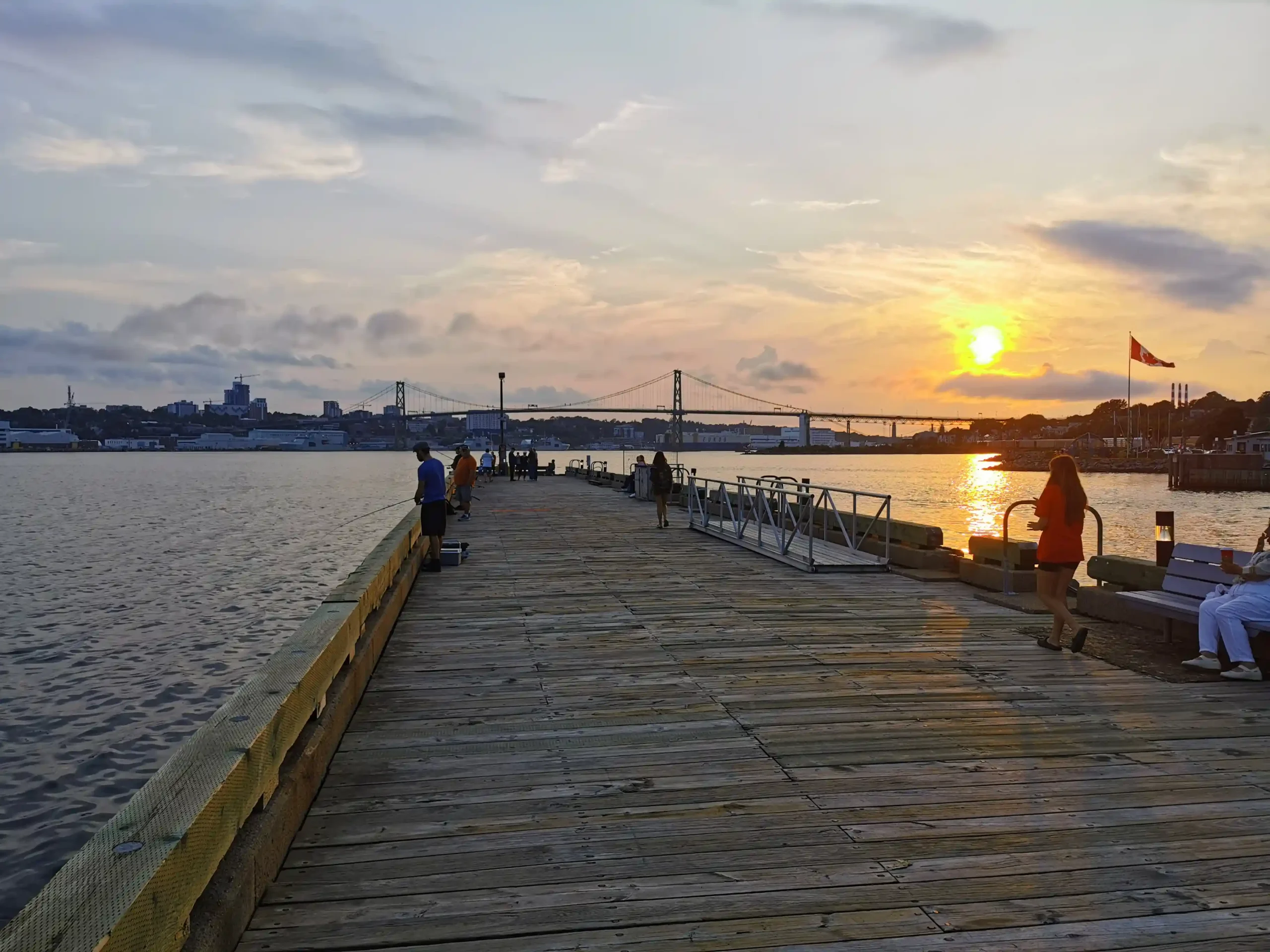
It was just past seven on a summer evening at the Dartmouth Ferry Terminal, and the mackerel were in. I could tell before I even saw a fish — half a dozen people lined up along the boardwalk, rods bent, reeling in fast. Someone’s kid was shrieking with delight over a fish smaller than her own forearm. Across the harbour, the lights of downtown Halifax were just starting to flicker on.
For the easiest harbour fishing near Halifax, you may not need a boat or a guide — but you do need to know the rules before you cast. Many tidal and saltwater spots don’t require a Nova Scotia provincial sportfishing licence, but DFO rules still apply. Freshwater lakes and rivers are different and usually require a Nova Scotia sportfishing licence. The two systems run in parallel, and mixing them up can get expensive.
This guide covers where to fish, what to check before you go, and what to realistically expect. Use it for trip planning, then verify current rules with DFO and Nova Scotia’s sportfishing pages before you fish. Rules change.
Quick Answer: Fishing Near Halifax
If you want low-barrier fishing near Halifax, start with the saltwater spots around the Dartmouth Ferry Terminal, the Macdonald Bridge area, Bedford Basin, or public sections of the Halifax waterfront. Many tidal and saltwater spots don’t require a provincial sportfishing licence — but that doesn’t mean there are no rules. DFO still controls seasons, catch limits, gear restrictions, species rules, and closures. For lakes and rivers, check Nova Scotia’s current sportfishing licence requirements before you go.
| If You Want | Start Here | Check First |
|---|---|---|
| Easy saltwater mackerel | Dartmouth Ferry Terminal / harbour wharves | DFO mackerel rules, hook limits, daily limits |
| Family-friendly waterfront | DeWolf Park / Bedford Basin | Tide, local signage, safe casting space |
| Downtown convenience | Halifax Waterfront / Cable Wharf area | Crowds, signage, harbour activity |
| Freshwater trout or bass | Lake Banook, Lake Micmac, Albro or Morris | Nova Scotia sportfishing licence and waterbody rules |
| Guided experience | Local charter or operator | Season, target species, cancellation terms, what’s included |
| Simple visitor setup | Light spinning rod + small tackle | Current regulations before buying or using rigs |
Licence Basics: Saltwater vs Freshwater
The system here splits along two tracks, and knowing which one you’re on matters.
Saltwater and tidal water: For many tidal and saltwater spots, no Nova Scotia provincial sportfishing licence is required. But that’s not the same as “no rules.” Seasons, bag limits, gear restrictions, species rules, and closures can still apply. DFO manages the marine and tidal side of things — not the province.
Freshwater lakes and rivers: These fall under Nova Scotia’s sportfishing licence rules. Anyone 16 or older generally needs a licence to angle in non-tidal water. Non-residents can buy a full-season licence or a one-day general fishing licence. Anglers under 16 generally don’t require a licence, and residents and non-residents aged 16 to 17 are eligible for a general or salmon licence at no cost. The Nova Scotia Anglers’ Handbook covers the full details, and licences are valid from date of issue to March 31 of the following year.
Licences are available online and through many approved vendors across Nova Scotia, including some tackle shops and retailers. Check Nova Scotia’s current sportfishing page for purchase options.
Atlantic salmon: If salmon is the goal, treat it as a completely separate research task. DFO lists most Maritimes salmon angling seasons as closed due to conservation concerns, with limited exceptions in specific Cape Breton rivers. Don’t treat salmon as a casual Halifax harbour option. Check current DFO salmon rules and Nova Scotia rules directly if that’s your target.
Mackerel Rules: What Visitors Usually Need to Know
At the time of writing, the DFO Maritimes mackerel page lists recreational mackerel in tidal waters as open April 1 to December 31, with no licence required for handline or angling. It also lists:
- One line with no more than three hooks
- Daily and total possession limit of 20 Atlantic mackerel per person
- No minimum legal size as of 2025
Check the DFO mackerel page before you fish. These rules have changed before and can change again.
One practical note on gear: many sabiki-style rigs come with five or six hooks. If the current DFO hook limit is three, trim the rig to three hooks before you use it. It still works fine — you just need to comply with whatever the current limit says.
For cod, pollock, and other groundfish, check the DFO groundfish page separately. Don’t treat this article as a complete rulebook.
Check the Tide Before You Go
Saltwater fishing here runs on tide, not just the clock.
A wharf that looks quiet at one tide can fish very differently as the water moves. Mackerel follow baitfish, which move with current — around Halifax Harbour, a rising tide tends to push activity toward Bedford Basin and the Northwest Arm, which lines up well with spots like DeWolf Park and the ferry terminal area.
Check a tide table for Halifax Harbour or the specific area you plan to fish. A quick search for “Halifax tide chart” will get you there. Aim to be on the water within an hour or two either side of high tide if you’re targeting mackerel from shore. It’s not a guarantee, but it’s the single easiest thing you can do to improve the odds.
Best Saltwater Fishing Spots Near Halifax
These are spots where locals and visitors fish for mackerel and other species in season. None of them guarantee results, and conditions vary by tide, time of year, and what’s running. Check local signage before you cast anywhere.
Dartmouth Ferry Terminal and the Macdonald Bridge Area
The Dartmouth waterfront near the ferry terminal is where I’ve had the most success with mackerel — evenings especially, when the light drops and the schools move closer to shore. It’s a public boardwalk with foot traffic, so cast responsibly. Respect pedestrians, ferry operations, and any posted signage about where fishing is and isn’t appropriate.
Walk a bit further along toward the Macdonald Bridge on the Dartmouth side and you’ll find more of the same feel — harbour access, open water, and a regular mix of locals who’ve been fishing this stretch for years.
DeWolf Park and Bedford Basin
About twenty minutes up the Bedford Highway, DeWolf Park sits on Bedford Basin with waterfront access that many locals use for casual fishing when conditions line up. It’s a family park — playgrounds, picnic tables, people walking dogs — so it’s a good option if you’re bringing kids along and want a lower-key setting than the city waterfront.
Halifax Waterfront and Cable Wharf Area
The Halifax waterfront boardwalk gives you access to the harbour without leaving the downtown core. Look for appropriate public spots where fishing is allowed and casting won’t interfere with pedestrians, boats, businesses, or harbour activity. This is a busy area, particularly in summer, so be realistic about space and read the room before you set up.
Freshwater Fishing Spots Within an Hour of Halifax
If you’re going the freshwater route, sort out the licence first. These are urban and suburban lakes with paddlers, rowers, swimmers, dog walkers, and local residents sharing the same water, so choose casting spots carefully and check current rules for the specific waterbody before you fish.
Lake Banook and Lake Micmac, Dartmouth
Lake Banook connects to Lake Micmac through the old Shubenacadie Canal system, and nearby Dartmouth lakes may hold trout, bass, or other freshwater species depending on the waterbody and season. If you’ve read the running in Halifax guide or the post on cycling routes around Halifax, you’ll already know this lake — it sits right along some of the better active routes in Dartmouth. It does double duty well.
Albro Lake and Morris Lake
Both sit within the Dartmouth area and see regular freshwater use. Albro Lake is a more accessible, urban option. Morris Lake is quieter, with more cover and coves that suit bass fishing. Check current Nova Scotia sportfishing rules and any waterbody-specific restrictions before treating either as a sure thing.
What Fish Can You Catch Near Halifax?
The honest answer is: it depends on the season, the tide, and where you’re fishing.
Around Halifax, Atlantic mackerel and pollock are the most common saltwater targets in season. Other species — cunner, flounder, the occasional groundfish — turn up depending on location and conditions. For offshore species like cod and haddock, you’re generally looking at a boat rather than shore fishing.
Freshwater lakes in the Dartmouth and Halifax area may hold brook trout, rainbow trout, smallmouth bass, and yellow perch, depending on the waterbody. Check current stocking and waterbody-specific rules before treating any lake as a sure thing.
If groundfish are the goal, check the DFO groundfish rules for what’s currently open and what limits apply. And if you’re hoping for Atlantic salmon, read the section above — it’s a separate world with its own rules and many closures.
When Is Mackerel Season in Nova Scotia?
The legal season and the practical shore-fishing window aren’t the same thing.
DFO currently lists mackerel season in tidal waters as April 1 to December 31. In practical Halifax terms, mackerel are usually most noticeable from summer into early fall — August tends to be a strong month locally, but timing shifts by year, water temperature, and location. Don’t count on strong action in May or early June from shore, and don’t assume it continues deep into October.
If your trip falls anywhere from late July to early September, the timing works in your favour. Outside that window, mackerel are possible but less reliable from shore.
Is a Fishing Charter Worth It?
Charters make more sense if you want a boat-based experience, access to offshore species, or someone else handling the gear and route planning. They’re less necessary if casual mackerel fishing from a public wharf is the goal — that’s achievable on your own with simple gear and a bit of research.
If you do book a charter, check current operator reviews, target species, what’s included, cancellation terms, and whether the licence and rule questions are handled for you. Quality varies between operators, and a good one will be clear about what you can realistically expect on the water.
Cable Wharf near the Halifax Ferry Terminal is one common place to start looking for harbour-based tour and charter options, but check current operators directly before planning around it.
Gear to Bring Without Overcomplicating It
You don’t need much for shore fishing near Halifax. The basics cover most situations:
- Light spinning rod and reel — a travel-friendly telescopic setup works well if you’re flying in
- Small tackle box with a few sabiki-style rigs and a handful of jigs
- Pliers and line clipper — for hooks and trimming rigs to comply with current hook limits
- Bucket or small cooler if you plan to keep what you catch
- Gloves or a towel for handling fish
- Valid licence if you’re fishing freshwater
- Tide chart and current regulations — check before you leave, not after you arrive
- Sun and wind layer — the harbour is more exposed than it looks on a summer evening
- Pack out your line and hooks — old monofilament on a wharf is a hazard for birds and other anglers
Only use rigs that comply with current hook limits. Check the DFO page before you buy.
Safety, Etiquette, and Practical Tips
A few things worth knowing before you head to the water:
On the water: Watch your footing on wharves and rocks — surfaces get slippery, particularly around low tide. Keep kids back from edges. Don’t fish where ferry operations, boat traffic, or businesses make it unsafe or inappropriate.
Around other people: Give other anglers space. Cast away from pedestrians. Check posted signage — some waterfront areas have restrictions on where fishing is permitted. The Halifax waterfront in particular is a busy public space, so read the situation before setting up.
On the rules: Know what you’re keeping before you keep it. Follow current catch limits. Don’t rely on Facebook groups or old forum posts for legal rules — regulations update, and what was true two years ago may not be true now. Go directly to DFO and Nova Scotia’s sportfishing page for current information.
Fish handling: Handle fish carefully if you’re releasing them. Wet your hands first, minimise air exposure, and release close to the water. Mackerel don’t handle being thrown back as well as some species — plan ahead, know the current limit, and keep only what you intend to use.
Where to Stay If You Want to Fish Near Halifax
The fishing spots in this guide are spread across a fairly compact area, so where you stay matters less than you might think.
Downtown Dartmouth works well for ferry terminal access, the Macdonald Bridge area, and the Lake Banook freshwater spots — and it puts you close to the water on both sides of the harbour. If you’re new to the area, the where to stay in Halifax guide covers the Halifax and Dartmouth options together.
Downtown Halifax gives you the easiest access to Cable Wharf and the waterfront boardwalk, plus most of the trip logistics — restaurants, transit, the ferry over to Dartmouth.
Bedford is worth considering if DeWolf Park is your main focus, but it’s a short drive from either city anyway.
For most visitors, fishing is a side activity, not the sole reason to pick a base. Choose accommodation that works for the whole trip, then add fishing wherever it fits. If you’re still working out the rest of the itinerary, the 3-day Halifax itinerary or the Nova Scotia itinerary are good places to start.
The Short Version
Fishing around Halifax is easy to try, but it’s not rule-free. Start with saltwater if you want the lowest-barrier option — no provincial licence required for most tidal spots, mackerel in season, and public waterfront access that doesn’t require a boat. Add freshwater if you sort the licence and pick the right lake.
Check the current rules. Pick a safe place to stand. Watch the tide. Keep the setup simple.
Some evenings you catch dinner. Some evenings you mostly catch wind. Around here, that still counts as getting out.
Have you fished around Halifax? Drop your favourite general area in the comments — I’m always looking for somewhere new to try.