Celtic Colours Festival Guide: Cape Breton in October
Affiliate note: This article may contain affiliate links, which means I may earn a small commission if you book or buy through them – at no extra cost to you. I only recommend things that make sense for this kind of trip.
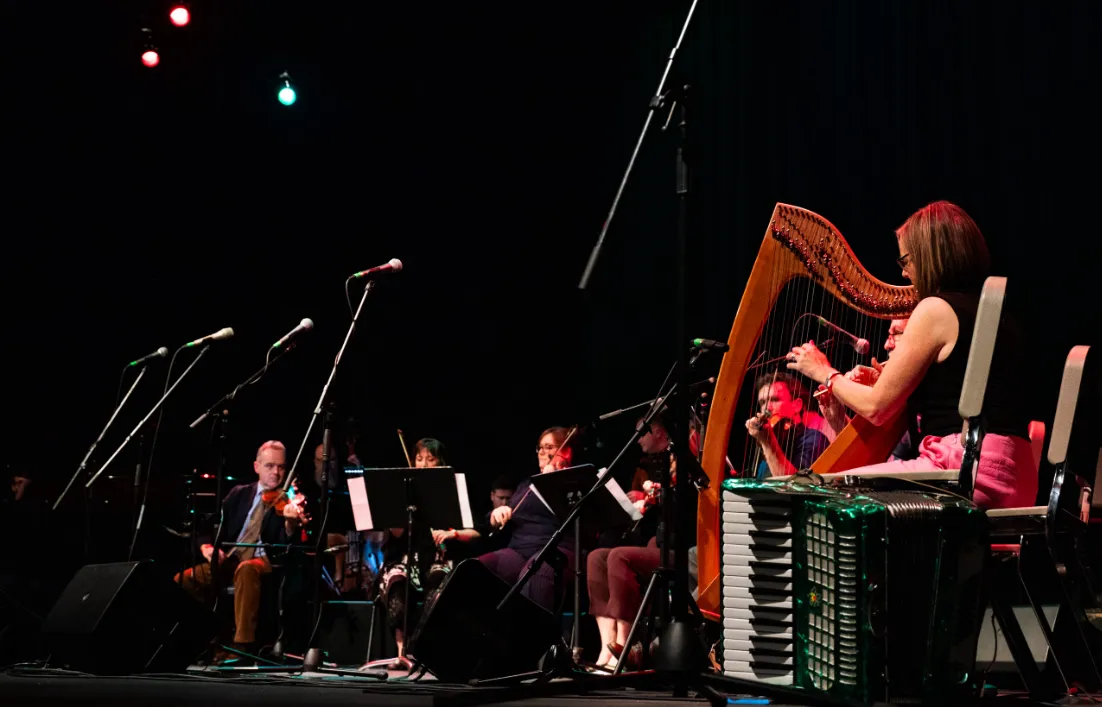
Photo note: Performers from Scotland and Cape Breton Island on stage for the Ceòlas 30! concert at the Strathspey Performing Arts Centre in Mabou during the 2025 Celtic Colours International Festival
photo by: Corey Katz
Most people picture Cape Breton in summer — Cabot Trail pullouts, whale boats out of Pleasant Bay, seafood on a patio if the wind cooperates. October is a different island. The roads empty out, the leaves start doing the marketing department’s job for free, and music stops being a nice evening option and becomes the whole reason people show up.
Step into a community hall on the right night and the first thing you’ll notice may be the fiddle before you even find your seat. There might be step dancing, kids moving between folding chairs, neighbours greeting each other like the evening started before the music did. The point is not that every event looks the same. It is that Celtic Colours often feels less like a show dropped onto the island and more like the island opening a few doors.
That shift is Celtic Colours. It’s not a concert series bolted onto a pretty backdrop. It’s spread across dozens of communities, built on Cape Breton’s actual living music culture, and it runs on a schedule that rewards people who plan and punishes people who don’t. If you’re weighing a trip around it, here’s what that actually looks like on the ground.
Quick Answer: Is Celtic Colours Worth Planning a Trip Around?
Yes — if live music and culture matter to you, if you’re willing to book accommodation and tickets early, and if you don’t mind spending real time in the car between events. October in Cape Breton also means shorter days and weather that can turn on you, so some flexibility helps.
It’s a harder sell if you only want scenery, dislike working around a schedule, or you’re hoping to book a room the week before. It’s also not the trip for cramming the entire Cabot Trail and three concerts into 48 hours. Something will lose, and it’ll probably be your patience.
| Best For | Not Ideal For | Time to Give It |
|---|---|---|
| Live music, fall colours, cultural travel, slower Cape Breton trips | Last-minute trips, single-venue festival expectations, rushed road trips | 2–5 days, or longer if building a full Cape Breton trip |
What Is Celtic Colours?
Celtic Colours International Festival is Cape Breton’s biggest annual cultural event, held every October since 1997. According to the festival’s own overview, it runs for nine days and spreads hundreds of events across communities all over the island, rather than concentrating everything in one venue.
The lineup covers concerts — as many as several a day, spread across community halls, churches, schools, and theatres — plus a wider program of workshops, participatory sessions, square dances, guided outdoor events, and community meals. Cape Breton musicians share stages with visiting artists from other Celtic and folk traditions, but the foundation is local: fiddling, Gaelic singing, step dance, and storytelling that’s been passed down in these specific communities for generations, not imported for the occasion.
Why Is Celtic Colours Considered One of Canada’s Best Music Festivals?
Partly the numbers, partly what’s behind them. The festival has run every year since 1997, was named Tourism Industry Association of Canada’s Event of the Year, and has picked up multiple East Coast Music Awards for Event of the Year across two decades, according to the festival’s own history. In 2011 it was added to the Canadian Tourism Commission’s Signature Experience Collection — the kind of recognition that tends to go to events with staying power, not one good year.
But the awards aren’t really the reason musicians keep showing up. Cape Breton’s fiddling, Gaelic singing, and step dance traditions have been maintained in these specific communities for over 200 years, largely because the island’s relative isolation let them survive when similar traditions elsewhere thinned out. Visiting artists get to share a stage with culture bearers who grew up inside that tradition rather than performing it as a novelty — which is a different kind of show than most festivals can offer, and part of why the festival now draws visitors from more than two dozen countries.
When Is Celtic Colours?
The festival always opens on the Friday of Canadian Thanksgiving weekend and runs nine days from there. Per the official schedule, upcoming dates are:
- 2026: October 9–17
- 2027: October 8–16
- 2028: October 6–14
The entire festival is structured around its start date, a tradition it has held onto for three decades, including through the COVID years. These are useful for planning ahead, but confirm the exact dates on the Celtic Colours site for whichever year you’re actually going — festival dates get set well in advance, but you want to be looking at the real thing, not a guide written a year or two before your trip.
October timing brings fall colours, cooler temperatures, and noticeably shorter daylight than a summer visit. Build that into your day, not just your packing list.
How Celtic Colours Is Different from a Regular Ceilidh
If you’ve read up on Cape Breton’s ceilidh culture, you already know the island doesn’t need a festival to have live music — a ceilidh can happen on a Tuesday in a kitchen or a legion hall, no ticket required.
Celtic Colours is that same culture, scaled up and scheduled. A ceilidh gives you one evening inside it. Celtic Colours builds a whole trip around it, with concerts that need tickets, a printed and online schedule, and a nine-day run instead of a one-off night. Related, but not the same thing, and it helps to know which one you’re actually planning for.
Where Is Celtic Colours Held?
This is the part that catches first-timers off guard. There’s no central festival site. Events happen in community halls, churches, schools, theatres, and other local venues scattered across the island — some of them buildings that have hosted the local dance for decades, not spaces built for tourists.
That’s a big part of the appeal. It’s also a logistics problem if you don’t plan for it. This is not the kind of festival where you book one hotel, walk ten minutes between stages, and call yourself organized. You need to think in terms of geography — where tonight’s concert is, how far it is from where you’re sleeping, and whether you’re driving unfamiliar roads in the dark afterward.
Where Should You Stay for Celtic Colours?
There’s no single right base — it depends on which events you’re chasing. A few ways people typically approach it:
Baddeck sits fairly centrally near Bras d’Or Lake, which makes it a reasonable option if you’re planning to catch events in more than one direction over your stay. Check where to stay in Cape Breton for more on how the island’s regions connect.
Sydney is the practical choice — closer to the airport, more services, and a sensible base if you’re leaning toward eastern events or pairing the trip with a day at Louisbourg.
Chéticamp and Inverness, on the west coast, put you closer to the Ceilidh Trail side of the island and the western stretch of the Cabot Trail.
Ingonish and the northern communities are scenic but more remote — check exactly where your chosen events are happening before committing here.
Here’s the short version, if you just want the quick match:
| If You Are… | Stay In |
|---|---|
| A first-time visitor | Baddeck |
| Flying in and out | Sydney |
| Focused on the Cabot Trail | Chéticamp |
| Only there for the music | As close to your venues as possible |
Some visitors split their stay across two bases if they’re attending events in different regions over several nights. Whatever you choose, book early. The romance of October disappears fast if your accommodation plan is “we’ll figure it out later,” and festival demand tightens up rooms across the island, not just in Sydney.
Tickets, Scheduling, and Booking Early
Tickets are sold through the festival’s official ticketing system, with the festival usually publishing current buying instructions before sales open. Check the official ticket tips page for the year you plan to attend rather than relying on old details. Popular concerts can sell out, and demand tends to be high enough on release day that buying — especially by phone — takes patience.
A few practical points worth building into your plan:
- Confirm the current year’s schedule directly on the official site before locking anything in.
- Plan your itinerary around where events actually are, not just which artists you want to see. A great lineup two hours from your bed at 11pm is a different night than the same lineup twenty minutes away.
- Leave buffer time between events for dinner, weather, and rural roads that don’t forgive rushing.
- Some community events — meals, workshops, sessions — may follow different booking rules than the main concerts, so check each listing rather than assuming one system covers everything.
- If you are trying to build a route around several events, the festival Box Office can also help with planning questions; Celtic Colours list 1-888-355-7744 (toll-free in North America) and 902-567-3000 as contact numbers.
What If You Don’t Want to Drive?
Fair question, especially if you’re coming from a country where you’d be driving on the opposite side of the road, at night, on unlit rural roads you’ve never seen. Cape Breton doesn’t have a public transit network connecting its communities, so this isn’t really a “take the bus instead” situation.
For Festival Club, Celtic Colours has listed a free shuttle between the Gaelic College and select Baddeck-area accommodations through NSLC’s Safe Rides program, but treat this as event-specific and confirm current details before relying on it. It does not solve the bigger question of getting between concerts around the island. Beyond that, a handful of tour operators run multi-day guided packages built specifically around Celtic Colours, with transportation, accommodation, and concert tickets bundled together and someone else doing the driving. If unfamiliar roads in the dark are your main concern, that’s the realistic alternative — search “Celtic Colours tour package” closer to your travel dates, since operators and offerings change year to year. Taxis exist in the larger communities like Sydney but won’t get you between rural venues at a price or reliability worth counting on.
Can You Combine Celtic Colours with the Cabot Trail?
Yes, and plenty of people do. Fall colours along the Cabot Trail can be excellent in October, and pairing a daytime drive with an evening concert is part of what makes the festival distinct from a normal urban music event.
The catch: Cape Breton distances do not get shorter because there is music at the end of them. Daylight is shorter than summer, weather is more variable, and the drive back from a headland after dark is a different experience than the same drive at 4pm in July. Pick one major daytime plan and one evening event — not both, back to back, on your longest driving day. If the Skyline Trail is on your list, give it its own slower day rather than squeezing it before a concert two hours away.
What Is Cape Breton Like in October?
Cooler, quieter on the roads outside festival hotspots, and shorter on daylight. Fall colours are a real draw, though peak timing shifts year to year with weather, so don’t build your whole trip around hitting the exact peak week.
Some seasonal businesses shift their hours or close for the season by mid-to-late October, so don’t assume every summer stop is running the same schedule. Pack layers and a rain shell regardless of the forecast, and keep outdoor plans flexible. And book accommodation early if any of it is tied to festival dates — this bears repeating, because it’s the single most common regret people mention after the fact.
How Many Days Do You Need?
2 days works if you’re already nearby or only care about catching one or two events. It’s not enough for a proper festival trip.
3–4 days is a solid focused visit — one base, a handful of events, some fall scenery, maybe a partial Cabot Trail day.
5–7 days lets you combine Celtic Colours with a fuller Cape Breton trip: multiple events, more of the Cabot Trail, a stop at Bras d’Or Lake, and possibly Fortress of Louisbourg depending on how your route lines up.
Is Celtic Colours Good for Families?
It can be, depending on the event. Some daytime and community events — meals, learning sessions, outdoor activities — work well for kids. Late evening concerts can run long and aren’t always a great fit for younger children.
Check each event’s description for duration, seating, and start time before booking, and keep the schedule flexible rather than locking in a full evening every night.
Common Mistakes to Avoid
- Treating Celtic Colours like a single-location city festival instead of an island-wide one.
- Booking accommodation late and getting stuck with a room an hour from anything you actually want to attend.
- Underestimating driving time between communities, especially at night.
- Stacking too many events into one day.
- Ignoring how much daylight October actually gives you.
- Assuming every event type works the same way — a community meal and a ticketed concert are not interchangeable.
- Pairing your longest Cabot Trail drive with a late concert on the same day. Pick one.
Celtic Colours vs. Summer Cape Breton
| Visit in Summer If You Want | Visit During Celtic Colours If You Want |
|---|---|
| Whale watching, warmer weather, longer daylight, classic road trip energy | Music, fall colours, cultural events, community atmosphere, cooler quieter roads |
Neither one is the better trip — they’re just different trips. If whale watching and long summer evenings matter more to you than live music, that’s a reason to come back in July, not a reason to skip October.
Is Celtic Colours Worth It for First-Time Visitors?
Yes, if music and culture are part of why you’re coming, and you go in accepting this is a festival road trip, not a normal road trip with a concert tacked on at the end. It can make for a memorable first visit to the island — arguably a more textured one than a standard sightseeing loop, because you’re spending evenings inside community spaces most summer visitors never see.
If scenery is truly your only goal, a summer or shoulder-season trip outside the festival dates will be simpler to plan and less dependent on ticket timing.
Frequently Asked Questions
What is Celtic Colours International Festival?
A nine-day festival held every October across communities on Cape Breton Island, combining concerts, workshops, community meals, and cultural events rooted mainly in the island’s Celtic, Gaelic, Scottish, and broader traditional music scene. It takes place within Cape Breton / Unama’ki’s wider cultural landscape, which also includes Mi’kmaq and Acadian histories and communities.
When is Celtic Colours in Cape Breton?
It opens on the Friday of Canadian Thanksgiving weekend each year. Confirmed dates: October 9–17, 2026; October 8–16, 2027; October 6–14, 2028. Always confirm on the official site for your travel year.
Where is Celtic Colours held?
Across the island, not in one venue. Concerts and events take place in community halls, churches, schools, and theatres in different Cape Breton communities, which means your accommodation and driving plan needs to account for distance between venues.
Do Celtic Colours tickets sell out?
Popular concerts can, particularly ones with well-known artists. The festival’s official ticket tips page recommends buying early and having a backup list of shows in mind in case your first choices are gone.
Where should I stay for Celtic Colours?
It depends on which events you’re targeting. Baddeck offers central access, Sydney is the practical hub with more services, and Chéticamp or Inverness put you closer to western events and the Cabot Trail. Book early regardless — October accommodation fills up around the festival.
Can I drive the Cabot Trail during Celtic Colours?
Yes, and fall colours make it a strong time to do it. Just don’t pair your longest driving day with a late concert — shorter daylight and rural night driving make that combination harder than it looks on paper.
Is Celtic Colours family-friendly?
Some events are, particularly daytime and community programming. Late concerts can run long, so check individual event details rather than assuming the whole festival works the same way for kids.
How many days do you need for Celtic Colours?
Three to four days covers a focused visit. Five to seven gives you room to combine the festival with a broader Cape Breton trip, including the Cabot Trail and other island stops.
What is the difference between Celtic Colours and a ceilidh?
A ceilidh is a single social music gathering — small, informal, and often free or low-cost. Celtic Colours is a larger, scheduled, nine-day festival built around Cape Breton’s living music culture, with ticketed concerts plus community and cultural events spread across the island.
Is Celtic Colours worth it for first-time visitors?
Yes, if culture and live music are part of the draw. Just plan it as its own kind of trip — one built around a schedule and geography — rather than treating it like a normal Cape Breton road trip with a concert added in.
The Short Version
Celtic Colours is one of the better reasons to visit Cape Breton in October if music and culture matter to you as much as scenery. It’s island-wide, not single-venue, which means the trip lives or dies on how well you plan accommodation, tickets, and driving time between communities. Pair it carefully with the Cabot Trail, pack for cooler weather and shorter days, and don’t expect to wing the logistics.
It’s not the easiest Cape Breton trip to plan. It might be one of the most rewarding, if you give it the planning it actually needs.
Have you been to Celtic Colours, or are you building a trip around it this year? I’d love to hear which community or event you’re leaning toward — drop it in the comments.