Coastal Maine in Winter: Worth It or Not?
Affiliate note: This article may contain affiliate links, which means I may earn a small commission if you book or buy through them – at no extra cost to you. I only recommend things that make sense for this kind of trip.
Picture a weekend that goes like this. You park the car on Friday night and barely touch it again. Saturday is a slow morning in an art museum, a long lunch somewhere warm, and a late-afternoon walk along the water while the harbour does its grey, moody thing. You’re back inside before the light gives out, and nobody’s rushing you anywhere.
That’s coastal Maine in winter at its best, and for the right traveller it’s a yes.
It’s a different trip from summer, though, not the summer coast at a discount. Boat tours, seasonal waterfront stops and dinner in any small harbour town you happen to pass belong mostly to the warmer months. Winter rewards one base, a short list of things you actually want to do, and whatever the coast decides to look like that day.
That’s also why choosing one area usually beats collecting coastal towns. Portland, Camden, Rockland and Bar Harbor each make a different kind of winter trip. Pick the one that matches what you want, and the rest of the planning gets much easier.
Is Coastal Maine in Winter Worth It for You?
It suits travellers who want to settle into a place rather than tick off a list.
It’s a good fit if you want:
- A town-and-food weekend where eating well is a main event, not a pit stop.
- Art and culture with coastline on the side.
- A winter outdoor reason to go, like a day on a small local ski hill or the carriage roads in Acadia.
- A quieter stay that doesn’t fall apart if some seasonal businesses are shut.
It’s a weak fit if your idea of the trip is:
- A run of boat tours and seasonal waterfront attractions.
- Spontaneous dining in every small community you drive through.
- A tightly timed circuit up the whole coast.
- Guaranteed snow, empty streets or cheap rooms. You won’t reliably get any of the three.
If the second list sounds like your trip, look at the warmer months instead, and match the operating seasons of the tours and attractions you care about to your dates.
Portland: The City-Break Option
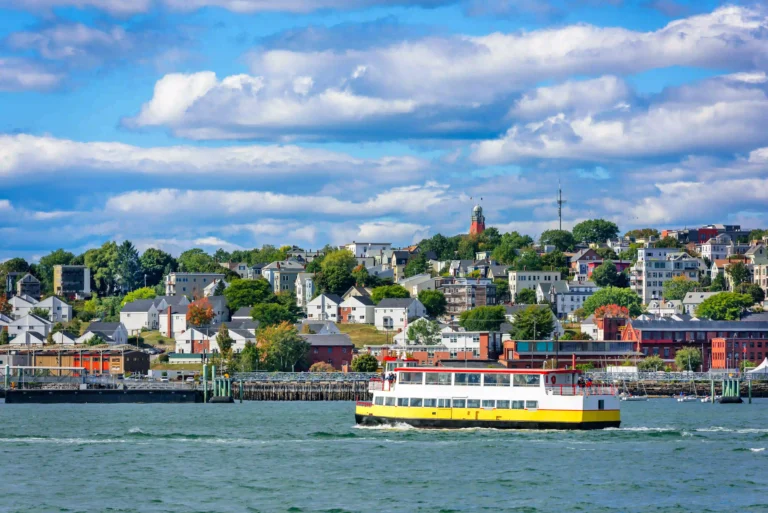
Portland is my first recommendation for a city-based winter break because you can build the trip around several indoor and dining options rather than one seasonal attraction. Check the opening days of your main stops, and choose accommodation that puts those places within practical reach.
For most first-timers, that means the downtown peninsula, somewhere between the Arts District around Congress Square and the Old Port down by the waterfront. The Portland Museum of Art sits right on Congress Square, and a big share of the city’s restaurants and shops are spread between there and the harbour. Stay in that stretch and a museum morning, a long lunch and an evening out can all happen within a fairly small area. Whether you walk it depends on the ice, the weather, your mobility and where your property actually is. Distances that feel easy in July can be a different story on a slick February sidewalk, so plan on a cab or the car for the longer hops.
That’s the whole appeal of Portland in winter: a city with enough going on that one closed door doesn’t wreck the day. Our first-timer’s guide to Portland, Maine fills in the rest of the city if you haven’t been.
If you want the open coast, Cape Elizabeth is the obvious short trip out of town. Treat it as a fair-weather bonus rather than the reason for the trip.
Camden in Winter: Is a Quiet Coastal Stay Worth It?
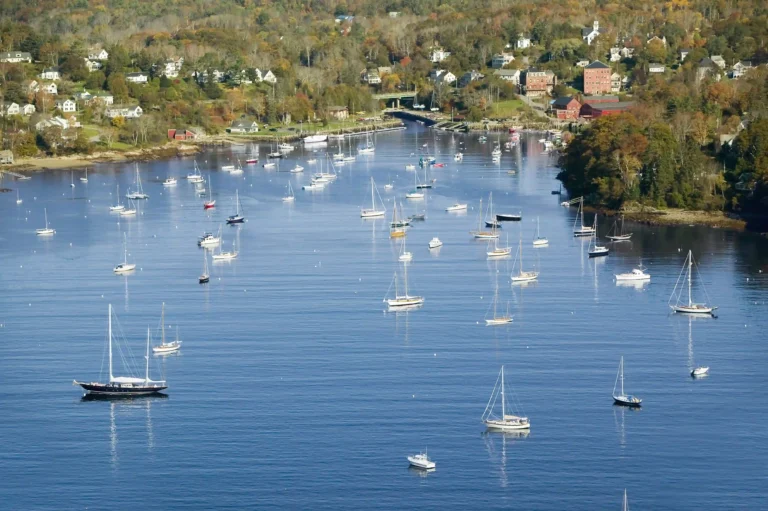
Yes, if quiet is what you’re after. Camden in winter suits couples and slow travellers who want a small harbour town as the setting, a few good meals, and some time outdoors when the weather allows. It’s a weaker fit for anyone who wants a packed itinerary.
Two specific reasons to choose Camden are its nearby ski area and Camden Hills State Park.
The Camden Snow Bowl is a town-run ski area on Ragged Mountain, a short drive from downtown, with ocean views from the upper mountain. It also has a wooden toboggan chute, which few ski hills can claim. Check the Snow Bowl’s own operating report before booking around it; skiing, night sessions and the toboggan chute may have different schedules and depend on conditions.
Camden Hills State Park is open year-round, with trails used for winter hiking and snowshoeing and some marked for cross-country skiing. Check the park’s current notices before choosing a route: winter access to the Mount Battie auto road, trailheads and parking areas can differ from summer. Don’t assume that a summer summit drive becomes a simple winter walk.
Does Camden Work Without Skiing?
It can, as long as you want a town stay rather than a full programme. Without skiing, a Camden stay revolves around the town itself: confirmed meals, whatever shops and cultural spots are actually open on your dates, and a short harbour or park walk when conditions allow. That’s a good couple of days for the right person, not several days of indoor activity.
If you want a fuller indoor plan, compare Rockland or Portland before you book.
Before booking Camden, make sure your accommodation is operating, you know where you’ll eat each night, and any outdoor plan you’re counting on is running. Camden’s downtown is compact, but that only helps if your room is actually in or near it.
When Is Rockland the Better Fit?
Rockland is the art-led alternative. The Farnsworth Art Museum focuses on Maine art and artists tied to this coast. It can anchor a day if it’s open when you’re there, and its days change through the year. The two towns are close neighbours on the same stretch of coast, so a stay in one doesn’t rule out a visit to the other. If your trip is built around a museum, Rockland is the more natural base. If it’s built around the ski hill or the state park, choose Camden. Our Camden vs Rockland comparison goes deeper into how the two towns differ.
One summer habit to leave behind: the Rockland Breakwater. In winter, ice, exposure and waves make it a very different walk from the one in summer photos.
Bar Harbor in Winter: Is It Worth Staying Overnight?
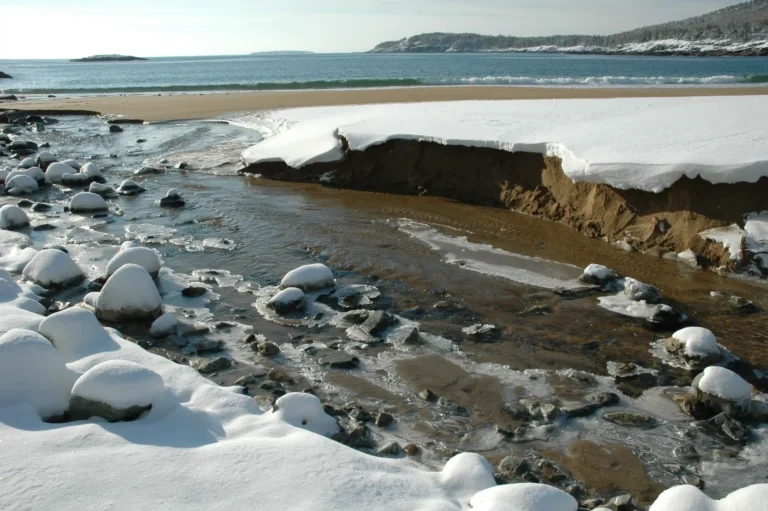
It’s worth it when the winter park itself is the reason you’re going. If you want to snowshoe, ski a carriage road or see Acadia’s coast under snow, sleeping nearby turns the park into a few relaxed outings rather than one long excursion from Portland. Check the full route from your starting point before booking: the drive from Portland takes a substantial part of a short winter day, and weather delays can reduce your time in the park further.
Staying overnight doesn’t change what’s open, though. A bed in Bar Harbor won’t reopen closed park roads or bring back seasonal restaurants and tours. Book Bar Harbor because Acadia in winter is your plan, not because it sits at the end of the classic summer coast route.
The destination label matters less than the property. Before booking, check four things:
- The property itself. Is it operating on your dates, and is it in town or out on a road you’ll need to drive?
- Meals. Which nearby restaurants are open on your nights, or does the room have a kitchen?
- Parking and check-in. Is there late arrival, cleared parking and a clear way in after dark?
- Park access. Can you easily reach the part of Acadia you want to visit from there?
A hotel marketed as “Bar Harbor” isn’t automatically walkable to downtown. Don’t count on a shuttle or guided tour unless the operator confirms it’s running in winter.
Bar Harbor isn’t the only base. Southwest Harbor and Northeast Harbor sit on the same island, and our comparison of Bar Harbor vs Southwest Harbor vs Northeast Harbor explains how they differ on the map. In winter, the deciding factor is what’s open around your specific property, not which town has the better summer reputation.
How long to stay? A single night can leave you with little park time once you count arrival, departure and short daylight. As a flexible example, a few nights give you room for a park outing plus some slack if the weather turns. Better weather isn’t guaranteed, but you’ll have a second chance.
What Access Does Acadia Have in Winter?
That covers whether to stay. This is what you can actually reach once you’re there.
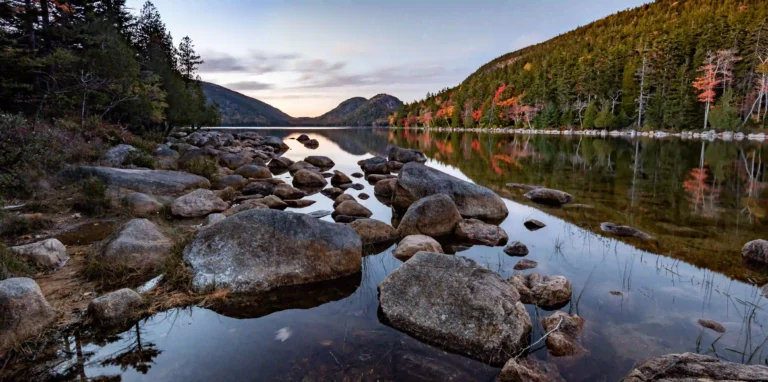
According to the National Park Service’s winter page, most of the Park Loop Road closes to vehicles during the winter period, including the road up Cadillac Mountain. A couple of maintained sections, part of Ocean Drive and the road to Jordan Pond, can still be driven, weather permitting. So the summer loop drive isn’t available, but the park isn’t sealed off either. Don’t plan your visit around the summit road.
Park roads are plowed and sanded only during daylight, according to NPS. That’s one more reason to keep your outings to the middle of the day.
The carriage roads are the winter draw. They’re open for walking, snowshoeing and cross-country skiing, and their condition depends on snow, ice and grooming at the time, not the calendar.
You still need a park entrance pass year-round. That’s separate from the Cadillac vehicle reservations used in the busy season, which won’t help you in winter anyway.
The NPS advises preparing for snow-packed and icy trails, while warning that traction devices can be hazardous on slick granite. Choose a route and equipment suited to the surface, and turn back when conditions exceed your preparation.
How Many Nights Should You Plan?
These are editorial examples, not rules. In general, fewer bases work better in winter, but where you fly in, where you fly out and what you’re going for should shape the plan.
- A short Portland stay: two or three nights for a city break.
- A focused Camden or Rockland stay: two or three nights in one Midcoast town, built around the town, the ski hill, the park or the museum.
- A longer visit: Portland plus one Midcoast base, ordered around your arrival and departure points.
- Bar Harbor and Acadia: a purpose-led stay of a few nights when the park is the point, not an add-on.
What I wouldn’t plan is a coast-wide circuit on a short winter trip. If the weather causes delays, every extra base means more of your limited daylight spent driving.
Planning Coastal Maine in Winter: What to Sort Out Before You Go
Here’s the practical side, in one place.
- Opening days. Before booking, confirm the opening days of the places your trip depends on, then recheck operations and travel conditions close to departure. Those checks solve different problems: a normal timetable does not rule out a weather closure.
- Meals and accommodation. Know where you’re sleeping and eating on each night, especially in smaller towns.
- Daylight. Days are short, so plan outdoor time for the middle of the day and keep night driving to a minimum.
- Weather and roads. Check your actual route and destination, there and back, on New England 511 for Maine road conditions and the National Weather Service forecast for the specific places you’ll be. A clear report isn’t a safety guarantee.
- Cancellation and change terms. Choose rates and bookings that can move if the forecast does.
- Rental cars. Ask about winter tyres and equipment. Don’t assume they’re included. A bigger vehicle isn’t a substitute for good tyres, experience or postponing.
- Arrival and departure. Leave some room around fixed flights. It helps, but it can’t promise you’ll arrive or leave on time.
Seafood is still on plenty of menus in winter, though many summer seafood shacks close. Cruises, whale watching and lighthouse interiors aren’t things to build a winter trip around. If you need a ferry, check the operator’s winter timetable and treat it as transport, not a storm-day outing.
On a real storm day, the fallback is your accommodation, not another drive to an indoor attraction. No museum, restaurant, ferry or shop is guaranteed to stay open during severe weather.
Once you know which area fits, our guide to where to stay on the Maine coast is the next step for choosing a base.
December or January and February?
December can suit a holiday-flavoured town visit, if the programming you’re going for is confirmed for your dates. It isn’t automatically busier or more festive in every community. January and February are better judged on what’s actually operating. Skiing and snowshoeing depend on operating status and conditions, not just the month. March isn’t automatically spring on the coast, either.
The Verdict
Coastal Maine in winter is worth it if you want a slower trip with good food, some culture and coastline on your own terms. The key is choosing the right version.
- Portland for a city-based break. Choose a peninsula base near your planned stops and give it two or three nights, using transport when distance, weather or icy surfaces make walking impractical.
- Camden for a quiet town stay, with the ski hill or the state park as optional outdoor time.
- Rockland for an art-led Midcoast stay.
- Bar Harbor when a winter Acadia visit is the reason to travel.
If what you really want is boat trips, a long list of seasonal attractions or carefree hopping from town to town, come back in another season. The coast will still be there, with its boats back in the water.