The Japan Accommodation Guide Nobody Warned Me About
Affiliate note: This article may contain affiliate links, which means I may earn a small commission if you book or buy through them – at no extra cost to you. I only recommend things that make sense for this kind of trip.
Because “just book a hotel” is the worst advice you’ll get for this trip.
There’s a version of your Japan trip where you check into a beige business hotel, sleep fine, and see all the sights.
That version is fine. But you’ll spend the whole flight home wondering what you missed.
Japan has accommodation options that simply don’t exist anywhere else in the world. Sleeping in a Buddhist temple. A private pod the size of a luxury sedan. A 24-hour manga cafe where salarimen nap between trains. A centuries-old inn where a staff member brings you sake and folds your futon while you’re at dinner.
You don’t have to choose any of them. But you should at least know they’re there.
This guide breaks down every major type of Japan accommodation — what it actually costs, what it’s actually like, and who each one is best for. Whether you’re planning your first trip or your third, there’s probably at least one option here you haven’t considered.
The Accommodation That Makes Japan, Japan
Ryokan — The One You Should Try at Least Once
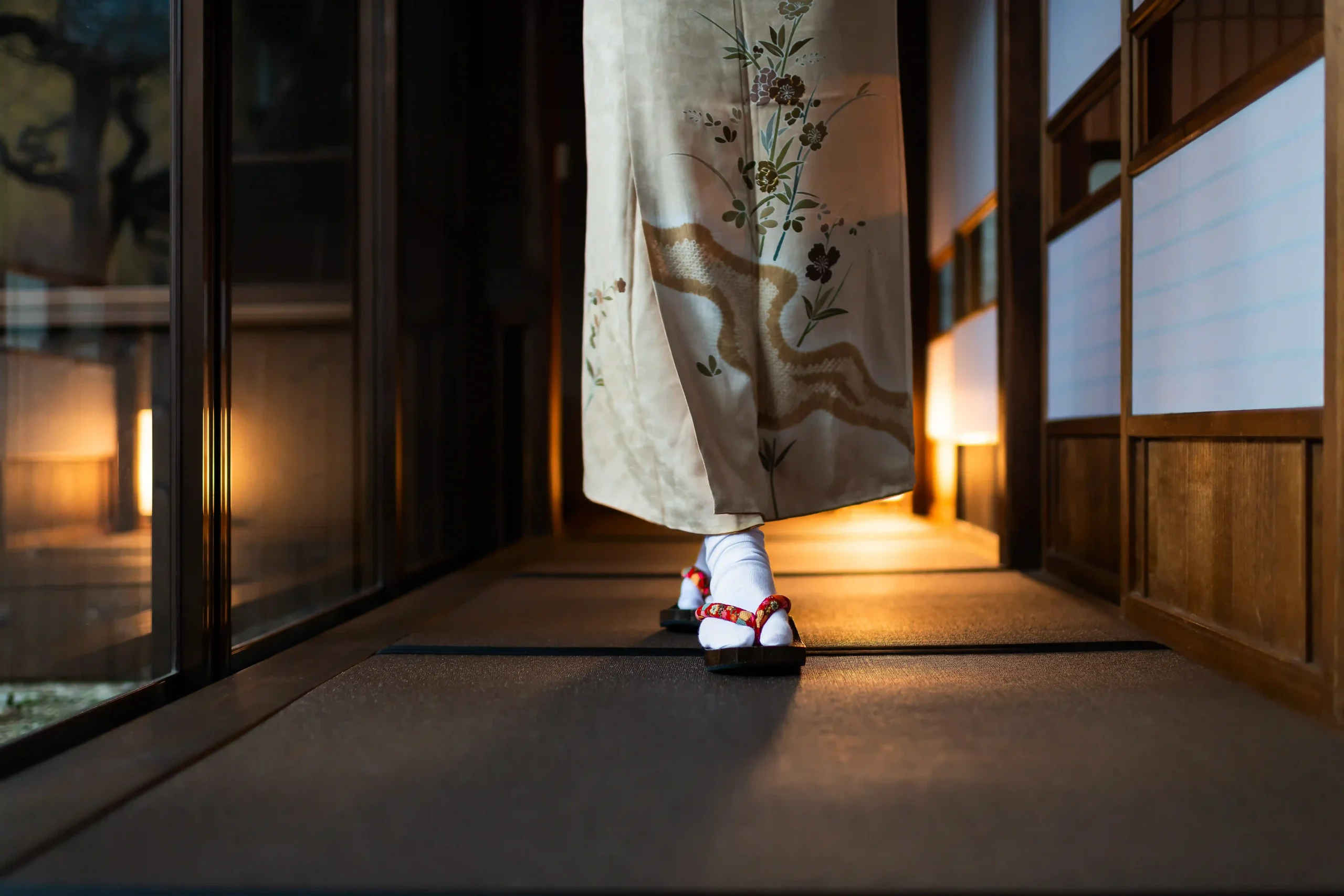
A ryokan is a traditional Japanese inn. Tatami floors, futon bedding, sliding shoji screens, a kimono-style yukata waiting on your bed. And if you choose well, a private onsen right outside your room.
The best ones operate on a philosophy called omotenashi — a kind of hospitality that’s less “customer service” and more “we anticipated everything you needed before you knew you needed it.” Staff remember your tea preference. Your shoes are neatted at the entrance when you return from dinner. The futon appears while you’re eating.
Most mid-range ryokans include a multi-course kaiseki dinner and a Japanese breakfast — and these are usually worth the price of the room on their own.
What to budget: Anywhere from $45 per night at a simple guesthouse-style ryokan to $400+ at a high-end inn. Most decent experiences land between $120–$200 per person.
Best for: Anyone who wants Japan to feel like Japan. Especially good for a night or two in Kyoto, Hakone, or Nikko. If this is your only trip, just do it.
One thing to know before you book: If you have visible tattoos, check the onsen policy first. Many ryokan — and almost all public bathhouses — don’t allow them. Look for places that specifically mention private onsen, or search for “tattoo-friendly ryokan.” There are good options; you just have to be deliberate about it.
Shukubo — Sleeping in a Buddhist Temple
At Mount Koya (Koyasan), about 90 minutes from Osaka, over fifty Buddhist temples offer accommodation to visitors. You sleep in a spare, quiet room, eat vegetarian shojin ryori meals prepared by monks, and wake early for morning prayer chanting if you want to join.
It’s not a retreat in the wellness-brand sense. It’s closer to borrowing a monk’s daily life for a night.
I’d recommend it to anyone who wants a break from the pace of city travel. Koyasan’s forest cemetery at dusk — with its moss-covered stone monuments and lantern-lit pathways — is one of the most atmospheric places I’ve been in Japan. Staying overnight means you have it almost to yourself once the day-trippers leave.
What to budget: $80–$150 per person, usually including both meals.
The Accommodation That Surprises You
Capsule Hotels — Not What You’re Picturing
When most people think capsule hotels, they picture something uncomfortable and claustrophobic. A tiny tube, a shared bathroom, a salariman snoring two pods over.
Modern capsule hotels are nothing like that.
The better ones — places like Nine Hours in Kyoto or First Cabin in Tokyo — are closer to a business class pod than a storage unit. Your capsule has its own lighting controls, a small shelf, a proper curtain or door, USB ports, and enough room to sit upright. Shared bathrooms are spotless. Many buildings separate floors by gender.
They’re excellent for solo travellers who are out all day and just need somewhere clean and quiet to sleep. They’re also a practical solution if you’ve stayed out later than the last train and need somewhere central to crash for one night.
What to budget: $30–$94 per night, depending on the city and the quality of the property. Tokyo and Kyoto skew higher.
Best for: Solo travellers, one-night layovers, anyone who doesn’t plan to spend much time in the room.
The Manga Cafe: $15, a Cubicle, and a Drink Bar
Yes, you can sleep there. People do it all the time — businessmen between trains, travellers who booked the wrong night, backpackers who did the math and decided hostels were too expensive.
A manga kissa (manga cafe) is a 24-hour establishment built around the idea of giving people a private booth to read, browse the internet, and eat snacks. Over time they evolved into an unofficial budget accommodation option — particularly for people who missed the last train or just need the cheapest possible bed in a major city.
Your “room” is a cubicle. It has a reclining chair (sometimes a flat surface), a monitor, and a curtain or door. Most cafes offer shower facilities. There’s usually a drink bar included in the price and a wall of snacks nearby.
What to budget: Around $11–$19 for an overnight stay. That’s cheaper than almost any hostel in Tokyo.
Is it comfortable? Honestly — not particularly. You’re in a booth in a shared building. It’s clean and functional but you’re not sleeping on a mattress.
Who is it actually for? If you’re stuck, it’s brilliant. If you’re planning it as regular accommodation, that’s going to get old fast. Think of it as a rainy-day tool in your travel kit rather than your primary plan.
The Accommodation That Just Makes Sense
Business Hotels — Underrated and Everywhere
Japan’s business hotel chains get very little love from travel bloggers because there’s nothing exotic about them. But there should be more love.
A good business hotel — APA, Toyoko Inn, Dormy Inn — gives you a clean private room, your own bathroom, often a public onsen on the top floor (Dormy Inn does this brilliantly), and a location usually within five minutes of a major train station. The rooms are small. That’s the point. You’re in Japan — you’re not spending time in the room.
What to budget: $70–$170 per night for a single or double. You can often find Toyoko Inn rooms in regional cities for under $80.
Best for: Couples, budget-conscious solo travellers, anyone who wants comfort and convenience without paying boutique hotel prices.
Hostels — Still the Best Way to Meet People
Japan’s hostels are very good. Cleaner than most European equivalents, well-located, and often run by people who actually want to help you figure out the city — not just check you in and disappear.
The social element varies — some are proper party hostels with regular events, some are quiet and guesthouse-style — so it’s worth reading recent reviews to get the vibe right. Budget travellers heading to Japan should look at hostels first before assuming they’re out of budget.
What to budget: $15–$50 per night for a dorm bed, with private rooms available at most larger hostels for $60–$100.
What Does Japan Accommodation Actually Cost?
Here’s a practical overview so you can plan without surprises:
| Type | Price per Night (USD) | Best For |
|---|---|---|
| Manga Cafe | $11–$19 | Emergency crash, budget extreme |
| Hostels (dorm) | $15–$50 | Solo travellers, social scene |
| Capsule Hotels | $30–$94 | Solo travellers, short stays |
| Business Hotels | $70–$170 | Couples, comfort without fuss |
| Ryokans (budget) | $45–$150 | Traditional experience, regional towns |
| Ryokans (mid-high) | $150–$400+ | Special nights, onsen, kaiseki |
| Luxury Hotels | $350–$1,000+ | Splurge nights, special occasions |
One cost most people forget: major tourist cities charge an accommodation tax on top of your room rate. Kyoto and Osaka both have tiered systems that add roughly $2–$10 per person per night depending on the room price. It’s collected at check-in, often in cash only. Not a deal-breaker, just worth knowing in advance so you’re not caught short.
How Do You Choose Where to Stay in Japan?
Match Your Accommodation to Your Itinerary
The biggest mistake is treating all your nights the same way. One approach that works well: use business hotels or hostels as your base in major cities like Tokyo and Osaka — somewhere practical and well-located — then splurge on a ryokan for one or two nights in Kyoto, Hakone, or a smaller town where the traditional experience actually fits the surroundings.
If you’re following a Japan itinerary that takes you beyond the main cities, that’s often where the best ryokan value lives. You’ll pay less than you would in Kyoto and get a more personal experience in a place that’s less crowded.
When Should You Book Japan Accommodation?
Earlier than you think. Especially for Kyoto.
Cherry blossom season (late March into April) and autumn foliage season (November) see some ryokans sell out four to six months ahead. A good business hotel in central Kyoto will still have rooms, but the best-value places go fast. If you have specific dates and a specific type of accommodation in mind, book as soon as your flights are confirmed.
For Tokyo and Osaka, you have more flexibility — there’s simply more supply. But for any overnight in a smaller town or a specific ryokan you’ve had your eye on, don’t leave it to the last minute.
A Few Things Nobody Puts in the Guide
The shoe rule matters. In any traditional accommodation — and some business hotel corridors, though rarely — you’ll encounter an entry area (genkan) where you swap your shoes for indoor slippers. On tatami floors you go barefoot. It’s not a big cultural hurdle, just something to expect so you’re not confused your first night.
Don’t skip the onsen if you have access to one. I know that sounds obvious, but a lot of first-timers feel awkward about the communal bathing aspect and opt out entirely. The format is: shower thoroughly before you get in, no swimwear, no phones. Then you soak in hot mineral water, probably looking out over a garden or a mountain, and everything in your body that was tense from travel stops being tense. It’s worth the brief discomfort of figuring out the etiquette.
The Japan travel guide has more on navigating the practicalities of getting around — which is, alongside accommodation, the other thing people tend to over-stress about. Both are easier than they look once you’re there.
The Short Version
Japan rewards people who engage with it, and that includes how you sleep. A ryokan night in Kyoto is one of the better things you can do on this trip — not because it’s luxurious (though it can be) but because it’s completely unlike anything at home. A capsule hotel in Tokyo at $40 is clean, functional, and interesting in its own way. A manga cafe is a story you’ll tell people.
You don’t need to stay in all of them. But you have options that don’t exist anywhere else on the planet, and you’re booking flights to Japan anyway.
Make some of those nights count.
Planning your Japan trip? I’d love to hear what type of accommodation you’re going with — or what questions are holding you back from deciding. Drop a comment below.