Portland, Maine in Winter: How to Plan a Car-Free City Break
Affiliate note: This article may contain affiliate links, which means I may earn a small commission if you book or buy through them – at no extra cost to you. I only recommend things that make sense for this kind of trip.
Picture a winter weekend where the hardest decision is whether to do the art museum before lunch or after. A morning in a proper art museum. A long, slow meal somewhere warm in the Old Port. Twenty minutes of salt air by the harbour, just enough to earn the next coffee. Then a play in the evening, a short hop from your room.
That’s the trip Portland, Maine in winter makes possible, and you don’t need a rental car for it. A centrally based stay works without one, as long as you plan two things properly: how you get from the airport or station to your accommodation, and how you get back again.
Car-free doesn’t mean walking everywhere. It means you’ll sometimes take a bus, sometimes pay for a taxi, and occasionally decide a sidewalk isn’t worth it today. That’s fine. That’s still a city break.
If you’re still deciding between a city stay and a wider trip along the coast, start with the bigger question in Coastal Maine in Winter. This guide assumes you’ve picked Portland and want to make the most of it.
How Do You Get Into Portland Without a Car?
Sort this before you book a room, not after you’ve landed.
From Portland International Jetport (PWM)
The airport’s ground transportation page lists a METRO bus link into downtown Portland (Route 7 at the time of writing), plus taxis, pre-booked car services and an information booth just outside baggage claim. No rental needed for a downtown-only stay.
The bus makes sense if you’re travelling light and your flight lands within service hours. METRO’s Route 7 page covers the Jetport–downtown route and its current timetable. Check that a trip actually lines up with your arrival day and time.
A taxi or pre-booked car is the better call when you land late, carry heavy bags, travel with small kids, or simply don’t fancy waiting at a bus stop in January. The airport says taxis cover the span from the first to the last flights. It doesn’t promise rideshare availability at every hour, so don’t plan a midnight arrival around an app. And if you need a child seat, confirm it with the car company in advance. Not every hired car has one waiting in the back.
By Train or Intercity Coach
The Amtrak Downeaster and Concord Coach Lines share the Portland Transportation Center at 100 Thompson’s Point Road. It’s on Thompson’s Point, west of the downtown peninsula. It is not in the Old Port, and it’s not a stroll to your hotel with a suitcase on a slushy evening.
The station page lists METRO Route 1 as a city connection, with taxis usually available on site. Concord Coach’s stop page also points to the Congress Street bus routes a short walk up Sewall Street. Either way, it’s a second leg, so build it into your arrival time.
One more check: not every intercity coach uses this terminal, so confirm the stop on your actual ticket.
Don’t Forget the Way Home
A car-free arrival plan is only half a plan. Before you go, check:
- When your return flight, train or coach leaves, and whether the first bus runs early enough to get you there.
- Weekend and holiday schedules, which can differ from weekday service.
- METRO’s service alerts the day before you leave, especially if snow is in the forecast.
An early flight is usually where a taxi earns its fare. Book or arrange it the night before rather than hoping.
Where Should You Stay in Portland for a Winter City Break?
Pick a base by what you actually plan to do, not by the word “Portland” in a search result. The first-time visitor’s guide to Portland covers the wider city layout. For a winter stay without a car, the question narrows to this: how close is your door to the things you want?
| Base | Fits best if you want | Watch for |
|---|---|---|
| Arts District / Congress Square side | The art museum, theatre, library, Congress Street buses | Hills down to the waterfront |
| Old Port / downtown waterfront | Dinners, shopping, short harbour walks | Steep climbs up to Congress Street |
| Elsewhere on the peninsula | A specific address that suits your plan | Distance and connections vary a lot |
Why “On the Peninsula” Isn’t the Whole Answer
Portland’s peninsula is compact on a map. In winter, the map lies a little. Hills, icy patches, uneven brick and a roll-aboard bag can turn a 15-minute walk into something you’d rather pay to skip.
Check the property’s exact address against where you’ll spend your time. Ask about accessibility directly with the property if steps, slopes or lift access matter to you.
The Cheaper Room That Isn’t
A lower nightly rate outside the core can disappear into two taxi rides a day. South Portland, an airport-area property and downtown Portland are not interchangeable bases, even if a booking site lumps them together under one city name.
If you’re also comparing towns further along the coast, where to stay on the Maine coast helps you weigh Portland against other coastal bases.
What Are the Best Things to Do in Portland, Maine in Winter?
Pick a couple of anchors and let the rest fill in around them.
Portland Museum of Art
This is your best indoor anchor. The Portland Museum of Art sits on Congress Square and spreads across three buildings, with a collection that leans into Maine and American art. Winslow Homer is among the collection’s best-known names, though what’s on the walls rotates, so check before you go if you’re hoping to see a particular work.
Give it a morning or an unhurried afternoon. It pairs naturally with lunch nearby and an evening at Portland Stage, which is just around the corner. Check the museum’s visitor page for current opening days before you plan around it. Don’t assume it’s open every day of the week.
A Performance at Portland Stage
Portland Stage is a professional, non-profit theatre at 25A Forest Avenue, a short walk from Congress Square. An evening show turns a museum day into a proper night out without any extra travel.
Shows run on specific dates, not every night, so check the current season calendar before you lock in your trip. And note that box-office hours aren’t the same thing as performance times.
Optional Stop: Portland Public Library, Downtown Branch
If you’re already near Monument Square, the Downtown Branch is worth a quick look. It’s a working public library that also hosts rotating art exhibits, and the library says computer and Wi-Fi access is free at its branches, with printing on site if you need a boarding pass.
Treat it as a warm half-hour between bigger plans rather than a reason to visit. It’s closed on Sundays, and exhibits and events change, so check the branch page first.
Old Port Browsing and a Long Meal
The Old Port is where you’ll likely eat at least once. Start your search on the streets that run down toward the harbour: Exchange Street and Fore Street for browsing and sit-down meals, then Wharf Street and Commercial Street closer to the water. For seafood, Eventide Oyster Co. at 86 Middle Street is an oyster bar best known for its brown butter lobster roll. For a daytime coffee and pastry stop, Standard Baking Co. at 75 Commercial Street has been baking since 1995. It’s a compact grid, so lunch, shopping and a harbour walk fit together without backtracking.
On the Arts District side, look along Congress Street between Monument Square and Congress Square for a lunch or pre-theatre meal that keeps you near the museum and Portland Stage.
Treat the Old Port as an outing of a few hours, not an all-day mission. Winter hours and seasonal closures change, so check the specific places you want before you walk down the hill, and book ahead for dinner on a show night or weekend.
A Short Walk When the Weather Allows
A short loop around the Old Port and downtown waterfront works when sidewalks are clear and the wind isn’t vicious.
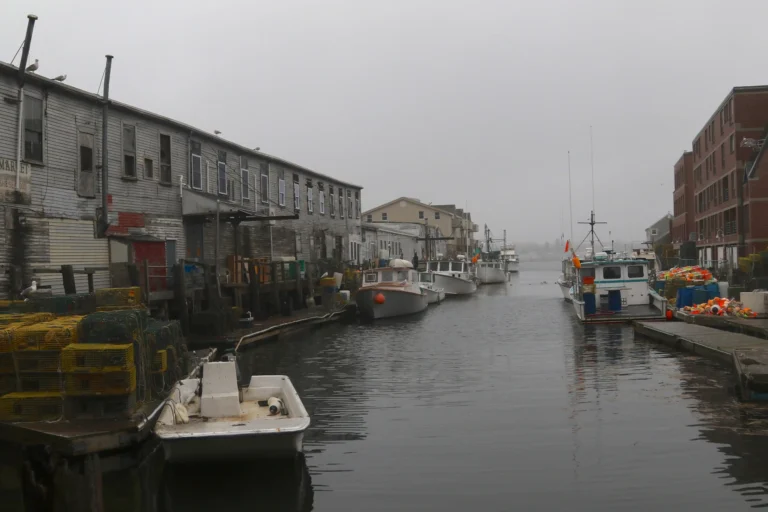
Keep it short and optional. Many piers are working waterfront, not public promenades, so don’t expect a continuous harbour path. The Eastern Promenade is lovely, but it’s on the far end of the peninsula and exposed in winter. Go only if surfaces and your energy allow.
With Kids: Children’s Museum & Theatre of Maine
The Children’s Museum & Theatre of Maine is on Thompson’s Point, near the train and coach station rather than the downtown cluster. That makes it a separate trip, not something you tack onto a museum morning on foot. It can pair with a train arrival or departure day, but that’s only practical if your luggage is sorted. The station’s own page puts Thompson’s Point venues about half a mile from the platform, and it doesn’t list left-luggage, so either drop bags at your accommodation first or confirm storage before you plan the combination.
Check the museum’s current opening days and any special closures before planning the transfer. Advance tickets are available but not required, according to its visitor page.
Two Days in Portland, Maine in Winter Without a Rental
A flexible template, not a clock to follow. Arrival and departure days are travel days first.
Day One: Arts District
Start at the Portland Museum of Art. Grab lunch somewhere close on the Congress Street side. If you’ve still got energy, spend an hour at the library on Monument Square, which is a short walk along the same corridor. Finish with a show at Portland Stage if one’s on that night.
Everything here sits within a fairly compact stretch of Congress Street. It’s the easiest day to do on foot, and the Route 7 bus runs along that corridor if you need it.
Day Two: Old Port and the Water
Head downhill for a slower day. Browse the Old Port, take your long lunch, and fit in a short waterfront walk if conditions cooperate. If it’s bitter or icy, swap the walk for a second café stop.
How to Swap Things Around
Venues don’t all open the same days. If the museum is closed on the day you planned, flip your two days. If there’s no show on the right night, move it. Families can replace part of a day with the children’s museum, as long as the transfer to Thompson’s Point is built in.
Don’t zigzag across the peninsula just to fit everything in. Pair things that sit near each other and let the rest go.
How Should You Get Around Portland When Walking Isn’t Right?
Walking works for short central hops. Beyond that, you’ve got options.
Bus, Taxi or Your Own Two Feet
METRO is the city’s bus service. Use its official trip planner and service alerts rather than guessing frequencies or stops. For a specific useful journey, like the airport or station transfer, the bus is often enough.
A taxi or rideshare makes sense when you’ve got luggage, the weather’s rough or a connection is awkward. Just don’t assume cars will be instantly available in a storm.
Dressing for Portland’s Sidewalks
Plan for all three: real cold, wind off the harbour, and sidewalks that can be wet, slushy or icy. Wear footwear with decent grip that can handle slush. Bring warm layers, gloves and something to block the wind for those short harbour-side stretches.
Slopes and uneven paving can matter more than map distance. Keep outdoor legs modest, plan your warm-up stops, and adjust for children or anyone less steady on their feet. If a walk looks icy, take the bus or skip it.
On a properly severe-weather day, the best plan may be staying in. Check the National Weather Service forecast for the Portland area and remember that indoor venues can close too.
When a Rental Car Becomes the Right Answer
If your plans grow into coastal day trips well outside the city, that’s a different trip, and a rental may make sense. For a downtown-focused stay, it mostly needs a parking spot.
What Not to Treat as a Default Car-Free Outing
These are extensions with their own logistics, not things you’re missing. You can have a complete Portland trip without any of them.
- Portland Head Light and Cape Elizabeth. Outside the city plan. It isn’t a downtown walk, and don’t assume a simple bus drops you at the park.
- The islands. Ferries run on scheduled timetables, but a winter crossing isn’t a guaranteed sightseeing day, and island services may be limited.
- Outlying breweries and shopping. A Portland address doesn’t mean it’s near your hotel. Check how you’ll actually get there and back.
When Should You Go, and for How Long?
December brings holiday programming, but what’s on depends on that year’s calendars, so check before you build a trip around it. January and February still work fine for a city break. Don’t assume they’re automatically quieter or cheaper. March is not spring. Pack for winter regardless.
Two or three nights suits this kind of focused stay, though it’s an example rather than a rule. And snow isn’t guaranteed at any point. If you get a white weekend, consider it a bonus.
Your next step: choose a central base near the things you actually want to do, sort your arrival and return transfers, and build around one or two confirmed anchors. Everything else can stay flexible.