Kayaking Navarino Bay: What to Expect Before You Paddle In
Affiliate note: This article may contain affiliate links, which means I may earn a small commission if you book or buy through them – at no extra cost to you. I only recommend things that make sense for this kind of trip.
Most kayaking tours feel like organised sports. A group of strangers in matching life jackets, a guide counting strokes, a turnaround point somewhere photogenic.
This one doesn’t work like that.
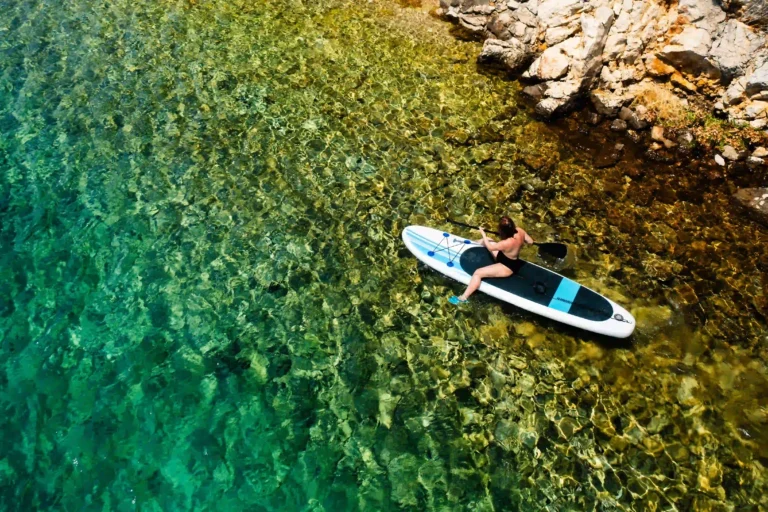
Kayaking in Navarino Bay is a half-day that moves at its own pace. You paddle through water so clear you can watch the seabed slide beneath you, pull up to a sea cave, land on a beach with no road access, and eat a Greek picnic under the sun. Somewhere along the way, your guide will point across the water and mention that this bay — this exact stretch you’re floating through — was the site of one of the most consequential naval battles in modern European history.
It’s the kind of activity that earns its place on a Peloponnese itinerary. This guide covers the route, the pricing, what wildlife to watch for, and everything first-timers need to know before booking. For more on exploring the wider region, browse our Europe travel guides.
What Makes Navarino Bay Different for Kayaking?
The bay’s geography does most of the work. Navarino is a natural harbour protected from the open Ionian Sea by Sphacteria, a long, narrow uninhabited island that runs along its western edge like a natural wall. The result is calm, sheltered water — ideal for beginners and anyone who doesn’t want to fight the sea.
That protection also meant the bay was strategically important for centuries. In October 1827, the combined fleets of Britain, France, and Russia sailed into this bay and, in a matter of hours, destroyed the Ottoman-Egyptian fleet in what turned out to be the last major naval battle fought entirely with sailing ships. The outcome changed the course of Greek independence. The bay is now peaceful. But paddle past Sphacteria and the history of what happened here isn’t hard to picture.
Two medieval castles still guard the bay’s entrance — Niokastro to the south, Paleokastro to the north — and you’ll pass both of them during the tour. That combination of calm water, striking landscape, and actual historical weight is what makes this more than just a paddling excursion.
What Does the Kayak Tour Actually Cover?
Tours run from two main starting points: Divari Beach (a few kilometres north of Pylos near the village of Gialova) and Pylos marina in the town centre. The routes differ slightly but both cover the highlights of the bay. Here’s what to expect.
Starting Point — Divari Beach or Pylos Marina
You’ll meet your guide at the starting point around 9:30am. After a 30-minute briefing covering paddling techniques, safety procedures, and equipment, the group sets off. Equipment is provided — kayak, paddle, life jacket, spray deck, waterproof jacket, and a waterproof bag for your belongings. You bring yourself and the essentials (more on that below).
Single and double kayaks are available. If you’re travelling solo, you can pair with another participant or ask about double kayak options with the guide.
The Rock Arch — Tsihli Baba
Heading out from the marina, one of the first landmarks is Tsihli Baba: an imposing monolithic islet with a dramatic rock arch at its northern tip. Weather permitting, guides circumnavigate it and paddle through its sea caves and natural tunnels. It’s the kind of geology that doesn’t need much explanation — you’ll see it and understand why it’s on the route.
From Divari Beach, the equivalent landmark is Sphacteria’s western cliff face — sheer rock walls rising from the water, dotted with nesting seabirds.
The Picnic Beach You Can Only Reach by Water
This is the stop people tend to remember. Mid-tour, the group lands on a secluded beach on Sphacteria Island that has no road access. It’s only reachable from the sea — by kayak, or by nothing.
There’s time to swim, snorkel, and rest. The guide unpacks a homemade picnic: freshly baked bread, organic fruit and vegetables, local cheese, and olive oil. In an era when “local lunch” is overused, this is the version that earns it — simple, Greek, and eaten on a beach with no other people on it.
Paddling Past Two Medieval Castles
The route takes you within close range of both Niokastro and Paleokastro, the fortresses that guard the bay’s southern and northern entrances respectively. They’re not just scenic context — their walls and bastions were actively used to control sea access during the 1827 battle. Paddling past them at water level gives a different perspective than the view from the road.
How Much Does Kayaking in Navarino Bay Cost?
Group tours typically run from €75–€80 per person / approximately $83–$88 USD, based on current listings from GetYourGuide and operator sites. Private tours cost around €100 per person / ~$110 USD, generally requiring a minimum of 2–4 participants.
The price includes all kayak equipment, the guide, and the picnic lunch. It doesn’t include transport to the meeting point — if you’re without a car, some operators offer pickup from central Pylos; confirm this at booking.
Duration is approximately 4 hours: around 30 minutes briefing, 2–2.5 hours on the water, and 1–1.5 hours for the picnic and free time at the secluded beach.
Free cancellation is standard up to 24 hours in advance on most booking platforms. For budget travel context while planning your wider trip, see our budget travel tips.
Do You Need to Know How to Kayak?
No. Most participants on these tours are first-timers.
The kayaks are specifically chosen for stability — wide, easy to balance, with rudders for steering — and the bay’s protected water means conditions rarely get rough. The guide covers all the technique you need in the pre-departure briefing. Basic swimming ability is required (you’ll need to be comfortable in open water), and participants should be reasonably fit. Children are welcome from age 5 upward.
Family groups, couples, and solo travellers all show up regularly. The group dynamic is typically relaxed — these tours are designed around journeying and looking, not athletic output. Reviews from families with young children and groups of complete beginners consistently describe the experience as manageable and enjoyable. One TripAdvisor reviewer noted coming with their 11-year-old and finding the whole thing well within reach for all three of them. The guides adjust pace to the group.
What Wildlife Might You Spot?
Navarino Bay sits adjacent to the Gialova Lagoon, one of Europe’s most important wetland habitats and a stopover for hundreds of bird species on migratory routes between Africa and Europe. The lagoon is visible from parts of the kayak route, and birdwatchers sometimes spot species near the water’s edge.
On the bay itself, Caretta caretta loggerhead sea turtles nest on the sandy beaches around Divari and Voidokilia — you may spot one surfacing while you’re paddling. Seals are occasionally sighted around the rocky sections near Sphacteria, though this isn’t guaranteed. Migratory birds use the island’s cliffs as resting spots.
For more on the lagoon and what else is worth seeing in the area, the Best Things to Do in Pylos guide covers Gialova, Voidokilia Beach, and the Palace of Nestor in detail.
What to Bring — and What to Leave Behind
The guide brings the important things. What you need to carry is minimal.
Bring:
- Water bottle (reusable — some operators actively discourage single-use plastics)
- Hat and sunscreen — the sun on water is stronger than it feels
- Swimwear or shorts under your clothes
- A light t-shirt (long sleeve if you burn easily)
- Towel
- Sea shoes, flip flops, or sandals — no trainers or thick-soled shoes
- Change of dry clothes for after
- Any personal medication you take regularly
Leave behind:
- Heavy bags or valuables (waterproof storage is limited)
- Shoes that can’t get wet
One practical note: if you’re staying in Pylos and heading out early, grab breakfast before the tour. The picnic comes at the midpoint, which is typically around the 2-hour mark.
How Do You Book a Kayak Tour in Navarino Bay?
Two operators run the main tours: ExploreMessinia, which departs from Divari Beach, and Aegean Outdoors, which starts from Pylos marina. Both are well-reviewed and use qualified guides. The routes differ slightly, so it’s worth checking which departure point suits your accommodation and transport situation.
If you prefer booking through an aggregator, the tour is also listed on GetYourGuide and Viator.
A minimum of 2 participants is usually required for the tour to run. Book in advance during July and August — peak season fills spots quickly, and the morning slot (the only daily departure for most operators) won’t wait.
If you’re still planning your Peloponnese itinerary, our travel itineraries section has practical frameworks for fitting activities like this into a wider trip.
Planning Your Visit
Tours run from spring through to autumn, with peak season running roughly May to September. The water is warmest in summer, but early morning on the bay — before the heat builds — is also when conditions are calmest and wildlife is most active. Andy’s standing advice: if there’s a choice between an 8am start and a 10am start, take the earlier one.
Pylos is a 3.5-hour drive from Athens (approximately 280km), and about 45 minutes from Kalamata, the nearest city with a regional airport. Most visitors to the area have a car — public transport to Divari Beach in particular is limited.
The Takeaway
Half a day. That’s all this costs you in time.
You get calm water, real history, a beach nobody else can reach by foot, and a picnic that beats anything you’d find in a restaurant at that price point. It’s the activity in Pylos that tends to show up in people’s Peloponnese trip recaps — the one they mention first when someone asks what to do there.
If you’re planning a wider trip through the region, the Best Things to Do in Pylos guide is a good place to start — kayaking is one piece of a town that has more going on than most people expect.
Have you done the Navarino Bay kayak tour? Drop a comment below — especially if you spotted a turtle.