Palermo Travel Guide: Everything You Need to Know Before You Go
Affiliate note: This article may contain affiliate links, which means I may earn a small commission if you book or buy through them – at no extra cost to you. I only recommend things that make sense for this kind of trip.
Most people go to Sicily and head straight for Taormina. The clifftop views, the Etna backdrop, the Instagram portfolio — it makes sense on paper. Palermo doesn’t have that kind of obvious appeal. It’s messier, louder, harder to summarise in a photo.
It’s also, by some margin, the more interesting city.
The moment that captures it best: a bowl of chickpea fritters eaten standing up at Ballarò market, while a vendor nearby calls out prices in a style that’s part theatre, part negotiation. That’s the version of Palermo nobody tells you about.
This Palermo travel guide covers everything you need to actually plan a trip — when to go, how to get around, what to eat, and what to see. No filler.
Why Palermo Belongs on Your Sicily Itinerary
Let’s address the obvious question first, because people still ask it.
Palermo had a serious problem in the 1980s and 90s. The Mafia violence of that era — assassinations of judges, politicians, prosecutors — earned the city a reputation that was hard to shake. The city has spent the past two decades pulling itself out of that period, and the transformation is real. Palermo today is a thriving, culturally rich European city that draws visitors from across the world.
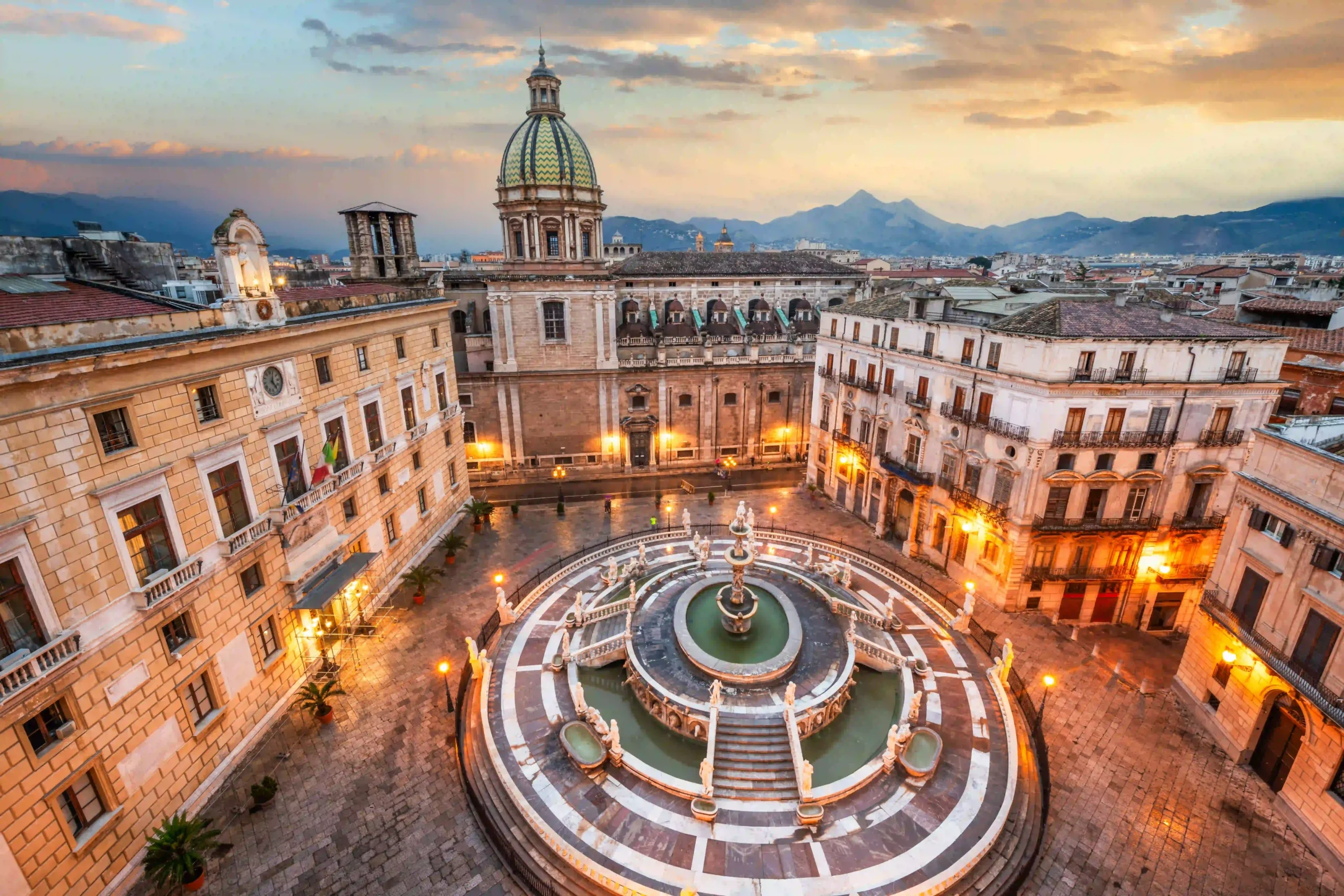
What makes it actually different from anywhere else in Italy is the layering. Centuries of Arab, Norman, Byzantine, Spanish, and Baroque influence are all sitting right on top of each other — sometimes in the same building. You’ll walk past a cathedral that started as a mosque, turn a corner into a Norman palace with a ceiling carved in Arabic honeycomb style, and then stumble into a 16th-century baroque piazza with a fountain that locals still call the shame because of its nudity. All within about fifteen minutes of each other.
It’s gritty in places. Some streets are visibly crumbling. That’s not a bug — it’s a lot of what gives the city its character.
When Is the Best Time to Visit Palermo?
Spring and Early Autumn: The Sweet Spot
April through June and September through October are the best months to visit Palermo for most travellers. Temperatures are warm but manageable — typically 17–25°C (63–77°F) — and the summer crowds haven’t arrived yet, or have just thinned out. Hotel prices also tend to be more reasonable than peak season.
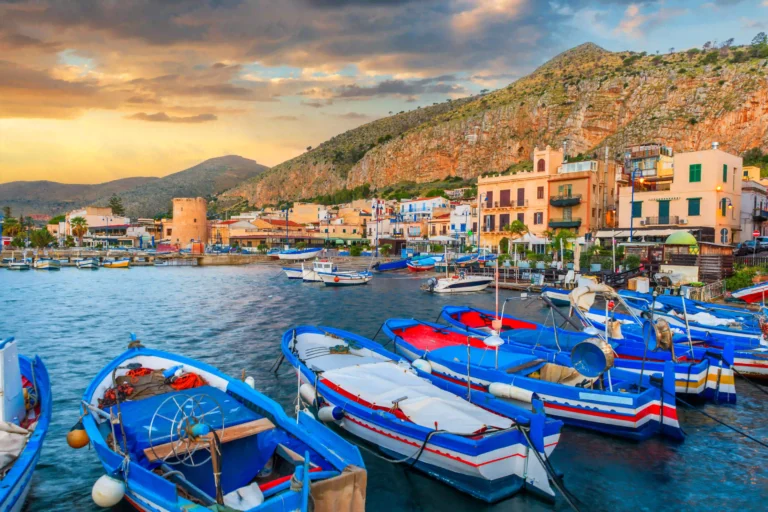
September is a particularly good call. The sea is still warm if you want a beach day at Mondello, the markets are in full swing with autumn produce, and the city has a settled, post-summer energy that feels less transactional than July.
Summer: Hot, Busy — But Liveable
July and August bring real heat — highs regularly hit 36°C (97°F), and the humidity adds to it. The historic centre radiates stored warmth well past midnight, which is actually when a lot of the social life happens — dinner at 10pm is normal, not unusual. If you’re visiting in summer, plan your sightseeing for mornings (arrive at major sites by 8am), rest during the hottest hours, and come alive again in the evening.
Winter: Quiet, Cheap, and Worth Considering
December through February is Palermo at its calmest. Temperatures sit around 10–15°C (50–59°F), which is mild enough for comfortable sightseeing. You’ll have the markets nearly to yourself on weekday mornings, accommodation prices drop significantly, and the city feels lived-in rather than tourist-facing. If you’re primarily interested in architecture, food, and culture rather than beaches, winter is a legitimate option — and the cheapest one.
How Do You Get to Palermo — and Around the City?
Getting from the Airport to the City Centre
Palermo’s airport, Falcone-Borsellino (PMO), is about 30km northwest of the city centre. You’ve got options at every price point.
The Prestia e Comandè bus is the budget pick — it runs every 30 minutes to Piazza Castelnuovo and the Central Station, costs around €6 (~$6.50 USD), and takes 45–55 minutes depending on traffic. Buy your ticket at the airport kiosk or on the bus.
The Trinacria Express train is a similar price (around €5.60–€6.80 / ~$6–7.50 USD) and takes about 50 minutes to Palermo Centrale. Trains run roughly every 30 minutes. It’s reliable, though the station isn’t quite as central as the bus drop-off for some accommodation.
If you’re arriving late at night with luggage and just want to be done with it, a taxi from the official rank costs a flat rate of around €44 ($56 USD). Expensive compared to the bus, but sometimes you just want the door-to-door option.
Getting Around Palermo Day-to-Day
The historic centre is very walkable. Most of the main sights — the Norman Palace, the Cathedral, Quattro Canti, the markets — sit within a roughly 20-minute walk of each other. You won’t need transport for much of your sightseeing.
For longer distances, the city has a bus network, but it’s slow and routes aren’t always intuitive. Taxis and rideshares are inexpensive by European standards and worth using for evening trips back from Vucciria or elsewhere if you don’t want to navigate on foot at night.
What Should You Eat in Palermo?
This is the section that matters most. Palermo has been called the best street food city in Europe — Forbes included it in that category — and unlike a lot of food-city claims, this one holds up.
The Three Markets — and When to Go to Each
Ballarò is the oldest, largest, and most intense. Located in the city’s south, it traces its roots to the Arab period — you’ll still hear vendors calling out their prices in a style called abbanniata, which is somewhere between a chant and an opera. Go in the morning, from around 8am until noon. This is when the fish is freshest, the energy is highest, and the fryers are turning out hot chickpea fritters (panelle) and potato croquettes (crocché) at full tilt. Most items run between €1.50 and €5.
Il Capo is the slightly more composed option — a proper daily market that peaks at lunchtime. Good for picking up ingredients, cheese, and a quieter version of the street food experience.
Vucciria is the nocturnal one. Its name comes from the French *boucherie* — it was originally a butchers’ market — and these days it comes to life after dark. By day it’s near-deserted; by night the stalls give way to grilled meat smoke, cheap wine, and stigghiola (skewers of lamb intestines, grilled right in front of you — better than it sounds). Don’t show up at 11am expecting atmosphere. Come back at 9pm.
Beyond the Markets: Sit-Down Food Worth Knowing About
You should also sit down somewhere proper at least once. Palermo’s restaurant scene has really good Sicilian cooking — pasta with sardines and fennel (pasta con le sarde), caponata, fresh swordfish, cassata. Ask your accommodation for somewhere locals actually go rather than the places positioned around the tourist sites.
For cannoli specifically: don’t buy them pre-filled. Any decent Palermo pasticceria will fill them fresh to order. The difference is significant.
Palermo Food Budget: What to Expect
Street food fills you up for around €10–15 ($11–16 USD) per person. A full dinner with wine at a solid mid-range restaurant runs €40–50 ($44–55 USD) per person — closer to €25–30 ($27–33 USD) if you skip the wine and antipasti. Palermo is not an expensive city to eat in. This is one of its better qualities.
Top Things to See in Palermo
For a full breakdown, check out the dedicated guide to the best things to do in Palermo — but here’s the core of it.
Cappella Palatina and the Norman Palace
This is the one thing in Palermo that actually justifies a superlative. Commissioned by Roger II in 1130, the Cappella Palatina sits inside the Norman Palace and is covered floor to ceiling in Byzantine gold mosaics — the work of Greek artisans brought specifically to Palermo for the project. The ceiling is carved in an Islamic muqarnas style, the floor is inlaid marble, and the whole thing exists in this strange, beautiful cultural middle ground where Arab, Byzantine, and Norman aesthetics somehow coexist without any obvious tension.
Admission is €12 (~$13 USD) standard, with a combined palace ticket at €19 (~$21 USD). Book in advance — queues without a booking can be long, and the chapel has dress code enforcement (no shorts, no bare shoulders, no exceptions). Allow at least 90 minutes for the chapel and the accessible palace areas.
Palermo Cathedral
A short walk from the Norman Palace, the Cathedral is a different kind of spectacle — less polished, more layered. The exterior is an architectural timeline of everything that’s happened to Sicily, which is to say it’s a little chaotic and completely fascinating. Inside you’ll find the royal tombs of several Norman and Hohenstaufen monarchs, including Frederick II. Entry to the main nave is free; some areas require a small ticket.
The Streets Themselves
Spend time on Via Maqueda and its intersection at Quattro Canti — four ornate baroque facades forming a perfect cross. Walk up to Piazza Pretoria for the fountain the locals have called la fontana della vergogna (the shame fountain) since the 16th century, on account of all the naked figures. And when it gets dark, find your way to Vucciria, where the city’s nighttime energy fully reveals itself.
Where Should You Stay in Palermo?
The historic centre — particularly around La Kalsa, Quattro Canti, and the Ballarò neighbourhood — puts you within walking distance of almost everything. It’s also where the character of the city is most alive.
For a more local, quieter base, some travellers prefer staying slightly north of the centre near Politeama or Libertà, which trades some atmosphere for convenience and slightly calmer streets at night.
Accommodation ranges from around €70–120 (~$77–132 USD) per night for mid-range options. For detailed recommendations, see the full guide to where to stay in Palermo.
Is Palermo Safe?
The short answer: yes, for the vast majority of visitors.
Palermo is a city, which means normal city precautions apply — watch your belongings in crowded markets, don’t flash expensive equipment on quiet streets at night, and be a bit more aware in the areas around the train station after dark. Petty theft happens, as it does in most major Italian cities.
Solo female travellers visiting Palermo report broadly positive experiences. For a full, honest breakdown of what to expect, the dedicated solo female travel safety guide for Palermo covers the specifics in detail.
A Few Practical Notes Before You Go
Cash is useful. Market stalls and smaller cafes often don’t take cards. Have some euros on hand — particularly at Ballarò and Capo.
Dress modestly for churches. The Cappella Palatina is strict about this, but it’s a good rule across most of Palermo’s religious sites. Shoulders and knees covered; keep a light layer in your bag.
Don’t try to rush it. Palermo rewards slow mornings. Have a granita and brioche for breakfast. Spend a full morning at a single market rather than trying to tick all three before lunch. Let the city show you things rather than following a rigid list.
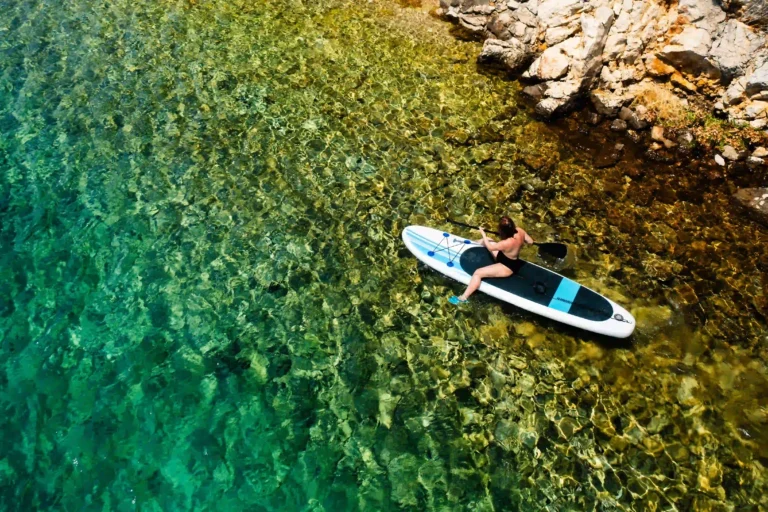
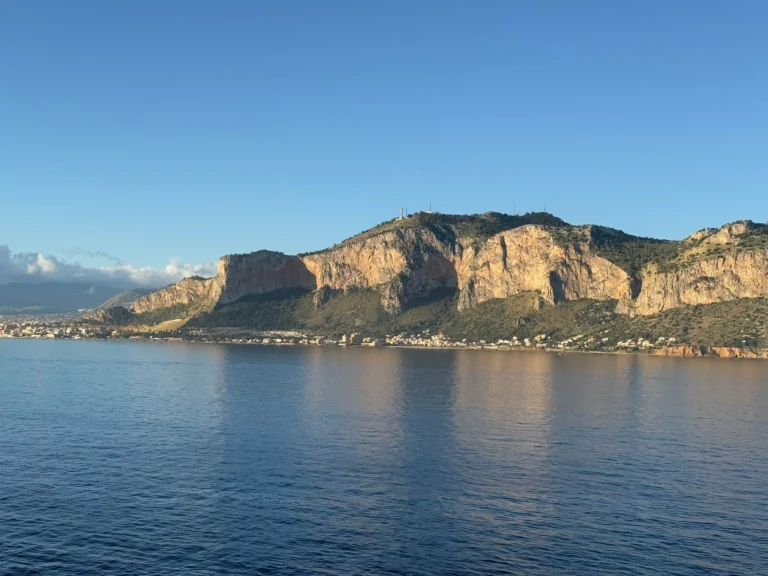
Want to get active? Palermo has more going on outdoors than most people expect. A day trip to scuba dive or snorkel at Ustica Island is one of the best things you can do from the city — a volcanic marine reserve 90 minutes by hydrofoil, with some of the clearest water in the Mediterranean. Closer to home, kayaking and SUP at Capo Gallo Nature Reserve puts you into sea caves and hidden coves that are unreachable any other way. And if you’d rather stay on land, mountain biking around Monte Pellegrino covers both coastal views and city fringe trails in a single morning.
Ready to Plan Your Palermo Trip?
Palermo isn’t the kind of city that photographs well before you’ve been there. It’s rough around the edges in ways that take some getting used to, and it doesn’t try to smooth itself out for tourists. That’s exactly why it’s worth going.
Once you’ve got the basics sorted — when to go, where to eat, what to prioritise — the rest tends to take care of itself.
For the full breakdown of attractions, dive into the dedicated guide to the best things to do in Palermo. If you’re ready to turn that into an actual plan, the Palermo itinerary maps it all out day by day. And if you’ve already been, drop your recommendations in the comments — the best Palermo tips I’ve heard have always come from people who’ve wandered somewhere I hadn’t thought to go.