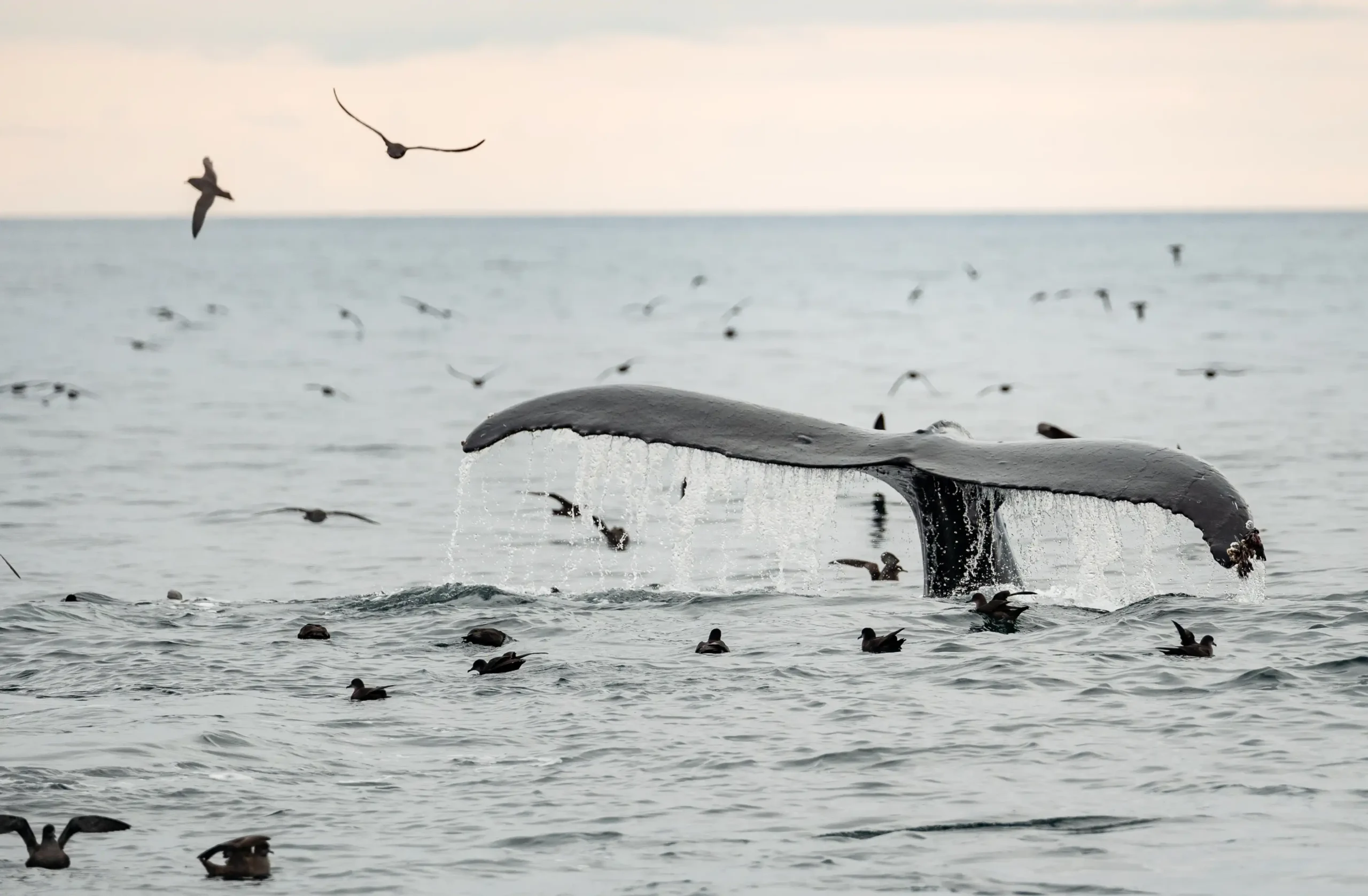
Whale Watching in Pleasant Bay: What to Actually Expect
Affiliate note: This article may contain affiliate links, which means I may earn a small commission if you book or buy through them – at no extra cost to you. I only recommend things that make sense for this kind of trip.
The Zodiac hits open water and the engine drops down a gear, and for a second everyone on board just holds on and grins like idiots. That’s Pleasant Bay in a nutshell. You came for whales. What you get first is a 400-metre highland drop-off, spray in your face, and a captain scanning the horizon like he’s done this ten thousand times — because he has.
Here’s the thing nobody tells you before you book: whale watching in Pleasant Bay isn’t really about the whales showing up on cue. It’s about a specific stretch of Nova Scotia coastline that happens to be one of the most reliable pilot whale feeding grounds in Atlantic Canada, and a boat ride that’s an experience whether or not a fin ever breaks the surface. You’ll probably see whales. You should still know what you’re actually signing up for.
This is what to expect, minus the brochure language.
Will You Actually See Whales in Pleasant Bay?
Yes, more often than not. Pilot whales return to the same feeding areas off Pleasant Bay year after year, which means local operators aren’t guessing — they know roughly where to look and how the pods move through the day.
Here’s a quick cheat sheet for what’s likely to be around depending on when you go:
| Species | Best Months |
|---|---|
| Pilot | Jul–Oct |
| Minke | Jun–Aug |
| Fin | Jun–Aug |
| Humpback | Aug–Sep |
Refund and voucher policies for no-sighting trips vary by operator — some offer a partial refund or return voucher, others don’t guarantee anything at all, so it’s worth checking directly with whoever you book with. Wind, fog, and the mood of a few hundred wild animals are still in charge here, not the tour schedule.
What’s the Best Time of Year to Go?
June to October — the whale window Tours generally run from late May through October, but the season isn’t flat. Minke and finback whales show up first in June, pilot whales settle in from July and stick around through October, and humpbacks and dolphins tend to follow the baitfish in late August and September.
Why September might be the sweet spot July and August are peak season — every operator’s running full schedules and the pilot whale pods are at their most reliable. But the crowds thin out noticeably after Labour Day, the highland colours start turning, and the whales haven’t gone anywhere yet. If you can time your Cabot Trail loop for early-to-mid September, do it.
The fog problem in June brings the first minke and finback sightings, but it’s also the foggiest month on this stretch of coast. Fog doesn’t just ruin the view — it can cancel tours outright, since operators run under Transport Canada wind and visibility rules. If your schedule’s tight, build in a spare day.
Zodiac or Larger Boat — Which Should You Actually Book?
This is the decision that shapes your whole tour, and most people don’t think about it until they’re standing at the wharf.
What a Zodiac tour actually feels like Most Pleasant Bay operators run rigid inflatable Zodiacs — smaller, faster, and manoeuvrable enough to get closer to a pod within the rules that protect the animals. You’ll feel every wave. Spray is part of the deal, not a design flaw, and many recent visitors mention being surprised by how much fun the ride itself turns out to be, having expected something closer to a slow lobster-boat crawl.
When a bigger boat makes more sense Zodiac tours come with real restrictions worth knowing before you book, not after. Most operators don’t allow children under 6, and don’t recommend the ride for pregnant travellers or anyone with back or neck problems — the pontoons soften the roll, but you still take a fair number of hard bumps at speed. If any of that applies to your group, or you just want a steadier ride with more shelter, a larger passenger vessel is worth the trade-off in intimacy. You’ll sit higher and drier, and the tour still covers the same waters — you’ll just watch from a bit further back.
Neither option is the “correct” one. It depends on whether you want to feel the ocean or just watch it.
How Much Does Whale Watching in Pleasant Bay Cost?
Expect somewhere around $50–70 CAD (roughly $36–51 USD) per adult for a standard tour, with children usually priced lower, around $25–40 CAD ($18–29 USD). As a reference point, one popular Pleasant Bay operator charges $60 CAD ($29 USD) for kids aged 3–12, and $55 CAD ($66 USD).
Prices shift by operator, boat type, and season, so treat these as ballpark figures rather than fixed rates — always confirm current pricing directly with whoever you book with.
Do You Need Motion Sickness Tablets for This?
Maybe, and it’s worth thinking about before you’re forty minutes offshore. Sea temperatures off Pleasant Bay rarely climb past 15°C even in summer, and open-water swells on a fast-moving Zodiac can catch people off guard — even travellers who don’t normally struggle with motion sickness.
Most people are fine. Based on visitor reviews, several people who specifically expected to feel unwell reported not getting sick at all, crediting the Zodiac’s smaller size and constant movement for keeping their stomachs settled better than a slower, rolling vessel would. If you know you’re prone to it, talk to a pharmacist before your trip and take something an hour ahead of departure — not after you’ve already started feeling off.
What Should You Pack for a Pleasant Bay Whale Tour?
Dress like it’s 10 degrees colder than the forecast on land. Between the sea temperature and the wind chill from a Zodiac moving at speed, what you’re wearing makes the difference between an incredible two hours and a miserable one.
Clothing:
- Warm base layer + windproof shell (operators usually supply waterproof gear, but bring your own fleece underneath)
- Closed-toe shoes that can get wet — flip-flops don’t survive a Zodiac
- A hat with a chin cord, so it doesn’t end up in the Gulf of St. Lawrence
Gear worth bringing:
- Waterproof dry bag — your phone and camera will get wet no matter how careful you are, so this is the one item every Pleasant Bay operator quietly recommends
- Compact binoculars — so you’re not squinting at every distant splash wondering if it’s a whale or a wave
- Packable rain shell — doubles as your windbreaker on deck and your rain jacket later on the Cabot Trail
Before you check in: There’s no washroom on most Zodiacs and cell service disappears well before you reach Pleasant Bay. Use the facilities at the Whale Interpretive Centre beforehand, and let anyone expecting to hear from you know you’ll be off-grid for a couple of hours.
Getting to Pleasant Bay (and What Else Is Worth Doing There)
Pleasant Bay sits at the bottom of one of the most dramatic sections of the Cabot Trail — the descent from the highland plateau at MacKenzie Mountain down to sea level, with the Gulf of St. Lawrence stretching out below the whole way down. Drive it from Cheticamp toward Pleasant Bay for the best build-up; the views open up gradually and the final descent to the bay is the payoff.
While you’re in the area:
- Skyline Trail — if a boat tour isn’t your thing, or you want a second free shot at spotting whales, the Skyline Trail‘s headland viewing deck is a genuine land-based whale-watching spot. Spouts in the Gulf are a fairly common sight from up there, and it’s one of the better coastal hikes on this side of Nova Scotia to pair with the boat.
- Food — the Rusty Anchor is Pleasant Bay’s one local institution, doing simple seafood and Cape Breton comfort food with a view of the bay.
- Accommodation — Pleasant Bay itself is small, mostly B&Bs and self-catering cottages rather than hotels. For more choice, Cheticamp is 35 minutes south with a bigger range of both dining and rooms.
Tours here fill up fast in July and August, so book ahead if you’re locking in a specific date. Same-week bookings are usually fine outside peak season, but don’t count on it in summer.
Frequently Asked Questions
How long do Pleasant Bay whale watching tours last? Most Zodiac tours run 1.5 to 2 hours. Some operators — usually larger vessels, or trips that need to travel further to find whales that day — run closer to 2.5 to 3 hours. Always check the specific tour’s duration when booking, since it varies by company.
Can children go whale watching in Pleasant Bay? It depends on the boat. Most Zodiac operators set a minimum age of 6, and a few won’t take children under 3. Larger passenger vessels are generally more flexible and a better fit for young families.
How cold is it on the water? Colder than you’d expect. Sea temperatures off Pleasant Bay rarely climb above 15°C even in summer, and the wind chill from a fast-moving Zodiac makes it feel colder still. Dress like it’s 10 degrees cooler than the forecast on land.
Can I bring my camera or phone? Yes, and you should — just pack it in a waterproof dry bag first. Spray is part of the ride on a Zodiac, and unprotected gear will get wet.
What happens if the whales aren’t found? Policies vary by operator — some offer a partial refund or return voucher if no whales are spotted, others don’t guarantee anything. It’s worth checking the specific operator’s policy before you book if that’s a dealbreaker for you.
The Short Version
Book based on how you actually want to experience the water — Zodiac for the thrill, bigger boat for comfort. Dress warmer than the forecast suggests. And build Pleasant Bay into a full day on the Cabot Trail rather than a quick stop, because the drive there is half the reason to come.
If you’re mapping out the rest of the island, this fits neatly into a wider Cape Breton itinerary — Pleasant Bay works well as a one- or two-night stop on the loop rather than a rushed day trip from Baddeck or Sydney.
Been out on the water in Pleasant Bay? I’d love to hear what you saw — drop it in the comments.