Fortress of Louisbourg: A Full-Day Guide
Affiliate note: This article may contain affiliate links, which means I may earn a small commission if you book or buy through them – at no extra cost to you. I only recommend things that make sense for this kind of trip.
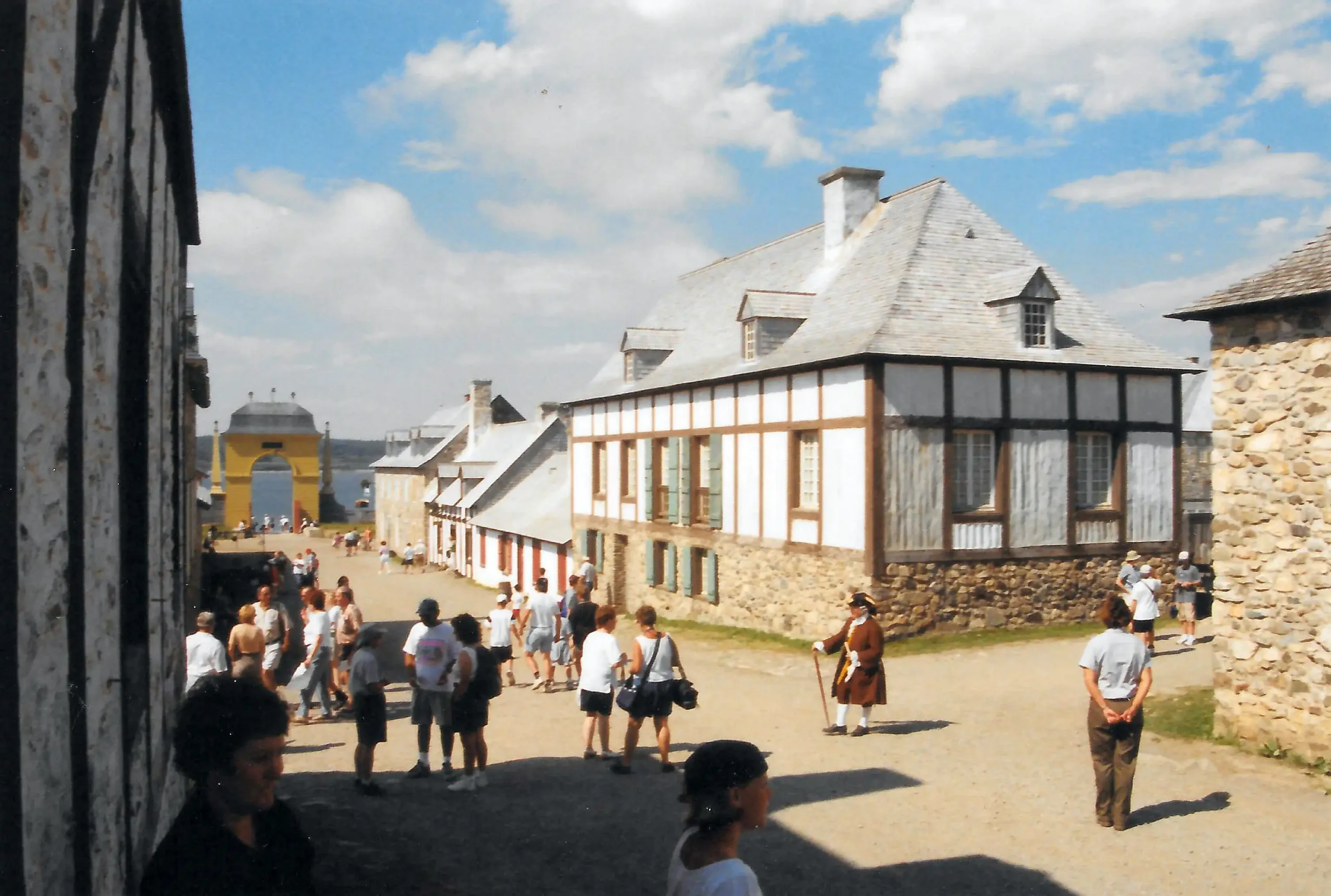
Photo: Eduard47 / CC BY-SA 4.0
A man in an 18th-century French uniform stops you at the gate. He’s not smiling. “State your business,” he says, and he means it — no wink, no breaking character, just a soldier doing his job in 1744.
That’s your welcome to the Fortress of Louisbourg, and it tells you almost everything about what kind of place this is. It’s not a museum with some actors wandering around for atmosphere. It’s North America’s largest historical reconstruction, built to make you forget you’re standing in Nova Scotia in the 21st century.
The question most people actually have isn’t “should I go” — it’s “how much of my one Cape Breton trip should I give this place.” Fair question. Here’s the honest answer.
Quick Answer: Is Fortress of Louisbourg Worth a Full Day?
For most travellers, yes — but not a rushed one. Budget four to five hours minimum, and treat a full day as the version that actually pays off. Half a day gets you the highlights. A full day gets you the thing that makes Louisbourg different from every other historic site you’ve been dragged through: time to just be there while it happens around you.
If you’re tight on Cape Breton days and history isn’t your thing, you can do a shortened visit and still leave satisfied. If you’ve got the day to spare, give it the day.
What Is the Fortress of Louisbourg?
At its peak, Louisbourg wasn’t some sleepy fishing outpost. It was one of France’s busiest Atlantic ports, built on the strength of cod. The cod fishery here was enormously valuable to the French crown — valuable enough to make Louisbourg one of France’s most important Atlantic ports. That’s the kind of detail that turns “fortified colonial town” into something people actually fought and died over.
And they did fight over it. The British besieged and captured Louisbourg twice — in 1745, and again in 1758 — before tearing the fortifications down so France could never rebuild them. A town that mattered enough to level twice isn’t a footnote. It’s worth walking through on purpose.
What stands today isn’t the original. The Canadian government rebuilt roughly a fifth of the town starting in the 1960s, using archival records, archaeology, and a level of obsessive detail that shows in everything from the stitching on the costumes to the vegetables growing in the kitchen gardens. You’re not walking through ruins. You’re walking through a working recreation of a specific moment in colonial history — and the difference matters for how the day actually feels.
Why It Feels Different from a Normal Historic Site
Most “historic sites” mean a plaque, a roped-off room, and maybe one costumed guide near the gift shop. Louisbourg isn’t that.
Two-thirds of the staff dress in faithful reproductions of 18th-century clothing, and they’re in nearly every building you enter — not standing around, but working. Someone’s baking bread. Someone’s mending a coat. Someone’s explaining, in character, why the fish trade mattered so much to this particular stretch of coastline.
You’ll smell the bread before you see the bakery, and woodsmoke drifts between buildings most of the day. Somewhere nearby, a hammer’s usually going against metal or wood. None of it feels staged for you — it feels like a town going about its work, which happens to include you walking through it.
Cannon and musket demonstrations are usually part of the daily programming in peak season, and the sound carries across the grounds when they happen. Exact times can change, so check the day’s schedule when you arrive instead of building your whole visit around a time you saw online. It’s the kind of detail that turns a “nice historic walk” into something you actually remember. There are also period restaurants where you eat what an 18th-century resident would have eaten, off the dishes they’d have used — pea soup, meat pies, and if you order the working-class menu, a spoon and nothing else.
How Much Time Do You Actually Need?
This is where opinions actually split, and both sides have a point.
The Half-Day Version
You can absolutely “do” Louisbourg in about three hours: bus in from the visitor centre, hit the King’s Bastion, walk the main waterfront row of houses, watch the cannon fire if the timing lines up, and head out. You’ll get the shape of the place and a decent sense of what it’s about.
The Full-Day Version
What you lose on the short version is the thing Louisbourg does best — letting the place unfold at its own pace. A full day means you can sit in on a longer conversation with an interpreter instead of nodding and moving on, actually eat a period meal instead of grabbing a snack, walk one of the coastal trails outside the walls, and catch both cannon firings instead of just one. Multiple long-time visitors describe not wanting to spend “less than a full day here,” and once you’ve seen how much ground the reconstructed town covers, it’s easy to see why.
Best Time of Day to Visit
Early works best if you want quieter streets and softer light for photos — the site opens at 9:30am in peak season, and the first hour is noticeably calmer than midday. Afternoon works best if you want the fuller experience: more staff on shift, more programming running, and more of the day’s cannon and musket demonstrations to catch.
If you can only pick one, aim for a late-morning start. You’ll catch the midday cannon fire, avoid the earliest chill off the water, and still have a full afternoon ahead of you.
What to See First
Start at the visitor centre — you’ll go through a small museum and catch the bus into the reconstructed town from there, which is included in admission and honestly a nice bit of scene-setting before you’re through the gate.
Once inside, head to the King’s Bastion first. It’s the largest and most impressive building on site, and it tends to get busier as the day goes on. From there, work your way along the waterfront row of houses, where the class differences of the town are easiest to see — the merchant’s house looks nothing like the fisherman’s.
Save the Mi’kmaw Interpretive Centre for later in your visit. It’s a slower, quieter stop, and it lands better once you’ve already absorbed the French colonial side of the story and can appreciate the contrast.
Is Fortress of Louisbourg Good for Kids?
Yes, more than you’d probably expect from a colonial history site. Kids can pick up a Club Parka activity booklet, watch sheep and geese wander the grounds, try artifact puzzles in the King’s Bastion, and — this is the one that seems to land every time — hear a very loud cannon go off.
One thing worth flagging if you’ve got a stroller: the streets are a mix of loose gravel and cobblestone, and some of the older buildings have narrow doorways and stone steps. It’s manageable, just not stroller-smooth the whole way.
What to Pack for a Full Day
The site sits directly on the Atlantic coast, and the weather does what coastal weather does — shifts without asking permission.
- Comfortable walking shoes. You’ll cover real distance on gravel and cobblestone, and cute-but-impractical footwear will not survive the day.
- A packable rain shell. Fog rolls in fast here, and a light shell takes up no space if you don’t end up needing it.
- A reusable water bottle or small daypack. There are cafés and restaurants on site, but you’ll want water on hand for the stretches between buildings, especially on the walking trails outside the walls.
How to Fit Louisbourg into a Cape Breton Itinerary
Louisbourg sits on the eastern side of the island, off the main Cabot Trail loop, which is exactly why some travellers skip it — it’s a deliberate detour, not a stop you pass through on the way to somewhere else.
If you’re already working from a Cape Breton itinerary, the cleanest way to handle it is to treat Louisbourg as its own day, separate from your Cabot Trail driving days. Trying to squeeze it in alongside something like the Skyline Trail on the same day means rushing one or the other, and neither is the kind of place you want to rush.
Sydney makes a reasonable base, since it’s roughly 35 minutes away, or you can stay closer to Louisbourg itself if you want an early start without the drive. If you’re still deciding, this guide to where to stay in Cape Breton breaks down the practical options by area.
Practical Tips Before You Go
Hours and pricing change by season — In 2026, Parks Canada lists the fortified town as open daily from 9:30am to 5:00pm from May 18 through October 31, with peak-season service from July 1 to September 11. Low-season access runs Monday to Friday, 9:30am to 4:00pm, with reduced or no services. Because these dates and prices shift year to year, check the official Parks Canada site before you go rather than relying on anything you read here, including this post.
A few other things that’ll save you a headache:
- If you’re visiting in peak season, bus service from the visitor centre stops running by late afternoon — arriving after that means driving in yourself via a separate entrance.
- Dogs aren’t allowed inside the reconstructed town, so plan accordingly if you’re travelling with a pet.
- No drones. Parks Canada enforces this one seriously, with fines attached.
How Much Does Fortress of Louisbourg Cost?
Recent Parks Canada fees list adult admission at CAD $22 in peak season and CAD $9.50 in the shoulder seasons, with free admission in the low season. Seniors pay slightly less, and youth 17 and under enter free. Check the official fees page before you go, since rates can change.
Guided walking tours cost a few dollars extra on top of admission, and specialty add-ons — firing a musket, joining the cannoneer-in-training program — are priced separately. Check current fees on the official Parks Canada site before you go, especially if you’re visiting right at a season changeover.
FAQ
Is Fortress of Louisbourg worth visiting?
Yes — and if you’ve ever walked through Colonial Williamsburg or Old Quebec and wished you could spend less time reading signs and more time actually talking to people, Louisbourg does that better than almost anywhere else in Canada. It’s the scale and the level of costumed detail that sets it apart from a typical historic site. If history really isn’t your thing at all, it’s still a scenic coastal walk, just not worth the detour on its own.
How much time do you need at Fortress of Louisbourg?
Plan for a minimum of four hours if you want to see the main buildings and catch at least one cannon firing. A full day, closer to five to six hours, lets you eat a period meal, walk a coastal trail, and actually talk to the interpreters instead of just walking past them.
What should I wear to Fortress of Louisbourg?
Layers and comfortable walking shoes. The site sits on open coastline, so temperature and weather can shift through the day even in summer. A rain shell is worth having even under a clear morning sky.
Is Fortress of Louisbourg good for a rainy day?
It holds up reasonably well — many buildings are open for shelter and browsing, and fog is almost part of the atmosphere here rather than a dealbreaker. Just expect a slower pace and pack that rain shell.
The Short Version
Louisbourg isn’t a quick photo stop, and it doesn’t pretend to be. Give it a real block of your Cape Breton trip — ideally a full day, separate from your Cabot Trail driving — and go in expecting to actually talk to people, eat a strange 18th-century lunch, and hear a cannon go off closer than you’d like.
Have you been? I’d love to hear whether you did the half-day version or gave it the full day — drop it in the comments..





.jpg)