3 Days in Halifax: The Best Itinerary for First-Time Visitors
Affiliate note: This article may contain affiliate links, which means I may earn a small commission if you book or buy through them – at no extra cost to you. I only recommend things that make sense for this kind of trip.
Most people fly into Halifax, walk the waterfront for an afternoon, eat a lobster roll, and call it done. I get it — it looks like a compact maritime city and you’ve probably got somewhere else to be.
But three days in Halifax gives you something most visitors never find: a city that actually rewards you for slowing down. The history here is layered and specific. The food scene is punching well above its weight. And just outside the city, the Nova Scotia coastline is the kind of thing that makes you quietly reschedule your flight home.
This itinerary covers all three days, day by day, with rough cost ranges and the kind of tips that make the difference between a good trip and a great one. You don’t need a packed schedule — you need the right one.
Let’s get into it.
Quick Answer: How to Spend 3 Days in Halifax
For a first trip, spend Day 1 on the Halifax waterfront, Citadel Hill, the Public Gardens, and a seafood dinner downtown. Use Day 2 for Peggy’s Cove and the coastal drive. Keep Day 3 for the Maritime Museum, a brewery or history stop, and the North End.
If you have a car, use it for Peggy’s Cove only. For the city itself, stay downtown and walk.
| Day | Main Plan | Best For |
|---|---|---|
| Day 1 | Waterfront, Seaport Market if it’s Saturday, Citadel Hill, Public Gardens | First feel of the city |
| Day 2 | Peggy’s Cove and the coastal drive | Classic Nova Scotia coast |
| Day 3 | Maritime Museum, brewery/history stop, North End | Local Halifax feel |
Day 1 — Waterfront, History, and Your First Halifax Dinner
Halifax is a city you understand best on foot. Start at the water and work your way up — literally.
Morning — Halifax Waterfront and Seaport Farmers’ Market
If your trip includes a Saturday morning, start at the Halifax Seaport Farmers’ Market. If not, start on the waterfront with coffee near the boardwalk and treat the market as a bonus rather than the anchor — it’s worth going out of your way for, but the boardwalk works just as well on any other morning.
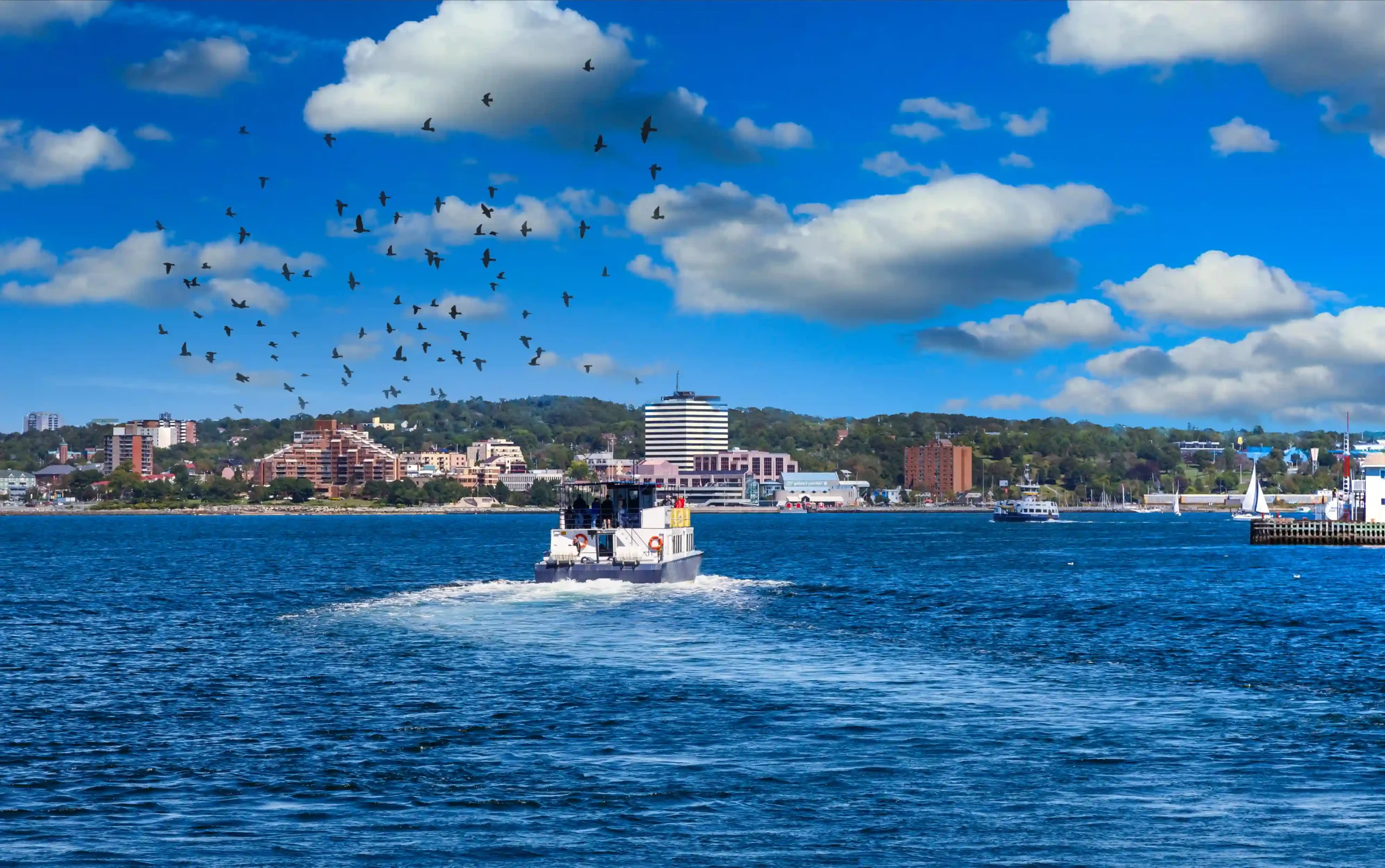
The boardwalk stretches about 4km along the harbour. It sounds like a lot but it doesn’t feel like it. You’ll pass fishing boats, tall ships, and the kind of old warehouse architecture that most North American cities knocked down decades ago. Halifax kept it.
If you’re visiting between June and October, keep an eye out for the Tall Ship Silva — a 1920s-era wooden schooner that does harbour tours. It’s touristy in the best possible way. Worth 90 minutes of your morning.
Afternoon — Halifax Citadel and the Public Gardens
After lunch, head uphill. The Halifax Citadel National Historic Site sits at the top of Citadel Hill and gives you the best view over the harbour and the city grid below. It’s a proper star-shaped British fortress — the kind you see in history books — and it’s been watching over Halifax since 1856.
Admission and seasonal programs change year to year, so check the official Parks Canada page before you go rather than relying on any figure you read here. The noon cannon is part of the classic Halifax experience when it’s running — be there for it if the timing works. It’s louder than you expect.
Spend about 90 minutes here. The costumed interpreters from the 78th Highlanders are worth engaging — they’re not just decoration.
Directly across the street: the Halifax Public Gardens. Free to enter, open daily from 7am. It’s a formal Victorian park that opened in 1867 — manicured flower beds, a bandstand gazebo, old cast-iron gates. It’s the kind of place you don’t expect to linger but somehow do.
Evening — Where to Eat on the Waterfront
For your first dinner in Halifax, you want seafood and you want a view. Two options worth knowing:
The Five Fishermen — the building started as a schoolhouse in 1817, then became a funeral home that handled bodies from both the Titanic disaster and the 1917 Halifax Explosion. It’s been a restaurant since 1975. Best treated as a reservation dinner rather than a cheap seafood stop — the history alone is worth planning around.
Drift at the Muir Hotel — Drift leans more polished and modern, with Atlantic Canadian dishes in a waterfront setting. Queens Marque location, good wine list. A solid option if a quieter room suits your first night better.
Day 2 — Peggy’s Cove and the Coastal Drive
This is the day you leave the city. Don’t skip it.
Why Peggy’s Cove Is Worth It (And When to Go)
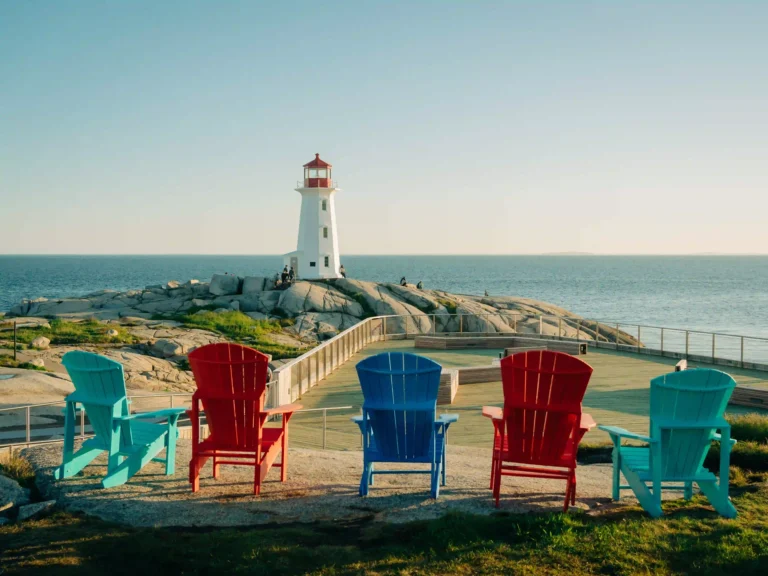
Peggy’s Cove is about a 50-minute drive southwest of Halifax, and yes — you’ve probably seen the lighthouse in a hundred photos. Here’s the thing: it still delivers. A small fishing village of about 30 residents, a weathered red-and-white lighthouse sitting on a sweep of granite rock above the Atlantic, boats bobbing in the cove below. It’s exactly what the photos promise.
The catch is timing. Arrive after 10am in July or August and you’ll be sharing the rocks with tour buses. Arrive before 9am and you might have it nearly to yourself — and the light is better anyway.
Entry to Peggy’s Cove itself is free. Parking is free. Budget for a coffee and a bowl of chowder at Sou’Wester Restaurant right by the lighthouse.
One safety note: stay off the black rocks near the water’s edge. The signs are not decoration. Waves here come without warning.
How to Get There: Car Rental vs. Guided Tour
Rent a car — the most flexible option if you’re comfortable driving. Halifax has all major rental companies (Enterprise, Hertz, Budget). Compare current rates before you build the budget around it — prices vary heavily by season and availability. The drive itself is part of the experience: the coastal route via NS-333 (the Lighthouse Route) passes through Indian Harbour, St. Margarets Bay lookouts, and fishing communities worth a slow stop.
Guided tour — if you’d rather not drive, half-day small-group tours from downtown Halifax include hotel pickup and cover Peggy’s Cove with a guide. Check current pricing directly with operators before booking. The downside: you’re on someone else’s schedule and you’ll share the lighthouse with a group. Worth it if driving isn’t an option.
Taxi — manageable if you’re splitting with others. Confirm current flat rates directly with local taxi companies before the trip.
What to Do Once You’re There
Beyond the lighthouse and the harbour, spend time walking the granite coastline — the rock formations alone are worth an hour. There are a handful of galleries and craft shops in the village if you want to browse. The whole visit naturally takes 2–3 hours, which leaves you time to stop at one of the coastal lookouts on the drive back.
If you’re back in Halifax by mid-afternoon, the Canadian Museum of Immigration at Pier 21 is a 10-minute walk from the waterfront. This was the entry point for over a million immigrants to Canada between 1928 and 1971. Check current admission rates on the Pier 21 website before you go.
If you’re thinking about getting out on the water while you’re in Halifax, the kayaking and SUP guide for Halifax covers the best options from the harbour and around Dartmouth.
Day 3 — Maritime Museum, Brewery/History Stop, and the North End
Your last day is your most local.
Morning — Maritime Museum of the Atlantic
The Maritime Museum of the Atlantic sits right on the waterfront boardwalk — you could practically walk into it by accident, which wouldn’t be the worst thing that’s ever happened. It covers Halifax’s entire relationship with the sea: shipbuilding, trade, the Mi’kmaq people, the 1917 Halifax Explosion, and yes — one of the largest collections of Titanic artifacts outside the UK.
Recovery vessels from Halifax were among the closest ships to the Titanic wreck and played a central role in retrieving bodies and artifacts from the water. The exhibition is quiet and specific in the best way.
Check current admission on the museum’s website — pricing varies by season. Spend 90 minutes to 2 hours here; it earns it.
Afternoon — Alexander Keith’s Brewery Tour
A short walk south brings you to Alexander Keith’s Nova Scotia Brewery, a historic Halifax brewery brand dating back to 1820. Keith founded it in 1820, and locals loved his beer so much they elected him Mayor of Halifax three times. That’s one way to build brand loyalty.
The tour is theatrical — costumed guides, 19th-century atmosphere, beer tasting at the end. Current adult admission runs around CAD $36 — check the official booking page for up-to-date pricing and tour times. Worth knowing: the experience leans more into Halifax history and atmosphere than a behind-the-scenes production tour, which surprises some visitors. Don’t let it — that is where the interest is anyway.
If immersive theatre isn’t your thing, skip the tour and explore the building’s ground-floor market instead. The building alone is worth a look.
North End: Where Halifax Feels Less Like a Stopover
Spend your last evening in the North End. It doesn’t try to sell you anything — the restaurants here work because they have to, not because they’re on the boardwalk.
Walk along Agricola Street. You’ll find independent coffee shops, bookstores, and restaurants that locals actually go to. Highwayman on Barrington is often a good fit if you want a more grown-up dinner setting away from the busiest waterfront strip.
The North End is also where Halifax’s creative energy lives. Murals, gallery spaces, the kind of neighbourhood vibe that tells you a city has more going on than the tourist map suggests. Let yourself wander for an hour before dinner. It’s a better way to end a trip than rushing back to the waterfront for one more photo of the harbour.
If you’re visiting solo — especially if you’re out late — the Halifax solo female travel safety guide goes into more detail on areas, transit, and late-night route choices.
Where Should You Stay in Halifax for 3 Days?
Wherever you land, prioritise the downtown peninsula. You can walk to the waterfront, Citadel Hill, and the Public Gardens without thinking about transport, which makes every morning simpler.
The where to stay in Halifax guide breaks down the neighbourhoods and options in more detail. As a quick starting point:
Budget: HI Halifax Heritage House Hostel is a well-reviewed option in a Victorian building close to the Public Gardens. Social atmosphere, solid location.
Mid-range: The Prince George Hotel is a reliable downtown anchor — central, comfortable, easy walking distance to everything.
Splurge: The Muir Hotel at Queens Marque has a waterfront location and Drift restaurant downstairs. If you want a more memorable waterfront stay, this is one of the obvious splurge options to compare.
Check current rates directly with each property — Halifax pricing shifts significantly between peak summer and shoulder season.
What Does a 3-Day Halifax Trip Actually Cost?
These are rough 2026 planning ranges, not guaranteed live rates. Always check current admission, tour, transit, and accommodation prices before booking.
Accommodation — Budget hostels run roughly CAD $40–70 per night; mid-range downtown hotels roughly CAD $130–200; higher-end waterfront options go from CAD $250 and up. Travelling as a couple cuts the per-person cost noticeably.
Food — Expect to spend roughly CAD $50–90 per day if you’re eating well. Halifax isn’t cheap by Maritime standards, but it’s nowhere near Toronto or Vancouver. A lobster roll and a bowl of chowder together will likely run you CAD $35–45 at a mid-range spot — treat those as ballpark figures, not menu prices.
Attractions:
- Halifax Citadel: check current Parks Canada rates — seasonal programs and free-admission periods change year to year
- Maritime Museum: check current rates on the museum website — pricing varies by season
- Alexander Keith’s Brewery tour: roughly CAD $36 per adult at time of writing — confirm current rates before booking
- Peggy’s Cove: free entry and parking
Transport — If you rent a car for Day 2, compare current rates before building the budget around it. Prices vary heavily by season and availability.
Rough total for 3 days (mid-range, solo): CAD $600–850 is a reasonable planning range. Your actual cost depends heavily on accommodation choice and how much you eat out.
When Is the Best Time to Visit Halifax?
June to September is peak season — long daylight hours, full Citadel programming, warmth on the water, and Peggy’s Cove at its most photogenic. It’s also when tour buses arrive and accommodation prices climb.
May and October are the sweet spot. Weather is still decent, the Citadel is open with most programming running, and you’ll share Peggy’s Cove with a fraction of the summer crowd. Prices drop noticeably.
November to April — Halifax doesn’t close, but the waterfront goes quieter, some seasonal spots shut down, and the Atlantic wind in February is a conversation. If you’re coming from somewhere properly cold, you’ll probably be fine. If you’re coming from Southeast Asia expecting “not that bad,” adjust your expectations.
For most international travellers, late May, early June, or September hits the balance between good weather and manageable crowds.
Three Days Is Enough. Almost.
Halifax will give you everything you came for in three days — the history, the seafood, the lighthouse, the coastal drive, the neighbourhood you didn’t expect to love. You won’t feel like you rushed it.
You might, however, feel like you should have stayed longer. That’s the sign of a city worth returning to.
The key takeaways: keep Day 2 focused on Peggy’s Cove and get there early, save your last evening for the North End rather than the waterfront, and don’t underestimate how much is within easy walking distance once you’re downtown. If you’re building this into a longer Nova Scotia trip, the Nova Scotia itinerary has options that extend well beyond Halifax.
Been to Halifax? Drop what I missed in the comments — I’m always looking for the next reason to go back.