Hiking in Nova Scotia: Best Trails for Every Level
Affiliate note: This article may contain affiliate links, which means I may earn a small commission if you book or buy through them – at no extra cost to you. I only recommend things that make sense for this kind of trip.
Most people come to Nova Scotia for the lobster rolls. Some come for the Cabot Trail drive. A smaller group actually laces up their boots and walks into the wilderness — and those are the people who come back.
Nova Scotia is one of Atlantic Canada’s most rewarding hiking provinces if you know where to look. You’ve got rugged coastal cliffs thirty minutes from Halifax, old-growth forest in Kejimkujik, and a headland trail in Cape Breton that stops people mid-step. And unlike some of Canada’s more famous hiking regions, most of it is still accessible without a shuttle system, a permit lottery, or a six-month waitlist.
That said: weather moves fast here, coastal trails are more exposed than they look, parking and reservations matter more than they used to, and some trails require more than a pair of sneakers and good intentions. This guide covers the trails worth your time, what to actually expect on each one, and what you need to sort out before you go.
Quick Answer: Best Hikes in Nova Scotia
If you want an easy hike near Halifax, start with Herring Cove or a shorter walk around Crystal Crescent. If you want a dramatic coastal day hike, Cape Split is the classic choice from Halifax, while Duncan’s Cove and Pennant Point feel wilder but require more care. If you’re driving the Cabot Trail, the Skyline Trail is the iconic Cape Breton hike, and Franey is the harder, steeper alternative. For forest, lakes, and quieter trails, Kejimkujik is a different kind of Nova Scotia entirely.
| If You Want… | Try | Best For |
|---|---|---|
| Easy hike near Halifax | Herring Cove | Beginners, families, quick coastal walk |
| Wild coastal feel near Halifax | Duncan’s Cove | Confident hikers, photographers |
| Beach + hike combo | Crystal Crescent / Pennant Point | Half-day to full-day coastal outing |
| Big Bay of Fundy view | Cape Split | Classic day trip from Halifax |
| Iconic Cape Breton view | Skyline Trail | Cabot Trail first-timers |
| Hard Cape Breton hike | Franey Trail | Strong hikers, summit views |
| Multi-day wilderness | Cape Chignecto | Experienced backpackers |
| Forest/lake hiking | Kejimkujik | Quiet trails, families, camping, stargazing |
Nova Scotia Trail Comparison at a Glance
| Trail | Area | Approx. Time / Distance | Difficulty | Best For | Check Before You Go |
|---|---|---|---|---|---|
| Herring Cove | Halifax (10 min) | 1–2 hrs / 2–4 km | Easy | Families, beginners, quick coastal walk | Nova Scotia Parks |
| Duncan’s Cove | Halifax (20 min) | 2–4 hrs / up to 8 km | Moderate–Hard | Confident hikers, photographers | Halifax Trails |
| Crystal Crescent / Pennant Point | Halifax (30 min) | 3–4 hrs / ~11 km loop | Moderate | Beach + headland combo, half-day outing | Nova Scotia Parks |
| Cape Split | Annapolis Valley (2 hrs) | ~5 hrs / ~13 km loop | Moderate | Bay of Fundy views, classic day hike | NS Parks — Cape Split |
| Bluff Wilderness | Halifax (45 min) | 3–5 hrs / variable | Moderate–Hard | Wilderness feel, loop options | Download offline map |
| Skyline Trail | Cape Breton | 1.5–3 hrs / 6.5–8.2 km | Easy–Moderate | Iconic Gulf of St. Lawrence views | Parks Canada Skyline |
| Franey Trail | Cape Breton | 2–3 hrs / ~4.6 km loop | Hard | Summit views, experienced hikers | Parks Canada — CBHNP |
| Cape Chignecto | Bay of Fundy / Cumberland | 3–4 days / ~53 km | Very Hard (Backcountry) | Experienced backpackers only | Cape Chignecto Provincial Park |
| Kejimkujik | Central NS (2 hrs from Halifax) | Variable / day to multi-day | Easy–Multi-day | Forest, lakes, stargazing, camping | Parks Canada — Kejimkujik |
What to Know Before Hiking in Nova Scotia
Do You Need a Permit to Hike?
For most public day hikes in provincial parks, you don’t need a hiking permit. But national park entry, provincial park rules, parking and reservation systems, camping permits, and seasonal closures can still apply — and the details change.
Cape Breton Highlands National Park and Kejimkujik National Park generally require Parks Canada entry passes. Temporary federal programs can affect entry fees — at the time of writing, a free-admission program exists for summer 2026, but check Parks Canada directly before assuming current prices or dates apply to your visit.
The Skyline Trail has had a separate parking reservation system in recent seasons. Parking and reservation rules have changed and may change again, so check the current Parks Canada Skyline page before building your Cape Breton day around it. Reserve early if timed parking applies for your dates.
If you plan to fish during your hike, check Nova Scotia sportfishing licence rules separately. Hiking alone doesn’t require a licence.
When Is the Best Time to Hike?
For most visitors, late spring through October is the practical hiking window, with June through October usually the easiest stretch.
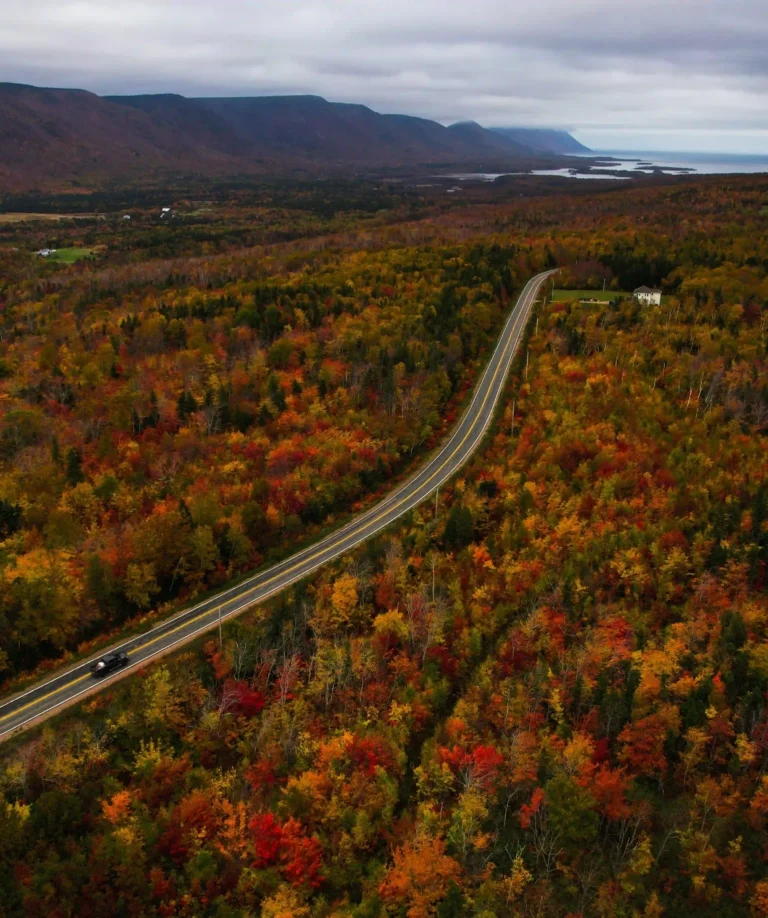
September is the sweet spot. Fall colour starts appearing in the highland areas, crowds thin out noticeably after Labour Day, temperatures are comfortable for walking, and the light is better than any other month. October is dramatic on the coast — wind, big skies, and serious mood — but plan accordingly.
A few things people don’t always think about: blackflies and mosquitoes are real in wooded and lakeside areas through late June and July. Ticks are a consideration across the province — do tick checks after woodland trails. Exposed coastal trails like Duncan’s Cove or the Skyline can feel five to ten degrees colder than the forecast suggests once you’re on the headland.
Avoid backcountry and wilderness trails in April and early May. Snow can linger at elevation, and wet/muddy conditions damage trails and create real navigation problems.
Best Easy Hikes Near Halifax
Herring Cove — Quick Coastal Walk Close to Halifax
Ten minutes from downtown Halifax, Herring Cove Provincial Park is a relaxed walk over granite outcrops with views straight out to the open Atlantic. You won’t be gasping for breath, but the scenery carries the day.
The trail runs along a rugged stretch of coastline where waves crash directly onto exposed rock — dramatic without requiring much of you, as long as you stay back from the edge in rough weather. Budget an hour to ninety minutes, though you could stretch it to two if you take your time.
Best for: First-time visitors, people with limited time, families, and anyone who wants a quick atmospheric escape from the city. It is often usable across more of the year than rougher or more remote trails, which puts it ahead of several others on this list.
Wear shoes with decent grip — the rocks get slick when wet year-round.
Crystal Crescent Beach — Easy Access to Coastal Scenery
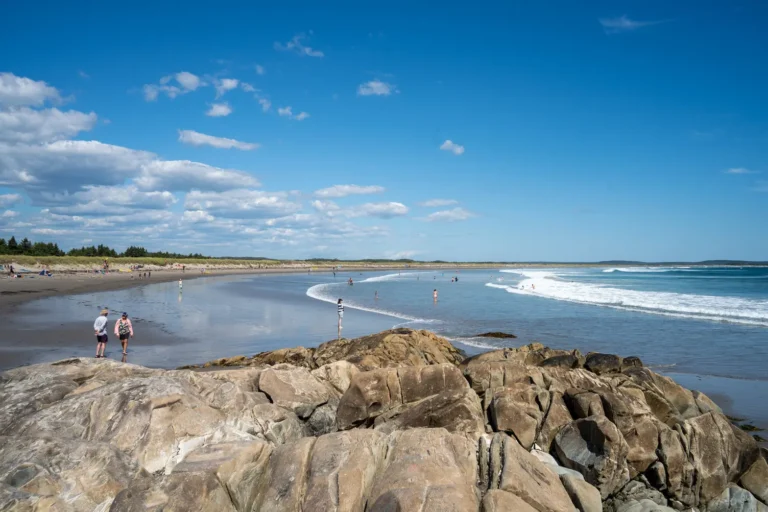
The short trails at Crystal Crescent Beach Provincial Park give you Atlantic views, white-sand beach access, and exposed headland scenery without committing to a full day. The beach loop is easy. If you want more, the Pennant Point Trail extends it into a full coastal hike (see below).
It’s about 30 minutes south of Halifax. Great option for a half-morning, families, or a warm-up day before a bigger hike later in the trip.
Best Coastal Hikes Near Halifax
Duncan’s Cove — Rugged and Unmanaged
Duncan’s Cove Nature Reserve is about 20 minutes from downtown Halifax and feels like arriving somewhere properly remote. Which, in a sense, you have.
The area is unmanaged — no signs, no markers, no maintained paths. You’ll scramble across granite barrens, look out over sea cliffs with Atlantic surf below, and likely spot seals on the rocks. There’s up to 8km of coastline to explore depending on how far you push.
This is not a family stroll. Cliff edges are real, footing is uneven across wet rock and heather, and it’s easy to go wrong without a map. Download an offline map before you go — cell service drops in and out, and you will get confused at least once without one. Not recommended for nervous hikers, young children, or anyone uncomfortable on exposed terrain near cliff edges.
For confident, experienced walkers: it’s one of the best coastal wanders near Halifax.
Crystal Crescent / Pennant Point Trail
The Pennant Point Trail extends from Crystal Crescent Beach into a full coastal circuit — roughly 11km, moderate difficulty, with around 130 metres of elevation gain and three to four hours for most people. The first half is well-trodden; the second half gets rougher and more exposed, with consistent Atlantic views.
Combine it with a swim or beach stop at Crystal Crescent at the start or end. Bring water, a wind layer, and sun protection for the exposed sections. Trail conditions can be wet and rough in places.
One thing to know: the park gate closes seasonally. When it’s closed, you’ll park on the road and add distance each way. Check before you go.
If you want to add wild swimming in Nova Scotia to your trip, Crystal Crescent is one of the better starting points near Halifax.
Best Day Hike from Halifax: Cape Split
Cape Split is the classic big-view day hike from Halifax — but it’s still a real hike, not a roadside lookout.
The trail runs through old-growth and coastal conifer forest to the tip of a dramatic headland over the Bay of Fundy. The view from the end — looking out at The Spires, a series of rock columns rising from the water below — is the kind of thing that earns the drive. Check the Cape Split Provincial Park Reserve page before you go for current access and trail information.
The trailhead is near Scots Bay, about two hours from Halifax. Plan for approximately five hours return. The trail is moderate with some uphill sections — not technically hard, but long enough that footwear, water, and snacks matter. The trail was updated to a loop format in 2021, which adds lookoffs along the way rather than saving everything for the end.
A few things worth noting: this is a Bay of Fundy headland, not a beach walk. Don’t descend to the shore unless you understand tidal conditions at that specific location. Bring more water than you think you need — there are no services on the trail. Weather and wind can be significant on the headland even when conditions looked fine at the trailhead.
If you’re heading toward the Annapolis Valley while you’re in the area, the Nova Scotia itinerary covers how to build a sensible route.
Best Cape Breton Hikes
If hiking is part of your Cape Breton itinerary, the trails here operate at a different scale — bigger scenery, more elevation, and a genuine sense of remoteness.
Skyline Trail — The Cape Breton Hike Everyone Talks About
The Skyline Trail is the most-visited trail in Cape Breton Highlands National Park. You’ll understand why the moment you reach the headland: a clifftop boardwalk hanging over the Gulf of St. Lawrence, with the Cabot Trail winding down the mountain below you like a ribbon.
The trail is roughly 6.5km to 8.2km depending on the route, and takes between 1.5 and 3 hours for most people. Difficulty is easy-to-moderate — distance is the main factor, not the terrain. The headland section is exposed and can be significantly colder and windier than inland.
Before you go: the Skyline Trail has had a parking reservation system in recent seasons, and these rules have evolved. Check the current Parks Canada Skyline page for current parking, reservation, entry fee, and access information before building your day around it. Reserve early if timed parking applies.
Dog rules for this trail are specific — check the current rules before bringing a pet.
Stay on the boardwalk at the headland. It’s there to protect fragile vegetation, and it’s enforced. Don’t approach moose if you encounter them on the trail.
Franey Trail — For Hikers Who Want More
Franey is one of the harder popular day hikes in Cape Breton — a roughly 4.6km loop with a sustained steep climb, and panoramic views at the top: Clyburn Brook Canyon below, Atlantic coastline stretching in both directions, and the Highlands behind you.
The trailhead is just north of the Clyburn River off the Cabot Trail near Ingonish. Plan for two to three hours, but the uphill demands real fitness. The terrain is rocky and requires sure footing. This is not the default recommendation for first-time hikers or anyone who found the Skyline tough.
If you’re comfortable with it: the summit view is worth the climb, and the trail sees far fewer visitors than the Skyline. Moose sightings are common on this route — give them space and don’t approach.
Best Wilderness and Backcountry Hikes
Cape Chignecto — A Multi-Day Coastal Wilderness Hike
Cape Chignecto is not Cape Breton, and it’s not a day hike. Cape Chignecto Provincial Park sits on the Bay of Fundy side of Nova Scotia, in Cumberland County — a roughly 53km wilderness loop through some of the most rugged coastal terrain in the province. Cliffs up to 185 metres, remote coves, backcountry campsites, and minimal infrastructure. Three to four days minimum.
Backcountry camping at Cape Chignecto requires reservations through Nova Scotia Provincial Parks, and conditions on the route are serious — remote terrain, Bay of Fundy tidal considerations, and limited rescue access. Check the official park page for current permit, reservation, and safety requirements before planning a trip. This is for experienced backpackers.
If that’s you: it’s one of the most dramatic multi-day hikes on the east coast.
Is Kejimkujik Good for Hiking?
Absolutely — though it’s a completely different experience from the coastal trails above.
Kejimkujik National Park and National Historic Site is inland, ancient, and quiet. Think flat lakeside trails through old Acadian forest, mirror-still lakes, and one of the best stargazing spots in eastern Canada — it’s a designated International Starlight Reserve. The hiking here isn’t dramatic in the cliff-and-surf sense, but it’s restorative in a way the coastal trails aren’t.
Day hikes are good here, especially if you choose shorter routes. The backcountry options extend into multi-day trips for those who want to go deeper.
Kejimkujik is a Parks Canada national park, so entry passes normally apply. Check the park page for current fees and whether any temporary programs affect your visit. It’s about two hours from Halifax — worth staying a night or two in or near the park rather than treating it as a rushed day trip.
What to Bring Hiking in Nova Scotia
Nova Scotia’s coastal weather moves fast. A clear morning can turn cold and windy in under an hour on an exposed headland. Here’s what to carry regardless of the trail:
- Waterproof or grippy footwear — rocky, rooty, and wet trails are the default, not the exception. Trail runners work for easy routes; anything moderate or above warrants proper hiking footwear.
- Rain and wind shell — a lightweight packable jacket is more useful here than a heavy waterproof. The wind is the bigger issue on most coastal trails.
- Layers — temperatures drop fast on headlands and at elevation.
- More water than you think you need — few coastal trails have reliable freshwater sources.
- Snacks — especially on Cape Split and longer loops where there are no services.
- Offline map downloaded before you leave — cell service drops out on most trails beyond the city fringe.
- Charged phone and a backup battery — in case things go longer than planned.
- Bug spray — blackflies and mosquitoes are real in wooded and lakeside areas through mid-summer.
- Sun protection — exposed coastal trails offer no shade.
- Small first aid kit — including blister care.
- Trekking poles — optional for easy trails, worth it on rough terrain like Cape Split or Franey.
Do not rely on cell service for maps, weather, or emergency contact. Download what you need before you go, and tell someone your plan if you’re heading somewhere remote.
Hiking Safety, Weather, and Trail Etiquette
A few things Nova Scotia hiking adds to the usual list:
Coastal fog and wind roll in fast. What looks clear from Halifax can be grey and cold at the trailhead. Check the marine forecast, not just the city forecast, before heading to any coastal trail.
Cliff edges are not photo props. Duncan’s Cove, Pennant Point, Cape Split, and the Skyline headland all have sections where the drop is real. Stay well back.
Bay of Fundy tides are serious. If you’re near the water at Cape Split or Cape Chignecto, do not descend to the shore unless you have current tidal information for that specific location and understand what it means. The tidal range here is the highest in the world.
Ticks are present. Check yourself thoroughly after any woodland trail, especially knee-height and above vegetation. Remove ticks promptly. This applies across the province.
Stay on marked trails and boardwalks where required. At the Skyline Trail headland and other protected areas, going off-trail damages fragile vegetation and may result in fines. Signs are there for a reason.
Dog rules vary by trail. Some trails prohibit dogs entirely; others require leashes. Check current rules before you arrive, not in the parking lot.
Download maps and check closures before you drive. Some trails close seasonally, and parking situations change. A two-hour drive to a closed gate is avoidable.
Pack out everything you bring in. Do not assume there will be bins at trailheads.
Where to Stay If You Want to Hike in Nova Scotia
Your base matters more than people realise when hiking is the main event.
Halifax or Dartmouth puts you within easy reach of Herring Cove, Duncan’s Cove, and Crystal Crescent / Pennant Point, and it’s manageable as a base for Cape Split as a day trip. The where to stay in Halifax guide covers the neighbourhood options.
Wolfville or the Annapolis Valley is a better base if Cape Split is the main goal — you’re 30 to 40 minutes from the trailhead instead of two hours, and the Valley itself is worth a couple of days.
Ingonish or Cheticamp puts you directly alongside the Cape Breton Highlands trails. Staying in either town makes Skyline and Franey morning hikes rather than drives.
Kejimkujik rewards staying inside or close to the park. Driving two hours from Halifax for a short trail and driving back the same day doesn’t do justice to what’s there.
The Nova Scotia itinerary and Cape Breton itinerary both cover how to build a sensible route if hiking is one part of a larger trip.
Hiking pairs well with other outdoor activities depending on your base. If you’re spending time in Halifax, kayaking and SUP in Halifax, running in Halifax, and cycling routes around Halifax are all worth looking at alongside the trail options.
FAQ
What is the best hike in Nova Scotia? That depends on what you want. Cape Split is the classic single-day hike from Halifax for big views. The Skyline Trail is the most iconic in Cape Breton. Duncan’s Cove is the most rewarding close to the city if you’re comfortable on unmanaged terrain. Franey is the best if you want a hard climb with a real summit.
What is the best easy hike near Halifax? Herring Cove is the easiest and closest — a relaxed coastal walk about 10 minutes from the city. Crystal Crescent Beach is slightly further but adds a beach to the experience.
Is Cape Split worth it? Yes, if the weather is good and you want a full day out. It’s not a quick trip — plan around five hours return from the trailhead and two hours of driving each way from Halifax. Don’t go on a wet, windy day expecting it to be fine at the headland.
Is the Skyline Trail difficult? The Skyline is listed as easy-to-moderate. Most reasonably fit walkers manage it without trouble. The bigger considerations are parking/reservations (check the Parks Canada page for current requirements), exposed conditions on the headland, and the fact that it gets very busy in peak season.
Do you need a permit to hike in Nova Scotia? Most provincial park trails don’t require a hiking permit. National parks — Cape Breton Highlands and Kejimkujik — require Parks Canada entry passes, though temporary free-admission programs can apply. Cape Chignecto backcountry camping requires reservations. Skyline Trail parking may require a reservation. Check before you go.
When is the best month to hike in Nova Scotia? September is the sweet spot for most people — comfortable temperatures, thinning crowds, and fall colour starting in the highland areas. June through August works well too, though July brings the most bugs. October is dramatic on the coast but comes with real wind and weather.
Are Nova Scotia hikes safe for beginners? Several are excellent for beginners: Herring Cove, the shorter Crystal Crescent loops, and the easier Kejimkujik day trails. Duncan’s Cove, Franey, and Cape Chignecto are not for beginners. Cape Split is manageable for fit, prepared hikers who understand they’re signing up for a full day.
Do you need hiking boots? For easy coastal walks like Herring Cove, proper grip is more important than boots specifically. For anything moderate or above — Cape Split, Franey, Pennant Point, Duncan’s Cove — waterproof footwear with ankle support makes a genuine difference.
Can you hike in Nova Scotia without a car? Most of the trails in this guide are not accessible by public transit. You’ll need a car for almost all of them, or a guided tour operator for Cape Breton options like the Skyline.
Are ticks a problem in Nova Scotia? Yes. Ticks are present across the province in wooded areas, long grass, and undergrowth. Do tick checks after any trail that takes you through vegetation above knee height. If you’re hiking with children or dogs, be thorough.
The Short Version
Nova Scotia hiking is not about conquering mountains. It’s about choosing the right stretch of coast, forest, or headland for the day you actually have. Start easy near Halifax, save Cape Split for good weather, treat Cape Breton with respect, and don’t underestimate how quickly fog, wind, mud, or one bad parking assumption can humble a perfectly good plan.
Bring layers. Download the map. Then go walk into the part of Nova Scotia you can’t see from the road.
Have you hiked any of these trails? Or is there a Nova Scotia trail that deserves more attention? Drop it in the comments — I’d love to hear what you found.