Bras d’Or Lake: Kayaking, Sailing, and Slow Travel in Cape Breton
Affiliate note: This article may contain affiliate links, which means I may earn a small commission if you book or buy through them – at no extra cost to you. I only recommend things that make sense for this kind of trip.
Most Cape Breton trips get planned around motion. Drive the Cabot Trail, hike the Skyline, race the fog before it rolls in, make the next lookout before the light goes flat. It’s a good way to see the island. It’s also exhausting, if you’re honest about it.
Bras d’Or Lake asks for the opposite. No lookout to chase, no cliff edge pulling you toward the next photo. You paddle out, or you don’t. You sit on a dock with coffee and watch a heron work the shallows. The island stops performing for a while, and so do you.
This isn’t a list of things to do on the lake. It’s an honest answer to the question most travellers actually have: does Bras d’Or Lake deserve a place in a trip already stacked with Cabot Trail days, and if so, how much of one?
Quick Answer: Is Bras d’Or Lake Worth Visiting?
Yes, if you want a slower Cape Breton day — kayaking, sailing, a calmer base, or somewhere to decompress between highland drives. Not a priority if you’ve only got two or three days and came for the Cabot Trail, the Skyline Trail, and Fortress of Louisbourg. There’s no version of Bras d’Or Lake that beats those on drama, and it isn’t trying to.
It earns its place with longer trips and slower travellers, not with people trying to see everything once.
| Best For | Not Ideal For | Time to Give It |
|---|---|---|
| Slow travel, families, kayaking, sailing, lakefront stays | Travellers chasing only cliff views and major attractions | Half a day to two days |
What Is Bras d’Or Lake?
Start with the name, because it causes more confusion than it should. Bras d’Or Lake isn’t really a lake. UNESCO describes it as a brackish, salt-water estuary watershed — an “inland sea” with three passages to the Atlantic Ocean: the Great Bras d’Or and Little Bras d’Or channels in the north, and St. Peter’s Canal in the south. Fresh water pours in from rivers like the Baddeck and the Middle River; salt water pushes in through those three openings. What you get sits somewhere in between — calmer than open Atlantic, less still than an actual freshwater lake.
An Inland Sea, Not Really a Lake
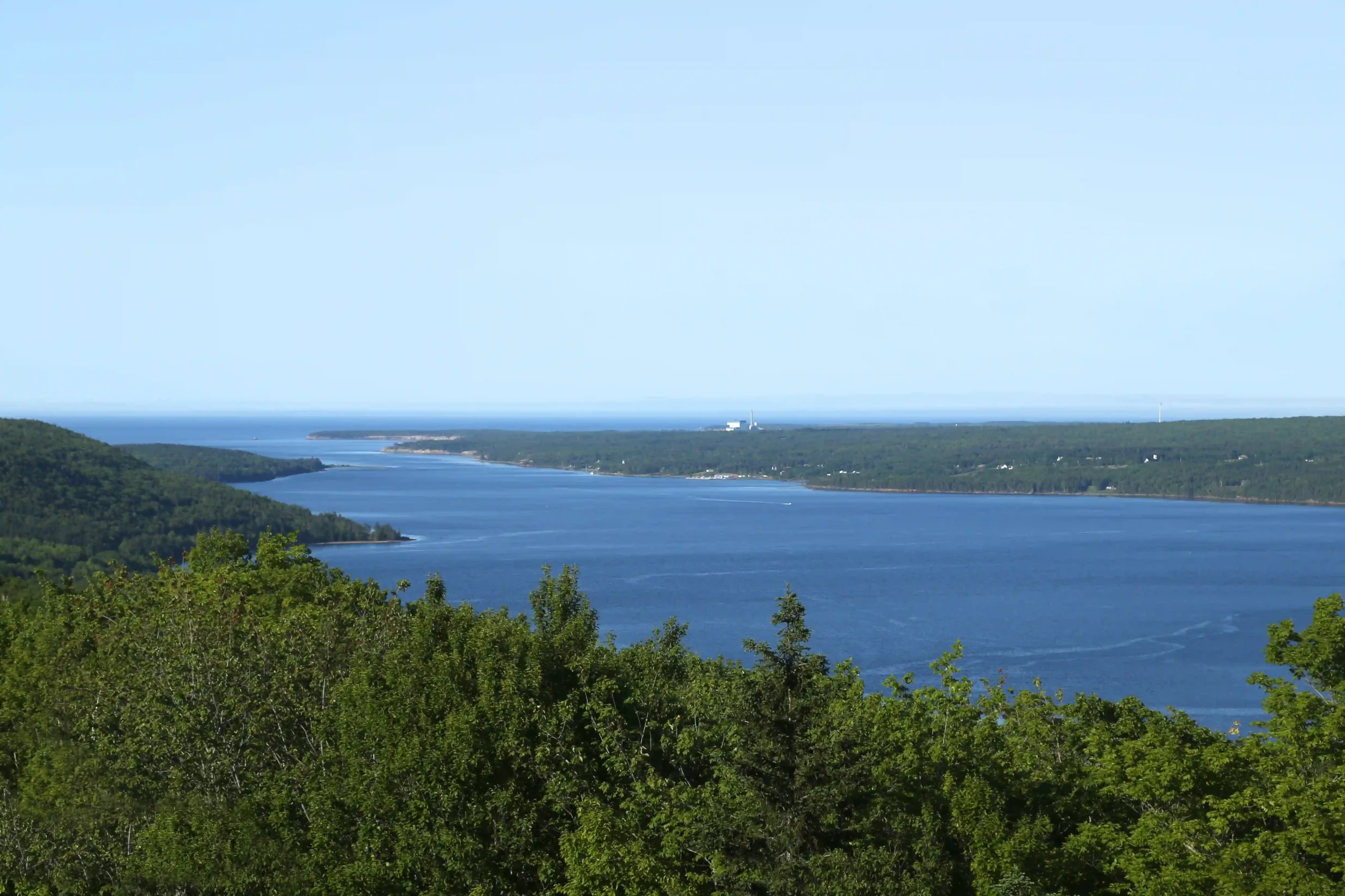
The scale surprises people who haven’t looked at a map first. The lake covers more than a thousand square kilometres, sitting almost dead centre in Cape Breton Island, ringed by rolling hills and dotted with islands. Communities like Baddeck, St. Peter’s, Iona, and several Mi’kmaq First Nations sit along its shoreline, and the lake has been central to Mi’kmaw life here for thousands of years before anyone called it Bras d’Or.
The UNESCO Biosphere Region
The lake and its watershed were designated a UNESCO Biosphere Reserve in 2011, recognising a working relationship between the communities around it and the water itself — not a protected wilderness so much as a place where people have figured out how to live alongside it without wrecking it. The designated biosphere region covers 356,574 hectares in total, stretching well past the shoreline into a dozen separate watersheds that drain into the lake.
None of that needs to matter to your trip. But it explains why the water looks the way it does, and why locals talk about the lake less like a tourist attraction and more like a shared responsibility.
Why Bras d’Or Lake Feels Different from the Cabot Trail
The Cabot Trail is about elevation and edges — cliffs, hairpin turns, lookouts where you pull over because the view demands it. Bras d’Or Lake is about surface. Wide, flat, reflective water with hills around it instead of above it.
That’s not a lesser experience, just a different tool for a different part of the trip. The Cabot Trail gives you the postcard. Bras d’Or Lake gives you the morning you actually remember — the one where nothing was scheduled and you still didn’t want to leave.
If you’ve already got the Skyline Trail booked in, Bras d’Or Lake is the day that comes after it, not instead of it.
Can You Kayak on Bras d’Or Lake?
Yes, and the lake is built for it. Sheltered coves, mild tides compared to the open Atlantic, and enough coastline that you’re never short on somewhere new to point the bow. There is a huge amount of shoreline to work with, with public access points scattered around the lake.
Don’t mistake calm for small, though. This is still open water in places, wide enough to build real chop when the wind picks up. Treat the sheltered bays near Baddeck as beginner territory and the open stretches with more respect.
Where to Launch: Baddeck vs. St. Peter’s
Baddeck is the easiest launch point for most visitors — Baddeck Bay is sheltered, close to town, and where most guided outings put in. Kidston Island sits just offshore and is a common turnaround point for a shorter paddle.
St. Peter’s, at the lake’s southern end, is the other obvious option. Kayak and paddleboard rentals are available near the historic St. Peter’s Canal, and the water here tends to be quieter and less touristed than Baddeck Bay. It’s worth choosing over Baddeck if you’d rather skip the crowds, or if you’re already based near St. Peter’s for the day. Confirm current rental availability directly, since small operators in this area can change seasonally.
How Long Should You Plan For?
Guided kayak outings around Baddeck are commonly sold as short paddles of an hour or two, with half-day and longer options available from some operators for a more ambitious route. Rental costs and exact tour lengths vary by operator, season, and whether you’re going guided or self-guided, so treat any number you see online as a starting point and confirm current rates and durations directly before booking.
Guided vs. Going It Alone
If you don’t know the lake, a guided tour is worth the money the first time out. Several small operators around Baddeck and the wider region run guided sea kayak outings through the quieter inlets, and Destination Cape Breton’s kayaking and water sports directory is a reasonable starting point for finding one that suits your dates and experience level, since local operators know which bays stay calm when the wind turns.
If you’re experienced and renting on your own, check conditions before you launch — this isn’t a pond where a bad decision just means a wet afternoon.
Best Time of Day to Paddle
Mornings, generally. Wind on Bras d’Or Lake tends to build through the day and settle again toward evening, so an early start gets you the glassiest water and the calmest paddling. Launch around 7:30am and you’re often paddling through a thin layer of mist still sitting on water so still it barely counts as moving — the kind of quiet that disappears by mid-morning once the wind and the day-trippers both show up. It’s also just a nicer way to start the day than sitting in Cabot Trail traffic.
Pack a dry bag. Everything gets wet on a kayak eventually, and your phone won’t forgive you for skipping this one.
Can You Sail on Bras d’Or Lake?
Also yes — and this is arguably the lake’s real specialty. Baddeck is the easiest sailing hub for most visitors, with marinas and charter options right on the waterfront, and the combination of size, consistent wind, and light powerboat traffic in most of the lake’s arms makes it one of the most appealing sailing settings in Cape Breton. Sailboat racing has been a fixture here for generations, run out of clubs like the Bras d’Or Yacht Club.
Why Baddeck Is Cape Breton’s Sailing Hub
Charters and guided sails typically depart from the Baddeck waterfront, with operators offering everything from a couple of hours on the water to multi-day cruises that work their way around the lake’s arms, stopping in places like Iona or Eskasoni. Sailing gives you a different read on the lake’s scale than driving around it ever could — you feel how far it stretches instead of just seeing it from a lookout.
Charter vs. Shared Cruise
You’ve got two real options here, and they suit different trips. A private charter — Sailing CBI, docked at the Baddeck community wharf, is the established name — books the whole boat for your group, typically in 2, 4, or 6-hour blocks, with overnight and multi-day options if you want to actually live on the water for a stretch. A shared or public cruise puts you on a boat with other travellers for a fixed-length trip, usually a couple of hours, and costs less per person since you’re splitting the boat rather than booking it outright. If you just want a taste of sailing without committing a private charter’s budget, look for shared cruise listings before defaulting to a private one.
Do You Need to Book Ahead, and Is It Beginner-Friendly?
Book ahead, especially in July and August. Private charters generally require advance reservation and a deposit, and shared cruises fill up on nice-weather days. You don’t need any sailing experience — this is crewed sailing, not a bareboat rental, so the captain handles the boat and you handle the enjoying-yourself part. It suits nervous first-timers about as well as it suits people who’ve sailed before.
Sunset Sails
If you only do one thing on the water, make it a sunset sail. Some operators, including Sailing CBI, run evening charter options, and occasional sailings may pair the water with local music. Check current listings directly before building your plan around a specific theme or schedule.
As with kayaking, treat the schedule as a plan rather than a promise. Wind and weather run the show here, and a good operator will tell you that upfront rather than push you out in conditions they wouldn’t sail in themselves.
Do You Need to Get on the Water?
No. It’s easy to assume Bras d’Or Lake only makes sense if you’ve booked a kayak or a sail — it doesn’t.
Drive the shoreline roads slowly. Sit on the Baddeck waterfront with a coffee. Spend a couple of hours at the Alexander Graham Bell National Historic Site, which sits right on Baddeck Bay and tells Bell’s story — telephone, hydrofoils, kite experiments — with a rooftop deck overlooking the water. It typically opens daily from mid-May through late October, but check Parks Canada for current hours before you go. Two hours is usually enough to see it properly.
None of that requires booking anything or getting wet. It’s a legitimate way to spend half a day, and for some travellers it’s the better version of Bras d’Or Lake anyway.
Where Should You Stay for Bras d’Or Lake?
Baddeck as the Easy Base
Baddeck does most of the heavy lifting here — restaurants, a proper waterfront, marinas, and easy access to both kayak and sailing operators without a long drive. If you want lake access without overthinking logistics, this is the answer.
Lakefront Cottages for Slower Trips
If the whole point of your visit is slowing down, a lakefront cottage or cabin does that better than a hotel room in town. Private wharfs, your own patch of shoreline, mornings that start with the water instead of a parking lot. For a fuller rundown of Cape Breton bases beyond just this lake, here’s where to stay across the island.
Sydney works if you’re combining a lake day with Fortress of Louisbourg, but it’s not a lake-focused base — you’re trading water access for convenience elsewhere.
How to Fit Bras d’Or Lake into a Cape Breton Itinerary
If You Have 3 Nights
Bras d’Or Lake is background scenery here, not a dedicated day. Base in Baddeck if you want some lake access baked into your drive, but don’t plan a kayak or sail booking — you won’t have the slack in the schedule to enjoy it properly.
If You Have 5 Nights
This is where the lake earns a half day or a slow morning. Pair it with the Bell historic site, or treat it as the decompression day between a Cabot Trail loop and a day at Louisbourg. It’s the reset button your trip will probably need by day three or four.
If You Have 7+ Nights
Now you can afford one or two actual lakefront nights, not just a stop-through. This is the version that suits families, or anyone who’s tired of packing the car every morning. It works well positioned either right before or right after the Cabot Trail — a soft landing on either side.
For the full shape of a longer trip, this Cape Breton itinerary breaks down how the pieces fit together.
Bras d’Or Lake with Kids
It works, and it works better than another long Cabot Trail driving day for families with younger kids. Fewer hairpin turns, fewer white-knuckle moments for whoever’s driving, more chances to just stop and let everyone get out of the car.
Kayaking and sailing with kids should stay conservative — sheltered coves, shorter outings, and a guided operator who’s used to younger paddlers rather than an ambitious open-water route. Check age and weight minimums with whoever you book, since they vary by operator and boat type. A lakefront cottage cuts down on the daily pack-up-and-move routine too, which matters more with kids than most adults want to admit.
What to Bring for a Bras d’Or Lake Day
- A light wind or rain shell — the water side of the lake is breezier than the road side
- A dry bag if you’re kayaking or sailing; phones and cameras don’t survive an unplanned dunk
- A reusable water bottle
- Sun protection, even on overcast days
- Bug protection, especially near the shoreline in early summer
- Water shoes or sandals with grip for wet launch points
- A warmer layer for boat trips — it’s colder on the water than the forecast on land suggests
- Snacks, if you’re travelling with kids and the day stretches longer than planned
Best Time of Year to Visit Bras d’Or Lake
Late summer into early fall tends to be the sweet spot — warm enough for the water, cooler air, and the crowds thinning out once the school-holiday traffic clears. Kayaking and sailing both run through the warmer months, roughly May into October, though exact operating windows depend on the individual outfitter.
October brings its own draw: fall colour around the shoreline and the Celtic Colours Festival, which pulls visitors toward Cape Breton for entirely different reasons but pairs naturally with a slower lake visit if your timing lines up.
Whenever you go, confirm current operator availability before you book. Small operators, seasonal hours, and shoulder-season gaps are normal here — check ahead rather than assume.
Bras d’Or Lake vs. Cabot Trail: Which Should You Prioritize?
The honest answer depends on what you’ve already got booked and how many days you’re working with.
First-time visitors on a short trip should prioritize the Cabot Trail without much debate — it’s the reason most people fly to Cape Breton in the first place, and a full day at Louisbourg or an afternoon at Pleasant Bay whale watching will do more for a short trip than a slow lake morning will.
Travellers with extra days, families, or anyone who’s already done a Cabot Trail loop before should add Bras d’Or Lake for balance. It’s not a replacement for the highland drive. It’s the thing that makes the highland drive feel less like an endurance test.
| Choose This | If You Want |
|---|---|
| Cabot Trail | Cliffs, lookouts, highland driving, the iconic Cape Breton views |
| Bras d’Or Lake | Calm water, kayaking, sailing, lakefront stays, slower travel |
| Both | A more balanced Cape Breton trip |
Frequently Asked Questions
Is Bras d’Or Lake worth visiting?
For most travellers with more than a few days on Cape Breton, yes. It isn’t trying to out-dramatic the Cabot Trail — it’s the counterweight, not the headline. Skip it only if your trip is short and already packed with the island’s bigger-name stops.
Can you kayak on Bras d’Or Lake?
Yes. Sheltered coves near Baddeck and St. Peter’s make for reasonable beginner paddling, though open stretches of the lake can get choppy once the wind picks up. If you don’t know the lake, book a guided outing rather than rent and go it alone the first time.
Can you sail on Bras d’Or Lake?
Yes, and it’s one of the better sailing settings in Atlantic Canada. Charters depart from Baddeck, ranging from a couple of hours to multi-day trips around the lake’s arms. No sailing experience is needed for a crewed charter — the captain handles the boat.
Is Bras d’Or Lake good for families?
Generally, yes — especially compared to another long Cabot Trail driving day. Keep water activities conservative and weather-aware, confirm age and safety requirements with whoever you book, and a lakefront stay cuts down on daily packing and moving with kids in tow.
Is Bras d’Or Lake part of a UNESCO biosphere?
Yes. The lake and its watershed were designated a UNESCO Biosphere Reserve in 2011, recognising the relationship between local communities and the surrounding environment rather than marking it off as untouched wilderness.
Where should I stay for Bras d’Or Lake?
Baddeck is the simplest base, with easy access to marinas, restaurants, and operators. A lakefront cottage suits travellers prioritizing pace over convenience.
How much time do you need at Bras d’Or Lake?
A half day covers the basics — a paddle, a walk along the waterfront, maybe the Bell historic site. A full day or an overnight lets the slower pace do its job.
Should I visit Bras d’Or Lake or the Cabot Trail?
Prioritize the Cabot Trail if your trip is short — it’s the reason most people come to Cape Breton in the first place. Add Bras d’Or Lake if you’ve got four or more nights, want to kayak or sail, are travelling with family, or want a day that doesn’t involve another set of hairpin turns.
The Short Version
Bras d’Or Lake isn’t the most dramatic part of Cape Breton, and that’s exactly the point. It doesn’t compete with the Cabot Trail’s cliffs or Louisbourg’s cannon fire — it gives the trip somewhere to exhale. Prioritize the big-name stops if your time is tight. Add the lake if you’ve got four to seven nights, want to kayak or sail, are travelling with family, or just want one day that doesn’t ask anything of you.
Baddeck makes the whole thing easy. Book a slower morning, or don’t book anything at all — either way, the lake doesn’t seem to mind.
Been out on Bras d’Or Lake? I’d love to hear whether you sailed it, paddled it, or just sat and watched it from the shore — drop it in the comments.