Cape Breton Itinerary: 7 Days on the Cabot Trail and Beyond
Affiliate note: This article may contain affiliate links, which means I may earn a small commission if you book or buy through them – at no extra cost to you. I only recommend things that make sense for this kind of trip.
Most people couldn’t find Cape Breton on a map before they went. Then they went. And they’ve been telling people about it ever since.
That’s not brochure language — it’s just what tends to happen. The island sits at the northeastern tip of Nova Scotia, connected to the mainland by a single causeway, and it operates at a pace that mainland travel rarely allows. There are sea cliffs that drop straight into the Gulf of St. Lawrence. Roads that wrap themselves around highland plateaus for dramatic effect. A ceilidh culture that still lives in community halls rather than tourist venues. And layers of history — Mi’kmaq presence and Unama’ki identity, Gaelic and Scottish traditions, Acadian fishing communities — that don’t flatten neatly into any single postcard.
You can technically drive the Cabot Trail in a day. You can also technically eat dinner standing over the sink. Neither is the version I’d recommend.
This is a 7-day Cape Breton itinerary for international travellers who want to do it properly — the Skyline Trail, Fortress of Louisbourg, at least one ceilidh or live-music evening, the slower parts that most people rush through, and a realistic sense of what it costs and how to move around. If you’re planning a broader Nova Scotia trip around this, the Nova Scotia itinerary covers how Cape Breton fits into the larger picture.
How Many Days Do You Actually Need in Cape Breton?
The honest answer: more than most people give it.
| Days | What’s realistic |
|---|---|
| 3 days | Highlights only — Skyline Trail, one base, one ceilidh. Rushed. |
| 5 days | Workable. You’ll cover the main Cabot Trail loop with some breathing room. |
| 7 days | Right for first-timers. Time for scenery, culture, a slow day, and Louisbourg. |
| 10+ days | Better. Especially if you’re hiking seriously, sailing the Bras d’Or, or timing Celtic Colours. |
This is not a trip that rewards spreadsheet optimism. The island is better when you stop treating every viewpoint like a task.
Before You Go: Getting to Cape Breton (and Why You Need a Car)
Halifax vs. Sydney — Which Airport?
Halifax (YHZ) is the main international entry point for Nova Scotia and has considerably more flight options, usually at better prices. The drive north to Baddeck — the classic starting point for the Cabot Trail — takes roughly 3.5 to 4 hours. It’s an easy drive on well-paved highways, and honestly a decent warm-up for what’s ahead.
Sydney (YQY) is on Cape Breton itself, about an hour from Baddeck, but flights are mostly domestic and tend to cost more. If you’re connecting through Toronto or Montreal, check whether it’s worth the convenience.
Do You Need to Rent a Car?
Yes. There’s no real alternative. Cape Breton has no meaningful public transport for visitors, and the Cabot Trail isn’t something you can piece together on foot or by taxi. Budget for a rental from the start, confirm current rates directly with rental agencies, and don’t revisit this question.
One practical note: if you’re arriving from the mainland, the Trans-Canada Highway across the Canso Causeway is your entry point. Cape Breton looks manageable on a map until the road starts wrapping itself around cliffs for dramatic effect.
7-Day Cape Breton Itinerary — Overview
| Day | Base / Area | Main Focus |
|---|---|---|
| 1 | Baddeck | Arrival, Bras d’Or Lake, evening ceilidh |
| 2 | Chéticamp / west coast | Skyline Trail |
| 3 | Pleasant Bay / north coast | Whale watching, northern Cabot Trail drive |
| 4 | Ingonish | East coast, Middle Head, beaches |
| 5 | Bras d’Or Lake / Iona | Slower day, Highland Village |
| 6 | Louisbourg / Sydney area | Fortress of Louisbourg |
| 7 | Sydney / return | Easy final day, drive out |
Day 1 — Arrive in Baddeck and Slow Down
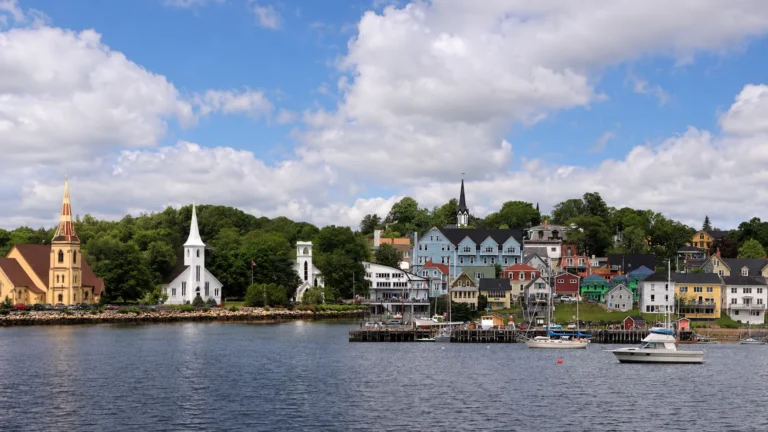
Baddeck is a small town on the shore of the Bras d’Or Lake — a vast inland saltwater lake that bisects the island and has a quality of calm that’s hard to explain until you’re sitting in front of it. It’s a good first-night choice precisely because it doesn’t demand anything of you.
If you have afternoon energy, the Alexander Graham Bell National Historic Site is worth a couple of hours. Bell spent his later years here, and the site covers considerably more than the telephone — his aeronautical experiments and hydrofoil work are the more interesting chapters. Check current hours on the Parks Canada site before you go.
That evening, find a ceilidh. Baddeck typically has live community music running through the summer season — check current schedules locally when you arrive, since times shift. A ceilidh (pronounced “kay-lee”) is fiddle music, step dancing, and a room full of people who came to watch and end up in a square set. If dancing happens and visitors are invited in, follow the room. Nobody is expecting professional footwork. Read more about what to expect from Cape Breton’s ceilidh culture before you go.
Day 2 — Chéticamp and the Skyline Trail
This is the day most people come to Cape Breton for, and it earns the reputation.
Drive north from Baddeck toward Cape Breton Highlands National Park. The west coast opens up gradually as you head toward Chéticamp — an Acadian fishing town with a harbour, good chowder, and a noticeably different cultural flavour from Baddeck. Stop for lunch.
From there: the Skyline Trail. It’s a loop through boreal forest that ends at a boardwalk cantilevered over the cliffs above the Gulf of St. Lawrence. The trail is rated moderate, takes roughly 2–3 hours at a comfortable pace, and the views at the end are the kind that make you stay longer than you planned.
A few things worth knowing before you go: dogs aren’t permitted on the trail, and parking access during peak season typically requires a reservation through the Parks Canada booking system — check the current rules on the Parks Canada site before you go, since they update year to year.
Timing matters here. Early morning gives you quieter trails and softer light. Sunset gives you the best light on the Gulf, but means finishing in the dark, and the trail isn’t lit. Our full Skyline Trail guide covers timing, crowds, and what to bring in more detail.
Day 3 — Pleasant Bay and the Northern Cabot Trail
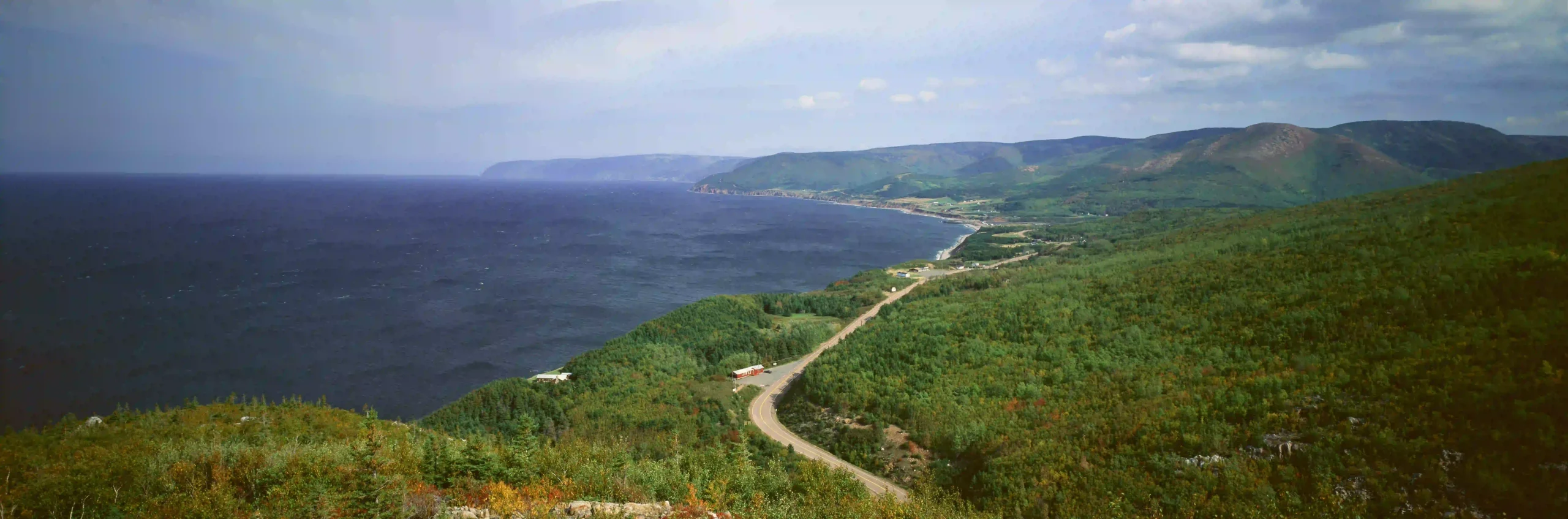
The drive between Chéticamp and Pleasant Bay is the most dramatic stretch of the Cabot Trail — ocean to the west, highland plateau above, and a road that makes sensible driving decisions feel like a suggestion. Take it at the pace it deserves.
Pleasant Bay is a small harbour village where whale watching boats head out into the Gulf of St. Lawrence during the summer and early fall. Pilot whales are the most consistent sighting; minke and fin whales also pass through depending on the season. See the Pleasant Bay whale watching guide for what to expect, which operators are running, and how to book.
If you have the afternoon and the road conditions are right, the gravel track out to Meat Cove at the island’s northern tip is worth considering — cliffs, open sea, and no guardrails. It’s weather and road-dependent, so ask locally before you commit to it.
Day 4 — Down the East Coast to Ingonish
The eastern side of the Cabot Trail runs through more sheltered, forested terrain than the west — a different mood entirely. Ingonish sits at the edge of the national park on this side and makes a sensible overnight base.
Before you check in, walk the Middle Head Trail. It’s a peninsula that juts into the Atlantic with ocean on both sides, which is the kind of thing that sounds gimmicky until you’re standing on it with wind coming from two directions at once.
Cape Smokey, just south of Ingonish, has a gondola with views across the Cabot Trail from above. Check ahead for current pricing and operating status — things change between seasons. It’s not a must-do, but if you’ve been hiking for three days and want the views without the legs, it’s a reasonable option.
Day 5 — Bras d’Or Lake and Iona
Use this day to slow down.
The Bras d’Or Lake is a UNESCO Biosphere Reserve — an inland sea connected to the Atlantic by two narrow channels, with calm water and gentle surrounding hills. After several days of coastal driving and highland hiking, it tends to feel like a reset. Kayaking and sailing on the lake are worth considering if you have the interest and the time.
The Highland Village Museum (Baile nan Gàidheal) in Iona sits on a hillside above the lake and traces the Scottish Gaelic migration to Cape Breton through a series of reconstructed buildings. It’s an open-air site, so plan for weather. Give it two hours and check current operating hours before you visit.
That evening, find live music. The island is good at this.
Day 6 — Fortress of Louisbourg
A full day. Don’t treat this as a half-morning stop.
The Fortress of Louisbourg is the largest historical reconstruction in North America — a working recreation of a French colonial town as it existed in the 18th century, staffed by interpreters in period dress who don’t break character. At its peak, Louisbourg was one of France’s most important Atlantic ports. The British besieged and captured it twice before tearing it down. A place worth levelling twice is worth spending a day in.
Plan a minimum of four hours. The period-style restaurant inside is worth using for lunch. Check current season hours and opening dates on the Parks Canada site before building your day around a specific schedule — peak and shoulder season access differs considerably.
Day 7 — Sydney and Out
Sydney is Cape Breton’s main city and doesn’t need to be complicated. Walk the Esplanade waterfront. The murals on Wentworth Street are well done. Have one last bowl of chowder. Then either catch a flight from Sydney or start the drive back to Halifax — roughly 4 hours with no stops, more if you want a final look at the Canso Causeway area on the way out.
When Is the Best Time to Visit Cape Breton?
Late June and July is when everything opens and the days are longest. The national park facilities are fully staffed, whale watching is running, and the ceilidh season is in swing. Moose are active in the early morning and around dusk — drive accordingly.
August is peak season. Busy, fully operational, and the most reliable for booking things without too much friction.
September is the sweet spot for a lot of travellers. pilot whales are still commonly seen, depending on conditions and operators, the crowds thin noticeably after Labour Day, and the light on the Cabot Trail starts doing things that August couldn’t manage. Some seasonal businesses start closing toward the end of the month, so check ahead.
Celtic Colours is a nine-day festival of concerts, dances, and community events held across the island each October. If this lines up with your travel, build around it — the Celtic Colours guide covers what to expect and how to plan. It’s the best possible context in which to hear Cape Breton music.
After mid-October, assume that many seasonal restaurants, accommodation options, and tour operators have closed for the year. If you’re visiting off-season, verify everything individually.
Where to Stay in Cape Breton for This Itinerary
The short version: base yourself where the things you care about are, and plan to move at least once.
Baddeck is the best all-around starting point — central, well-connected to Halifax, and close to the lake and evening music. Good for nights 1 and 7.
Chéticamp puts you at the edge of the national park on the west side. Right for the Skyline Trail and the northern loop, limited in accommodation options, books out early in summer.
Ingonish is the natural midpoint on the east coast section. A range of options from mid-range motels to heritage properties.
Sydney and the Louisbourg area work for your last night before Louisbourg or a flight out.
For a full breakdown of where to stay by area and what to expect, the Where to Stay in Cape Breton guide covers it properly. If you’re spending a night on the mainland before or after Cape Breton, Where to Stay in Halifax is the companion piece.
What Does a Cape Breton Trip Cost?
Cape Breton is not an expensive destination by international standards, but the costs add up across a week. Here’s where the money goes:
Car rental: The single biggest variable cost. Book ahead, especially in peak season. Check current rates directly with rental agencies.
Accommodation: Ranges from budget motels to mid-range B&Bs to more distinctive rural stays. Prices vary significantly by season and location — properties in Chéticamp and Ingonish tend to book out earlier than Baddeck.
National park fees: Access to Cape Breton Highlands National Park requires a day pass or an annual Discovery Pass. Check current fees on the Parks Canada site — pricing updates periodically and varies by pass type, age, and group size.
Food: Reasonable. Fresh seafood at local spots is consistently good value. Budget more in the national park areas where options are limited.
Whale watching: Prices vary by operator and boat type. See the whale watching guide for current pricing context.
Ceilidhs and cultural events: Generally low cost. Check current prices locally.
Fuel: The Cabot Trail is 298km. You’ll be driving more than just the loop. Factor in full tank fills from Baddeck or Chéticamp.
Common Mistakes to Avoid
Trying to drive the Cabot Trail in one day. You’ll see road. You’ll miss the island.
Staying in one place for seven nights. Cape Breton rewards moving — the west coast feels nothing like the east, and Baddeck feels nothing like either. Split your bases.
Underestimating distances. The map makes things look close. The roads make things take longer. Build buffer time into every day.
Booking accommodation late in peak season. Options in Chéticamp and Ingonish are limited and go early. Book as soon as dates are fixed.
Skipping the ceilidh. It will seem optional right up until you’re on the ferry home wishing you’d gone.
Assuming October logistics are the same as August. Seasonal businesses close. Tour operators finish their runs. Always confirm before you go in shoulder or off-season.
Treating every scenic pull-off as a two-minute stop. Some of them warrant twenty. The island is better at its own pace.
FAQ
How many days do you need in Cape Breton? Seven days is the right amount for a first trip that covers the Cabot Trail loop, a slower day, and Louisbourg without feeling rushed. Five days is workable. Three days is the highlight reel, not the trip.
Can you drive the Cabot Trail in one day? Yes. It takes around 4–5 hours of driving without stops. Whether you should is a different question — the point of the Cabot Trail is not finishing it, it’s what happens when you slow down on it.
Is Cape Breton worth visiting without hiking? Yes. The drive alone is the experience for a lot of people. Add whale watching, Louisbourg, ceilidhs, the Bras d’Or Lake, and the food, and hiking becomes optional rather than essential.
Do you need a car in Cape Breton? Yes. There is no practical alternative for getting around the island as a visitor.
Where should you stay for a Cape Breton road trip? Plan at least two bases — Baddeck for the start and end, and one stop mid-loop (Chéticamp or Ingonish depending on your priorities). The Where to Stay in Cape Breton guide covers this properly.
When is the best time to visit Cape Breton? Late June through September covers most visitors well. September is quieter than August with roughly the same access. Celtic Colours in October is worth planning around if music is part of why you’re going.
Is Cape Breton good for families? Yes — with a car and flexible scheduling. The Skyline Trail is accessible for older kids. Louisbourg can work well for families, especially when its seasonal interpretation and activities are running. Whale watching depends on the boat type; Zodiacs have age restrictions, larger vessels generally don’t.
Can you combine Cape Breton with a Nova Scotia road trip? Easily. Cape Breton sits at the northern end of a natural loop that takes in the South Shore, Annapolis Valley, and the Bay of Fundy. The Nova Scotia itinerary covers how to structure the larger trip.
Should you visit during Celtic Colours? If you have any interest in live music or local culture, yes. It’s the best version of Cape Breton’s music tradition in a single week. See the Celtic Colours guide for how to plan around it.
The Short Version
Seven days. One rental car. At least two bases — Baddeck to start, somewhere mid-loop to break it up.
Do the Skyline Trail early and at your own pace. Spend a full day at Louisbourg. Go to a ceilidh even if it doesn’t sound like your thing — especially if it doesn’t sound like your thing. Give the Bras d’Or Lake an afternoon when you need to stop moving.
The supporting guides are there when you need more detail on specific parts of the trip:
- Skyline Trail
- Whale Watching in Pleasant Bay
- Fortress of Louisbourg
- Bras d’Or Lake
- Where to Stay in Cape Breton
- Ceilidh Culture
- Celtic Colours Festival
Planning your Cape Breton trip and have a specific question? Drop it in the comments — happy to help you map it out. of the night.
Cape Breton is one of those places that takes about 24 hours to understand and about 7 days to not want to leave.
Planning your Cape Breton trip? Drop your questions in the comments below — happy to help you map it out around your dates.